Online shop owners with changing sets
If you regularly photograph different stationery sets, you’ll probably want their shape and colour to remain clear across multiple product images.


For occasional shots in good window light, you don’t necessarily need a softbox: a white reflector may be enough to soften shadows on the side facing away from the window. For regular shoots, a dimmable continuous light with a suitable softbox gives you more control, but it takes up space and needs a well-planned setup. When photographing coloured paper, check the white balance in the actual mix of light sources and use test shots to see whether the reflector and lighting work for your set.
If you regularly photograph different stationery sets, you’ll probably want their shape and colour to remain clear across multiple product images.
When photographing paper, prints and coloured pens, it matters whether the white areas and product colours look true to life. Adobe points out that white balance affects every colour in an image.
If you only arrange smaller sets by a window now and then, you may want to soften the shadows first without setting up a full studio straight away.
A good fit if: You take photos occasionally, have a flexible schedule and mainly want to soften shadows on the side facing away from the window.
The trade-off: Daylight can vary from one shoot to the next. A test shot will show whether the reflector is enough for your set.
A good fit if: You already have a compatible continuous light and want to add a larger, diffused light source for your set.
The trade-off: Check that the connection, maximum load, accessories and space requirements are all suitable for your existing light and photography table.
A good fit if: You regularly shoot a series and want to adjust the brightness and colour temperature as well as use window light.
The trade-off: The light, softbox and stand may be sold separately. Manufacturer figures measured with a reflector don’t tell you how bright your setup will actually be with a softbox.
| Consideration | What to check before buying | Who it matters most to |
|---|---|---|
| Shadows and reflections | Take a test shot with your largest typical set; check the softbox’s size and position, as well as its inner and outer diffusers. | When photographing flat-lay sets, I want to control shadows on the side facing away from the window and avoid distracting reflections. Around 31% of consumers put control over shadows and reflections first. |
| Paper and product colours | Check the adjustable colour temperature range of the exact model and photograph your set under the mix of light you plan to use. | If I want white paper and print colours to look as true to life as possible, I check them under the lighting I’ll actually use. Around 31% of consumers prioritise colour rendering. |
| Consistent lighting | Check whether you can adjust the brightness and colour temperature; note down the position and camera settings for future shots. | For additional images taken on different days, I want to be able to recreate the lighting reliably. Around 23% of consumers put consistent lighting conditions first. |
| Space and setup | Check the connection and maximum load, the softbox dimensions when assembled, the stand and each included item separately. | If my table has limited space, I want to make sure the connection and setup will work beforehand. Around 15% of consumers prioritise space requirements and a straightforward setup. |
A softbox is a light modifier and doesn’t automatically include a light source. The amaran Light Dome 60 listing includes diffusion accessories and a grid, but no light.
Check the specific listing to see separately whether it includes a light, compatible mount, stand and any accessories you need.
The illuminance figures given by Godox and SmallRig are based on specific measurement conditions. They don’t automatically tell you how brightly an entire set will be lit with a diffuser.
Only compare measurements taken under the same conditions, and test your planned subject with the setup you intend to use.
Adobe explains that white balance affects all the colours in an image, not just white areas. Window light and artificial light can look different when used together.
Check white paper and key print colours under the actual mix of light, rather than relying on Kelvin or CRI figures alone.
These examples refer to the product ranges and light modifiers mentioned; they are not a general assessment of any brand.
The SL60IIBi is a dimmable bi-colour continuous light with a Bowens mount; softboxes are sold separately.
The 100x S is an adjustable Bowens continuous light; the Light Dome 60 is a separately available, documented light modifier.
The European version of the RC 120B is a modular bi-colour light with a Bowens mount.
The CB60B is a compact, adjustable Bowens continuous light.
The click softbox with grid is a light modifier for compatible Bowens continuous lights or studio flash units, not a light source in its own right.
The Joybuy products below include photography lamps, a portable photography light, a small LED light box and a ring light. These are different solutions and they are not all softbox setups.
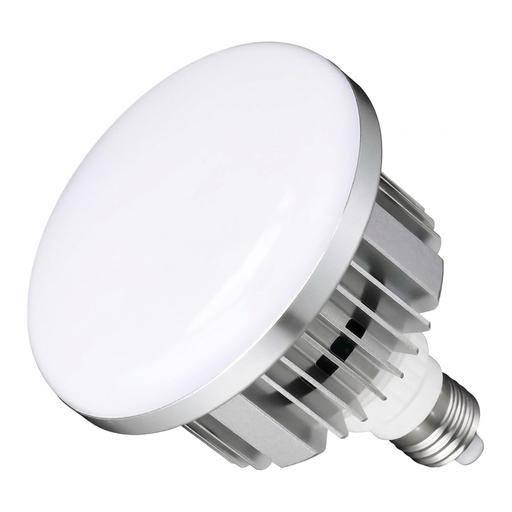 No image available
For a softbox with a compatible E27 fitting; the bulbs are dimmable and the colour temperature can be adjusted according to the product information.
The stated range is 3000–6500 K, and a remote control is included. Disconnect from the mains before fitting the bulbs; don’t touch hot surfaces, and keep the bulbs away from water and flammable materials.
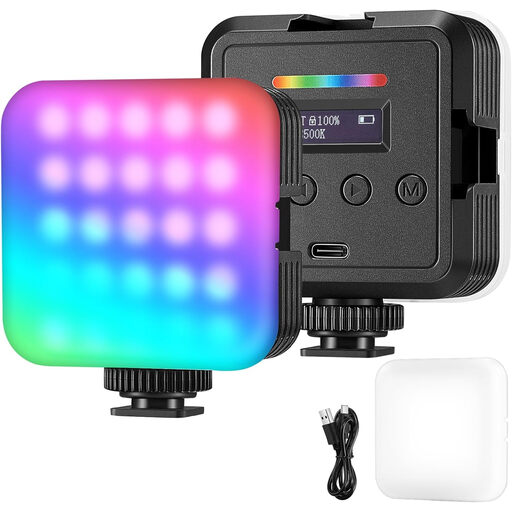 No image available
An option for adding light to photo or product shoots when you want to adjust the brightness and light colour.
The product description lists RGB, white and warm light modes, as well as battery or USB power. Check in advance whether the light is suitable for the size of your set and the position you have in mind on your photography table.
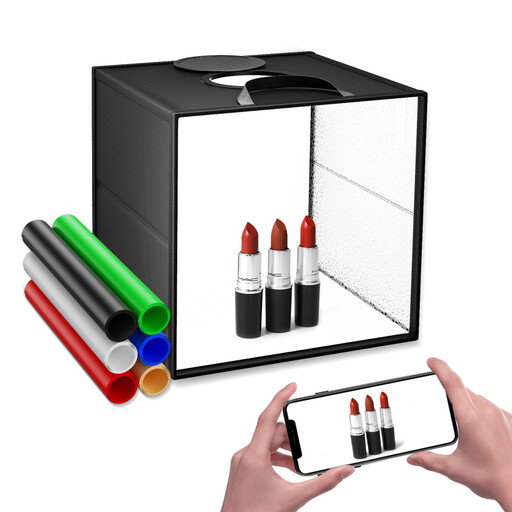 No image available
For small products, when a compact light box is a better fit for your subject than a softbox beside the window.
The product title lists 120 LEDs, three colour temperatures, nine dimming levels and six background papers. It’s described as a 30 cm light box for small products, not a softbox setup.
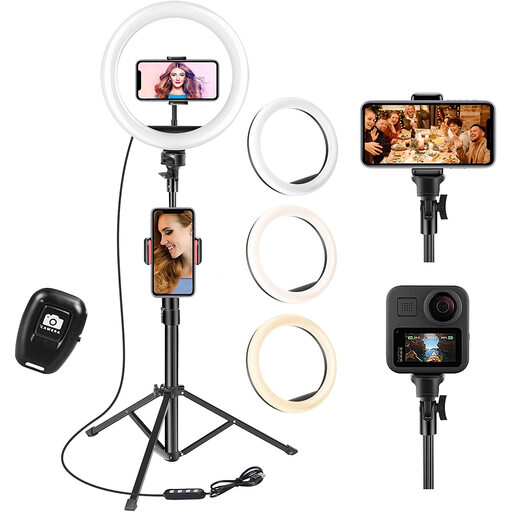 No image available
An alternative type of lighting for photography and content creation if you’re considering a ring light instead of a softbox.
The product title lists a remote control, three light colours and ten brightness levels. Check that the ring shape and tripod position will work with your arranged set.
No. If a white reflector softens the shadows enough for your shot, you can start with that. An additional light is more useful if you want greater control over the lighting for regular shoots.
Check the white balance under the lighting you’ll actually use for the shot. Adobe explains that different lighting conditions can cause colour casts and that white balance affects every colour in an image; an adjustable light on its own won’t correct this.
The mount isn’t the only thing to consider. Check the load limit specified by the light’s manufacturer, the softbox dimensions when assembled and the space available around the stand. SmallRig specifically highlights the load limit for the RC 120B.
Follow the instructions for the specific model. The Godox SL60IIBi manual warns about hot parts and moisture, among other things, and says to unplug the light before cleaning or maintenance. These model-specific instructions don’t automatically apply to other lights.
CE marking is required for products covered by harmonised EU rules that require it. According to Your Europe, it is a manufacturer’s declaration, not a blanket independent quality mark. In Germany, the Federal Environment Agency says that waste electrical equipment must not be put in household rubbish; it should be collected separately.