
Lieferung heute & morgen

Qualitätsgarantie

Willkommens-Angebote freischalten: KOSTENLOSE Lieferung | Bis zu 80 % RABATT | Kostenlose 30-Tage-JoyPlus-Testphase
App herunterladen
A high-quality cast iron Dutch oven is an investment for years, if not a lifetime. The STAUB 24 cm Cocotte, in particular, is highly coveted by home cooks and culinary enthusiasts alike. However, the market is saturated with products whose marketing promises often suggest more than their material quality can deliver. Before you make a decision, it's crucial to understand the common pitfalls that can lead to disappointment and a costly purchasing error.
This guide will help you identify the decisive quality features and make an informed choice.
When selecting a cocotte, there are three common issues that often only become apparent during daily use after the purchase:
To avoid the problems mentioned above, you should carefully examine three technical aspects before buying. These define the performance and longevity of a cast iron cocotte.
A cast iron cocotte is an outstanding heat retainer due to its high mass and material density. It heats up slowly but distributes the heat very evenly to the food—ideal for searing at high temperatures and slow braising at low heat.
The quality is evident in the enamelling. A high-quality enamelled cocotte has multiple layers. The inner, usually matte black, enamel should be scratch-resistant and acid-resistant. This not only allows for searing that develops roasted aromas but also simplifies cleaning and prevents the pot from absorbing flavours. The outer enamel protects against corrosion and serves an aesthetic purpose, as seen in the STAUB La Mer colour variant.
A crucial feature for succulent braised dishes is a lid that keeps moisture inside the pot. The STAUB 24 cm Cocotte features a special structure on the inside of the lid. These so-called "picots" or nubs ensure that the rising steam condenses and drips back evenly onto the food as an "aroma rain." This continuous cycle prevents drying out and intensifies the flavours without the need to constantly add liquid.
For users of an induction hob, the nature of the pot's base is critical. A good cast iron pot for induction must have a perfectly flat, ferromagnetic base. The base diameter should also match the size of the cooking zone to ensure maximum energy efficiency. This feature makes the pot universally usable—from gas and ceramic hobs to the oven, where it is also excellent for baking bread in a pot.
Instead of a one-size-fits-all recommendation, we present models tailored to specific user profiles.
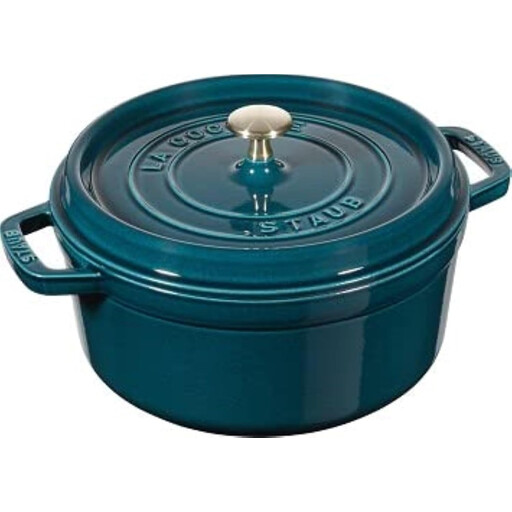
Why it's a great fit: With a 3.8-litre capacity, this cocotte is ideal for households of 2 to 4 people. Its size is versatile enough for a Sunday roast, a hearty goulash, or a rustic loaf of bread. It combines functionality with an appealing design that transitions seamlessly from the hob to the table.
The multi-layer enamel, made in France, is extremely robust. The lid, with its nub structure, ensures continuous basting of the food. The flat base guarantees optimal performance on induction hobs.
Excellent heat retention and distribution. The lid's self-basting system ensures succulent results. Suitable for all hob types and oven-safe up to 250°C.
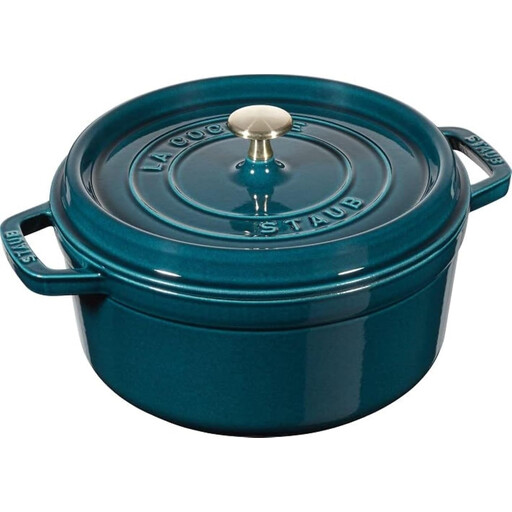
Why it's a great fit: If you regularly cook for many guests or enjoy batch cooking, you need volume. With 6.7 litres, this 28 cm cocotte offers ample space for large roasts, stews for the whole family, or cooking for celebrations.
Despite its size, this model maintains the same quality features: a durable enamel coating, the effective "aroma rain" lid, and a base optimised for induction. The robust construction ensures that nothing gives way, even with a heavy load.
Generous capacity for families and guests. Delivers the same reliable cooking performance as the smaller models on all hob types.
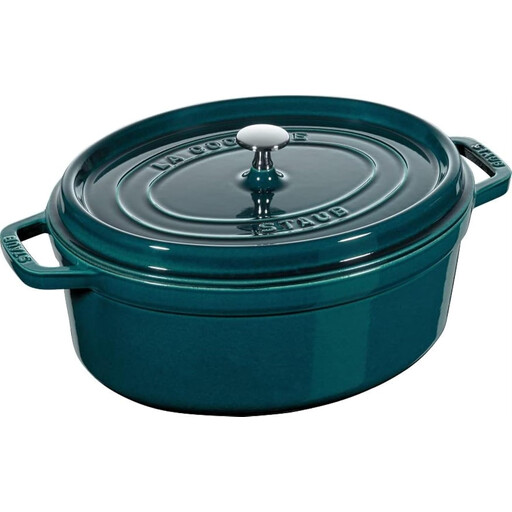
Why it's a great fit: The oval shape is not just a design element; it's highly functional. It's perfect for preparing whole poultry, fish, legs of lamb, or long cuts of meat that are often impractical to place in a round pot.
The oval shape ensures even heat distribution around elongated foods, a common problem with round pots. All other STAUB quality features, such as the enamel and the lid, are naturally included.
Optimised shape for specific dishes like poultry or whole roasts. Offers more flexibility for certain cooking methods than a round pot.
We have compiled a complete, up-to-date list of products that fully meet these strict selection criteria and German safety regulations.
1. Can you really bake bread in the STAUB 24 cm Cocotte? Yes, using a cast iron cocotte for baking bread is a very popular method. The heavy cast iron retains heat extremely well and releases it evenly. The tight-fitting lid traps the steam from the dough. This moist environment inside the pot ensures that the bread's crust remains elastic at the beginning, allowing the bread to rise optimally. The result is often an exceptionally crispy crust and a moist crumb, similar to what you'd get from a professional steam oven. The 24 cm size is ideal for a standard loaf of bread made with about 500-750 g of flour.
2. How do you properly care for an enamelled cast iron cocotte to maximise its lifespan? Proper care is straightforward but important. Avoid extreme temperature shocks, so never place a hot pot under cold water, as this can cause cracks in the enamel. Use utensils made of wood, silicone, or heat-resistant plastic for cooking and stirring to avoid scratching the interior enamel. Although many models are declared dishwasher-safe, hand washing with warm water and a soft sponge is recommended to preserve the enamel's shine long-term. Always dry the pot thoroughly after cleaning before storing it.
3. Does the price of a STAUB Cocotte justify the purchase compared to cheaper alternatives? The price of a STAUB Cocotte reflects objective factors such as the manufacturing location (France), material quality, and specific design features. The multi-layer, durable enamel and the patented lid design are the result of complex production processes. These features contribute to consistent cooking results and a very long product lifespan. With cheaper alternatives, material savings, such as in the thickness of the enamel or the flatness of the base, can lead to a shorter lifespan or uneven cooking results. The decision ultimately depends on your personal requirements for durability and cooking performance.