
Lieferung heute & morgen

Qualitätsgarantie

Willkommens-Angebote freischalten: KOSTENLOSE Lieferung | Bis zu 80 % RABATT | Kostenlose 30-Tage-JoyPlus-Testphase
App herunterladen
A Staub Cocotte can be used for braising, searing, baking and serving. But the name alone won’t guarantee you make the right choice. It’s easy to focus on colour, brand name or supposed extra features, while overlooking important details such as capacity, weight and hob compatibility.
A larger diameter doesn’t necessarily mean more usable capacity. The height, shape of the base and lid design all matter too. For example, a Cocotte with a 24 cm diameter may hold 3.8 l, while another model of a similar diameter may have quite different internal dimensions.
For one or two people, 1.2 to 2.2 l is often enough. Families and households that like to batch-cook should look at models of around 3.5 l or more.
An enamelled cast-iron pot is generally designed for gas, electric, ceramic and induction hobs. But that doesn’t automatically apply to every decorative ceramic Cocotte. Ceramic models may be suitable for the oven, microwave and dishwasher, but product information may state that they shouldn’t be used on a hob or over an open flame.
So if you’re looking for an induction-compatible casserole, check the hob compatibility in the technical specifications rather than relying on the product photos alone.
A dimpled or Chistera structure on the underside of the lid can direct condensation back onto the food. This helps keep food moist as it cooks, but it won’t replace careful temperature control or enough liquid in the recipe. Cast iron and the lid also add considerably to the overall weight.
A cast-iron casserole retains heat and releases it slowly. This makes it well suited to searing, braising and slow cooking. With an enamelled cast-iron pot, the enamel protects the metal from direct contact with acidic ingredients and makes cleaning easier. Unlike bare cast iron, it normally doesn’t need to be seasoned.
However, enamel can still be damaged by knocks, sudden temperature changes and abrasive cleaning products. Metal utensils may scratch the surface, so wooden or silicone tools are a practical choice.
A cast-iron casserole dish is heavier than many aluminium or stainless-steel models. Before buying, check the combined weight of the pot and lid. This is especially important if you’ll regularly move it from the hob to the oven and then carry it to the table.
As a rough guide:
A 24 cm Staub Cocotte with a 3.8 l capacity offers a useful balance between footprint and volume. With very large models, also check that the pot sits securely on your induction hob and fits in your oven.
A lidded casserole dish keeps steam inside while food cooks. The lids on some of the Staub models mentioned here are described as having a dimpled underside. The maximum temperature can vary depending on the model and lid knob; product information, for example, may specify limits of 240 °C, 250 °C or 260 °C.
If you’re choosing an oven-safe Cocotte, bear the following in mind:
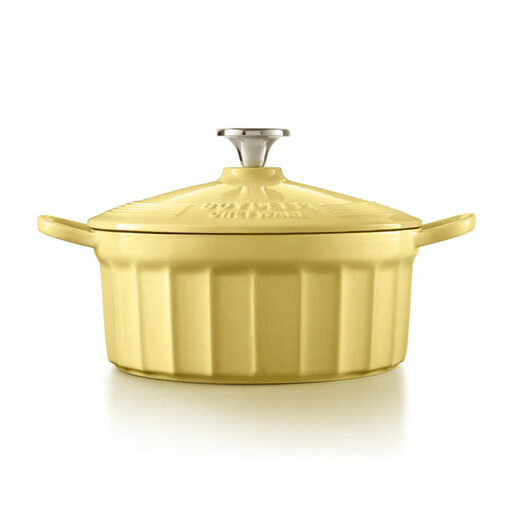
Why this product suits this type of user: With a capacity of 2.9 l, this enamelled cast-iron pot is well suited to smaller households and everyday braising. According to the product information, it can be used on induction, gas, electric, halogen and ceramic hobs, as well as in the oven.
The technical specifications clearly state the capacity, compatible hob types and dishwasher suitability. That makes it easier to assess whether it’s right for you before buying.
2.9 l capacity, heat-retaining cast iron and a close-fitting lid with a stainless-steel knob.
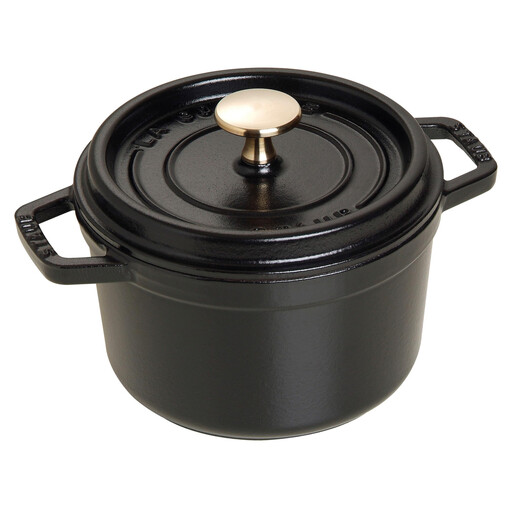
Why this product suits this type of user: According to the product information, this compact Cocotte is made from enamelled cast iron, suitable for all hob types including induction, and oven-safe up to 250 °C.
Its compact size helps you avoid buying an unnecessarily large, heavy pot for individual portions. The lid is described as having a dimpled underside.
1.2 l capacity, matt black enamel interior, and suitable for use on the hob and in the oven.
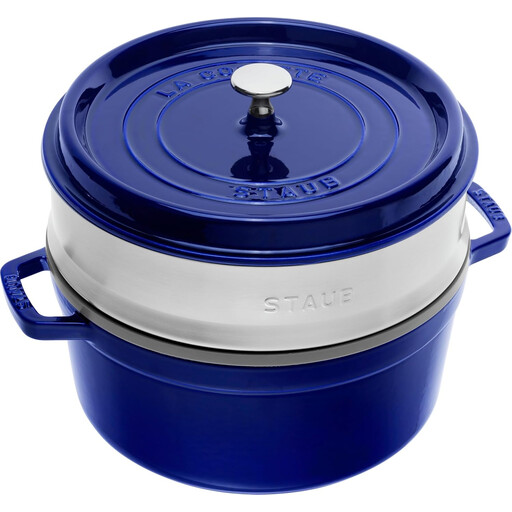
Why this product suits this type of user: According to the product information, its generous capacity is designed for around four to six portions. The additional stainless-steel steamer insert lets you steam as well as braise and roast.
Its purpose is clear: this isn’t just a large pot, but one that includes a specific accessory for another cooking method.
5.2 l capacity, stainless-steel steamer insert and suitable for all hob types, including induction.
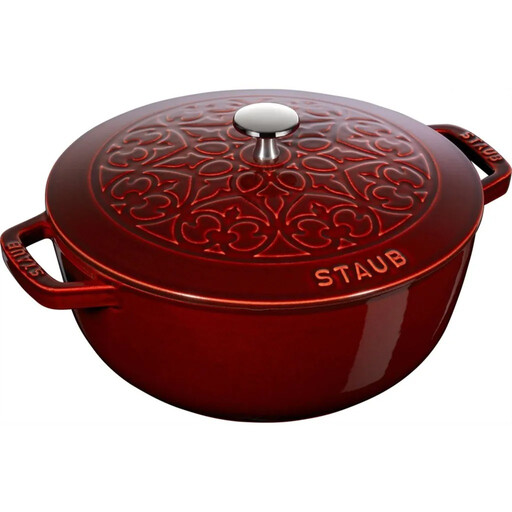
Why this product suits this type of user: The floral lily design and Grenadine colour make this French cast-iron casserole an appealing choice if you’d like to take it straight from the oven to the table.
The design isn’t its only appeal: according to the product information, it’s suitable for induction and oven use, and has a lid with a Chistera dimpled structure.
5 l capacity, stainless-steel knob, and suitable for all hob types including induction, as well as oven use.
We’ve put together a complete, regularly updated list of products that meet these strict selection criteria and fully comply with the safety regulations in force in the EU.
Models between 2.2 and 2.6 l are often a practical choice for two people. If you regularly want to keep leftovers or cook larger braises, you could choose a Staub Cocotte with a capacity of around 3.8 l. A 1.2-l model is often enough for individual portions or side dishes.
Yes, as long as the manufacturer explicitly states that it’s suitable for induction. According to the product information, the enamelled cast-iron models mentioned here are suitable for induction hobs. Ceramic Cocottes are different: they may be oven-safe, but that doesn’t automatically mean they can be used on a hob.
Let the casserole cool first, then clean it with warm water, mild washing-up liquid and a soft sponge. Avoid sudden temperature changes, metal utensils and abrasive cleaning products. Even if some models are listed as dishwasher-safe, hand-washing can help protect the enamel and decorative finishes over time.