A perfectly cooked steak deserves an equally perfect tool. But the search for the right steak knife set can quickly become overwhelming. Many products overpromise and underdeliver, leading to disappointment at the dinner table. As your Joybuy Product Recommendation Officer, I'm here to help you navigate the common pitfalls and make an informed decision. We'll focus on the facts that truly matter.
The 3 Most Common Pitfalls When Buying Steak Knives
Before we dive into the features of a good knife, let's highlight the three most common issues that can lead to a bad purchase.
- The "Stainless" Myth: The "stainless" label is not a guarantee of longevity. Cheaper stainless steel can be susceptible to surface rust and stains, especially after just a few wash cycles. The quality of the steel is what determines its corrosion resistance and edge retention.
- The Misunderstood Serrated Edge: A steak knife with a serrated edge is often marketed as a low-maintenance solution that never loses its sharpness. This is only half the truth. While the serrations maintain a perceived sharpness for longer, they tend to tear fine meat fibres rather than slicing them cleanly. Furthermore, resharpening them at home is nearly impossible.
- Neglected Handle Construction: A loose or cracked handle is not just an aesthetic issue, but also a hygienic one. Gaps between the blade and handle can trap bacteria. Cheap plastic handles can become brittle, and poorly crafted wooden handles can swell in the dishwasher.
What Really Matters: The Core Parameters for Your Steak Cutlery
To avoid these pitfalls, you should carefully examine three technical aspects. These determine the performance and lifespan of your new steak knife set.
1. Blade Material: The Foundation of a Sharp Steak Knife
The blade is the heart of any knife. Pay close attention to the specific details about the material.
- 18/10 Stainless Steel (Crominox/Cromargan): This alloy consists of 18% chromium and 10% nickel. The high chromium content provides excellent corrosion resistance, while nickel increases acid resistance and gives the steel a fine lustre.
- Forged Blade Steel: Knives forged from a single piece of steel generally offer superior stability and better balance. This process densifies the steel's structure, resulting in longer-lasting sharpness.
2. The Blade Grind: Serrated vs. Straight Edge
The choice of grind depends on your personal preferences and primary use case.
- Serrated Edge: Ideal for meat with a crispy crust or even as a pizza knife. The teeth grip immediately and cut effortlessly through firm surfaces. Edge retention is high, but the cut can slightly roughen the meat fibres.
- Straight Edge (Plain Blade): Allows for an extremely clean, smooth cut that preserves the meat fibres and keeps the juices in the meat. Sharp steak knives with a straight edge need to be resharpened more regularly but reward you with surgical precision.
3. Handle Material and Ergonomics
The handle determines both comfort and hygiene.
- Material: High-quality plastic like polypropylene (PP) is robust, hygienic, and often dishwasher-safe. Wooden handles offer a classic aesthetic but require hand washing. Stainless steel handles are extremely durable and hygienic but can be slippery when wet.
- Craftsmanship: A seamless transition between the blade and handle (bolster) prevents food residue from getting trapped. Look for an ergonomic shape that fits well and securely in your hand.
Our Selection: Recommendations for Different Needs
Here are some products that represent a considered choice for different user profiles, based on objective features.
SUITABLE FOR: VALUE-SEEKERS
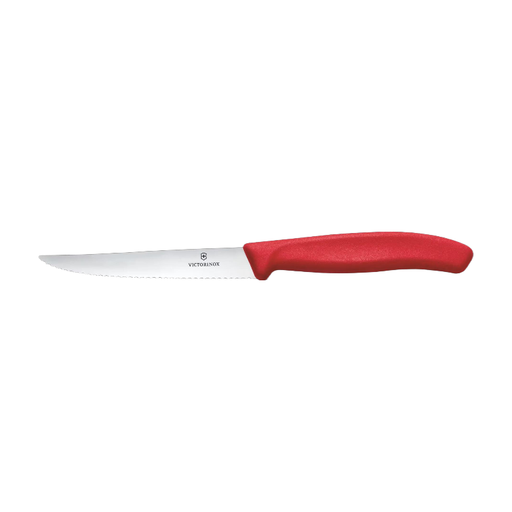
Why this product is a great fit: Ideal for anyone seeking proven Swiss quality at a very accessible price. It's not just a steak knife but also an excellent pizza knife, making it a versatile everyday tool.
How It Avoids the Pitfalls
The handle is made of durable polypropylene that won't become brittle. The stainless steel blade from Victorinox is renowned for its longevity, and the precise serrated edge stays sharp for a long time.
Key Advantage
Excellent value for money. Dishwasher-safe for easy cleaning.
SUITABLE FOR: QUALITY-CONSCIOUS HOSTS
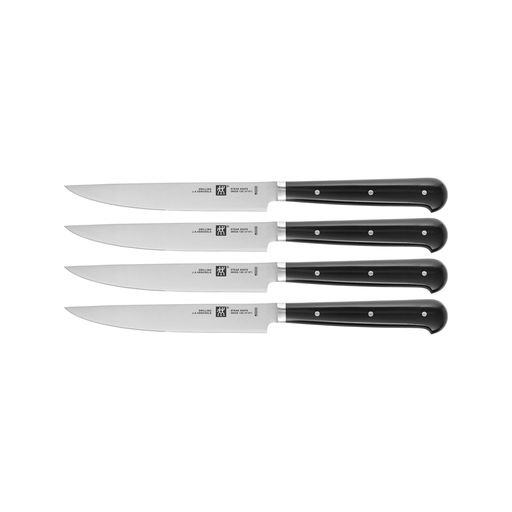
Why this product is a great fit: For those who value both style and function at dinner parties. The classic design with a three-rivet handle and the renowned Zwilling brand make this set an elegant addition to any table setting.
How It Avoids the Pitfalls
The blade is crafted from a special corrosion-resistant steel that combines flexibility with edge retention. The robust handle construction with integrated rivets is designed for durability.
Key Advantage
Elegant, timeless design combined with high cutting power from the serrated edge. A statement piece for quality-conscious connoisseurs.
SUITABLE FOR: EVERYDAY ENTHUSIASTS
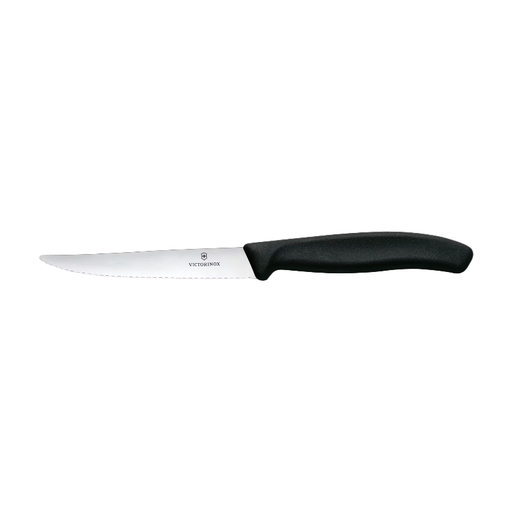
Why this product is a great fit: This 6-piece steak knife set is the pragmatic solution for families and anyone who regularly enjoys steak or pizza. It's functional, extremely low-maintenance, and designed for daily use.
How It Avoids the Pitfalls
The ergonomic PP handles are hygienic and completely dishwasher-safe, unlike poorly sealed wood or cheap plastic handles. The proven serrated edge from Victorinox is designed for long-lasting performance.
Key Advantage
A complete household set that is dishwasher-safe and impresses with its versatility as both a steak and pizza knife.
Looking for more options?
We have compiled a complete, up-to-date list of products that fully meet these strict selection criteria and safety regulations.
Frequently Asked Questions (FAQ)
1. Are steak knives with a serrated or straight edge better?
There is no one-size-fits-all answer; it depends on your priorities.
- Serrated Edge: Stays sharp longer, ideal for crispy surfaces, but can tear fine fibres.
- Straight Edge: Allows for a very clean cut that is gentle on the meat but needs to be sharpened more often. Often the preferred choice for meat purists.
2. Can all steak knives go in the dishwasher?
No. Dishwasher suitability (dishwasher-safe) depends on the material. Knives with handles made of high-quality plastic (PP) or solid metal are usually fine. Knives with wooden or riveted handles, where water can seep in, should always be hand-washed to preserve the material's lifespan. Always follow the manufacturer's instructions.
3. How can I identify a high-quality steak knife?
Look for a combination of three factors:
- Material: A precise specification of the blade steel (e.g., forged special blade steel, 18/10 stainless steel).
- Craftsmanship: A seamless, clean transition from blade to handle and a solid, gap-free handle attachment.
- Balance: The knife should feel well-balanced in your hand, allowing for comfortable, fatigue-free handling.