
Lieferung heute & morgen

Qualitätsgarantie

Willkommens-Angebote freischalten: KOSTENLOSE Lieferung | Bis zu 80 % RABATT | Kostenlose 30-Tage-JoyPlus-Testphase
App herunterladen
A perfectly cooked steak deserves more than an ordinary dinner knife. Yet, the search for the right steak cutlery can quickly become overwhelming. Between grandiose marketing promises and a vast selection of materials and blade types, several pitfalls can diminish your dining experience and lead to a poor investment. As your Joybuy Product Recommendation Officer, I'll help you identify the crucial features to make an informed choice.
Before we dive into quality characteristics, let's highlight the typical problems that can arise with budget-friendly or inadequately described products.
To avoid these pitfalls, focus on three objective criteria. These will help you separate the wheat from the chaff and find the perfect steak knife set for your needs.
The heart of any knife is its blade. Two aspects are critical here:
The choice between a straight edge and a serrated edge is a matter of personal preference and maintenance effort.
The handle determines how well the knife fits in your hand and how secure it is to use.
Instead of making a one-size-fits-all recommendation, we have selected products that suit different user profiles and meet the quality criteria mentioned.
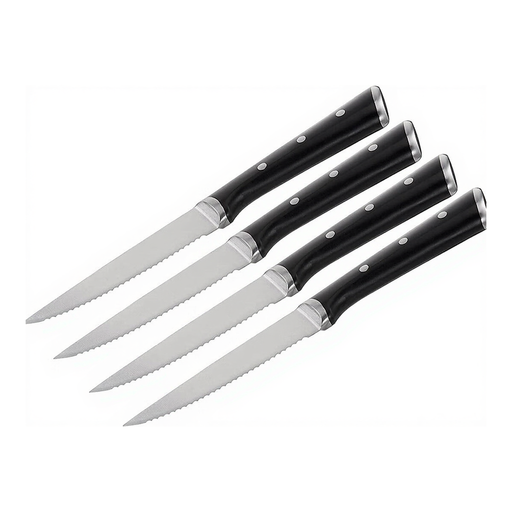
Why it's a good fit: This set offers a solid entry point for households looking for a functional and low-maintenance steak knife set. As a 4-piece set, it's ideal for families or couples who occasionally enjoy steak and value a well-known brand with a good price-performance ratio.
The stainless steel used and the craftsmanship from an established brand like Tefal offer greater resistance to rust than no-name products. The ergonomic handle ensures balanced handling.
According to the manufacturer, the Ice Force technology (blade is cooled to -120°C after heating) ensures greater durability. The set is also dishwasher-safe.
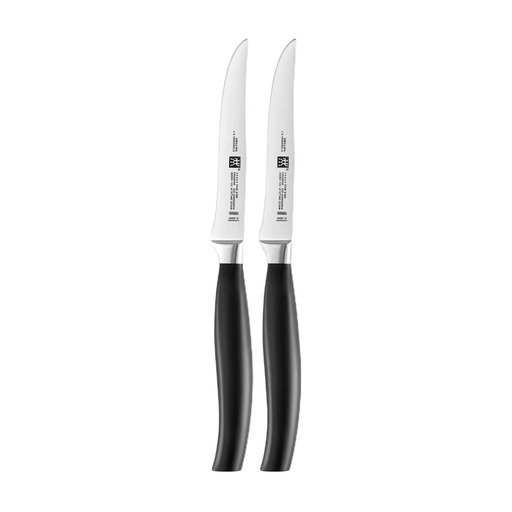
Why it's a good fit: For those who value the highest quality, durability, and an excellent feel. This Zwilling steak cutlery from Solingen is an investment in cutting culture, ideal for discerning steak lovers and as a high-quality gift.
The precision-forged blade, made from a single piece of special formula steel, is extremely robust and corrosion-resistant. The seamless transition to the ergonomic handle prevents dirt buildup and ensures perfect balance.
SIGMAFORGE blade for high edge retention and flexibility. The finger guard (bolster) provides additional safety during use. Made in Germany.
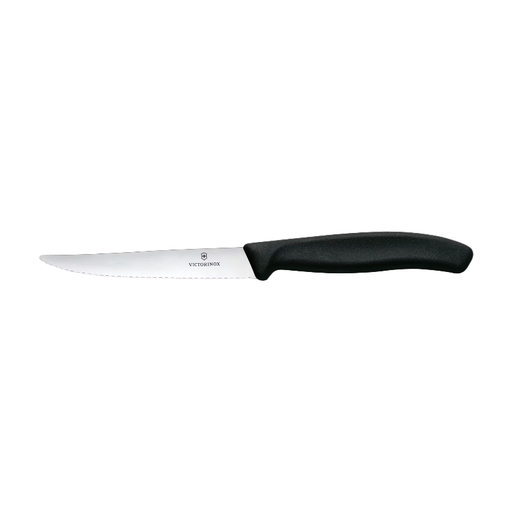
Why it's a good fit: The perfect choice for families and anyone looking for an extremely versatile, durable, and low-maintenance knife set for daily use. It cuts not only steak but also pizza, bread rolls, or vegetables with ease.
The precise Swiss serrated edge from Victorinox cuts cleanly without tearing the meat—a clear difference from cheap saw-toothed knives. The robust plastic handle is hygienic and dishwasher-safe.
Extremely long-lasting sharpness thanks to the proven serrated edge. Versatile and dishwasher-safe. Made in Switzerland.
The steak experience begins with preparation. A high-quality cast iron steak grill pan ensures even heat distribution and characteristic grill marks. Tools like a meat tenderizer can help achieve a more tender texture with certain cuts of meat, while a special steak seasoning completes the flavour profile.
We have compiled a complete, up-to-date list of products that fully meet these strict selection criteria and German safety regulations.
1. Which steel is best for a steak knife? A good standard for durability and rust resistance is 18/10 stainless steel. For even higher edge retention and robustness, forged blade steel, as used by German manufacturers like Zwilling, is an excellent choice.
2. Straight edge or serrated edge for steak knives – which is better? Both have their merits. A straight edge offers the cleanest cut but must be sharpened regularly. A high-quality serrated edge (e.g., from Victorinox) stays sharp for a very long time and is low-maintenance, making it ideal for everyday use. However, avoid coarse, low-quality serrations that tear the meat.
3. How do I properly care for my steak cutlery? Always check the manufacturer's instructions. Many modern sets with plastic handles are dishwasher-safe. However, to preserve the sharpness of the blades long-term and prevent surface rust, it is often advisable to remove the knives immediately after the wash cycle and dry them. High-quality knives with wooden handles should always be washed by hand only.