
Lieferung heute & morgen

Qualitätsgarantie

Willkommens-Angebote freischalten: KOSTENLOSE Lieferung | Bis zu 80 % RABATT | Kostenlose 30-Tage-JoyPlus-Testphase
App herunterladen
As your Joybuy Product Recommendation Officer, I see the vast number of options on the home appliance market every day. A steam cleaner promises a deep, hygienic, chemical-free clean—an attractive proposition, especially for families, pet owners, and allergy sufferers. However, not every device lives up to its advertising. Before you make a decision, it's crucial to know the most common pitfalls that can lead to unsatisfactory results or even a regrettable purchase.
Choosing the wrong device often leads to frustration: floors are left too wet, stubborn dirt is merely smeared around, or the appliance becomes useless after a short time due to limescale buildup. Let's focus on the facts that truly matter.
Marketing terms can be confusing. Many devices boast impressive numbers, but in practice, other features are often more decisive. Here are three typical problems to watch out for:
To avoid these traps, you should concentrate on three core technical aspects. These determine whether a steam cleaner for hard floors or other surfaces is suitable for your needs.
These three factors work as a unit. The heating power in watts indicates how quickly the device is ready for use. A temperature of over 100°C (212°F) is necessary to clean hygienically without chemicals, as it's at this heat that most bacteria and germs are effectively killed.
There are two main types of devices:
A detachable water tank is a significant convenience upgrade. You can easily fill it under the tap while the device stays in place. The capacity, usually specified in millilitres (ml), determines the continuous operating time. A tank with 350–500 ml is typically sufficient for 15–25 minutes of cleaning, which is adequate for most standard rooms.
The microfiber cleaning pads are the direct point of contact with the dirt. Ensure they are densely woven, absorbent, and machine-washable. A good pad picks up the loosened dirt instead of just spreading it around. For accessories like grout brushes or jet nozzles, material quality is crucial. Robust plastic and sturdy bristles are a must if, for example, you want to be cleaning tiles with steam and thoroughly clean the grout lines at the same time.
Based on these objective criteria, we have identified several models that represent a considered choice for different user profiles and their specific requirements.
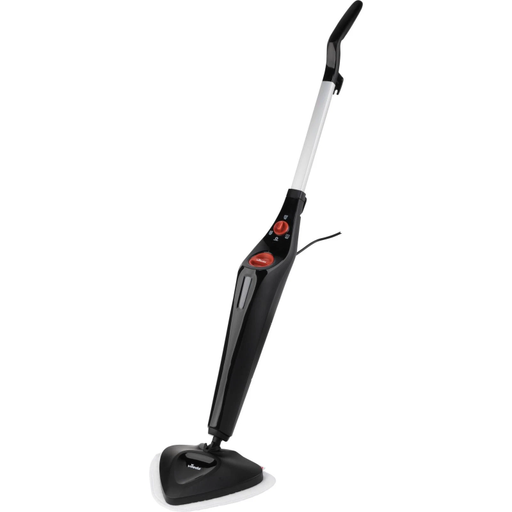
Why This Fits Their Persona: Ideal for households looking for a straightforward and reliable solution for the regular cleaning of hard floors and tiles. The device focuses on its core function and is ready to use quickly.
The device forgoes superfluous accessories, focusing on efficient floor cleaning. It thus avoids the trap of impractical accessories (Trap 2).
Fast heat-up time and easy handling. The included carpet glider also allows for refreshing carpets.
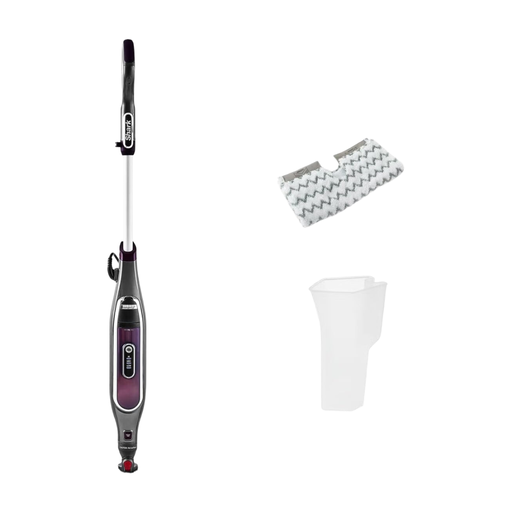
Why This Fits Their Persona: Perfect for households with pets or large, high-traffic areas. Its intelligent features are designed for efficiency and deep cleaning to tackle even the most stubborn messes.
The intelligent steam control adjusts the steam output, disproving the myth that only maximum power matters (Trap 1). The reversible mop head is a genuine practical feature, not a gimmick (Trap 2).
Double-sided cleaning pad (Klik n’ Flip) for twice the cleaning area per pad. A targeted Steam Blaster function loosens stuck-on dirt.
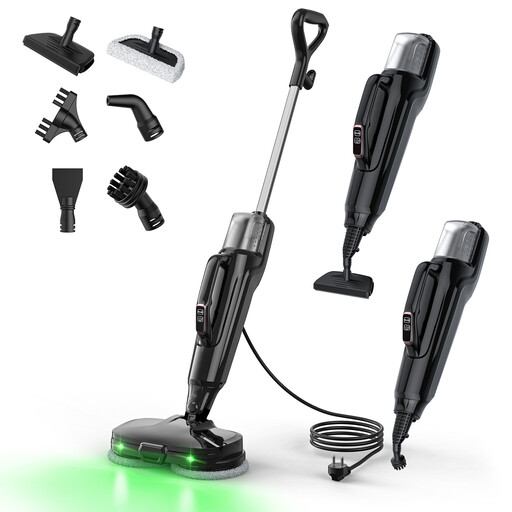
Why This Fits Their Persona: For users seeking a versatile device for the entire household. The combination of floor cleaner, polisher, and detachable handheld unit covers nearly every application.
The detachable handheld steamer is robust and versatile, making the accessories genuinely useful (Trap 2). The large, removable 500 ml tank solves the problem of cumbersome refilling (Trap 3).
A true 6-in-1 steam mop system with rotating pads that clean and polish simultaneously. The LED lighting helps to spot dirt in dark corners.
We have compiled a complete, up-to-date list of products that fully meet these strict selection criteria and German safety regulations.
1. Can I use a steam cleaner on laminate and parquet flooring? Yes, it can be used on only on sealed hard floors like laminate and parquet. Select the lowest steam setting and keep the device in constant motion. Do not linger in one spot for too long to prevent moisture from seeping into joints or cracks and causing the material to swell. A steam cleaner should not be used on unsealed or oiled wooden floors.
2. How often do I need to change or wash the steam cleaner's pads? For a perfectly hygienic result, it is recommended to use a clean pad for each cleaning session, or at least for each room. Most microfiber pads are machine-washable. Wash them after each use at the temperature recommended by the manufacturer. Avoid using fabric softener, as it can impair the absorbency of the fibers.
3. What kind of water should I use for my steam cleaner? Many manufacturers advise using distilled or demineralised water. This is especially true in regions with hard, lime-rich tap water. Using distilled water prevents limescale deposits inside the device, which can clog the nozzles and shorten its lifespan. In any case, check the specific recommendations in your model's user manual.