
Lieferung heute & morgen

Qualitätsgarantie

Willkommens-Angebote freischalten: KOSTENLOSE Lieferung | Bis zu 80 % RABATT | Kostenlose 30-Tage-JoyPlus-Testphase
App herunterladen
A steam cleaner can handle several cleaning tasks around the home: from sealed hard floors to tiles and grout, glass surfaces, upholstery or car seats. To make sure your purchase is genuinely practical for everyday use, however, you shouldn't just focus on wattage and the number of accessories. What really matters are the right technical specifications, safe usage, and a realistic assessment of each surface.
A high power rating, such as 1,500 or 2,000 watts, simply describes the appliance's energy consumption. On its own, it doesn't tell you how well the steam reaches the nozzle or how comfortable the appliance is to use. You should also consider steam pressure, heat-up time, steam control and nozzle shape.
For grout, corners and kitchen residue, a concentrated jet nozzle is useful. For floors, on the other hand, you need a suitable floor head that distributes the steam and holds the cloth securely in place.
"Steam cleaner with accessories" sounds versatile at first. But the number of attachments is only relevant if the included components match your intended use. For a steam cleaner for windows, for example, a squeegee is more important than several small brushes. With a steam cleaner for upholstery, a suitable textile attachment and controlled steam delivery are key.
Check before you buy:
A chemical-free steam cleaner can help remove everyday dirt with hot steam. However, that doesn't automatically make it suitable for all materials. Unsealed wood, delicate varnishes, some plastics, waxed surfaces and heat-sensitive textiles can be damaged by moisture or temperature.
Before using it over a large area, do a patch test in an inconspicuous spot. For laminate, parquet, natural stone or coated worktops, always follow the manufacturer's care instructions.
Steam pressure is usually given in bar. Appliances with up to 4 bar can direct steam precisely onto grout, fittings or hard-to-reach areas. However, a higher value alone doesn't guarantee a suitable result. For delicate materials, adjustable or metered steam output is often more important than maximum pressure.
Temperature specifications should also be considered in relation to the task. Very hot steam can loosen residue, but requires a greater safety distance and extra care with textiles, plastic parts and painted surfaces.
A steam cleaner with a large water tank reduces interruptions when cleaning larger areas. A 1.5-litre tank, for example, can be practical for longer sessions. However, the actual running time depends on the steam output, heating system and operating mode. Figures like "up to 45 minutes" should be understood as a maximum and may be lower during intensive use.
For small bathrooms or individual windows, a compact tank is often sufficient. If you regularly want to clean floors, the kitchen and bathroom one after the other, a larger capacity is more beneficial.
A classic steam cleaner loosens dirt with steam. The loosened water and dirt then usually need to be wiped up with a cloth. A steam vacuum cleaner, on the other hand, combines steam, a brushing function and suction, depending on the model. This can be advantageous for upholstery, carpets or car seats, but brings additional tanks, filters and cleaning steps.
Pay particular attention to:
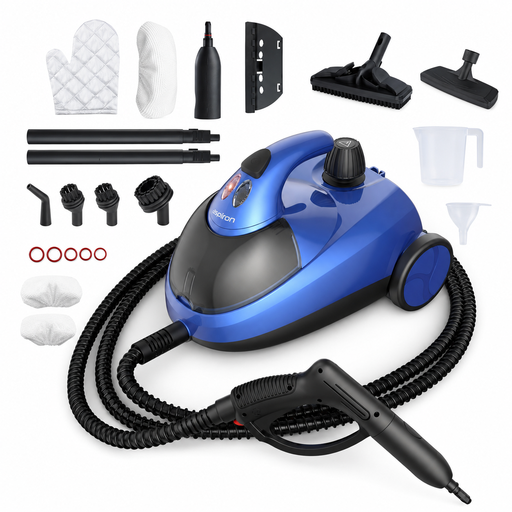
Why this product fits the profile: This model combines 2,000 watts, up to 4 bar steam pressure, a 1.5-litre water tank and a 13-piece accessory set for various areas around the home.
The larger tank and various attachments reduce the need for frequent refilling and mean you don't need a separate appliance for each task.
1.5-litre tank, up to 45 minutes of steam according to the product specification, plus accessories for floors, grout, glass and selected textiles.
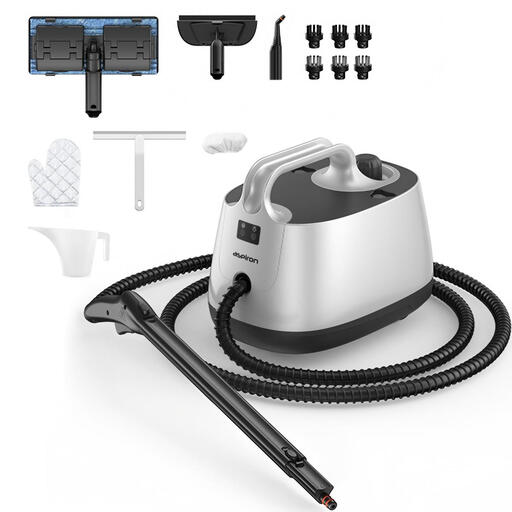
Why this product fits the profile: The 21 accessories and the stated steam pressure of up to 4 bar appeal to users looking for a wide range of applications for floors, windows, grout, upholstery, carpets and the car.
The equipment isn't just designed for floors. Different tools allow you to choose the right attachment more precisely for each surface.
21 accessories, 1.5-litre water tank and steam up to 145 °C according to the product description.

Why this product fits the profile: This appliance combines spraying, brushing, steam and suction, making it designed for carpets, sofas, car seats, beds and chairs.
The suction collects loosened water in a separate tank. This means the concept is designed for textile spot cleaning, not just hard floors.
1.6-litre fresh water tank, 0.95-litre dirty water tank, overflow signal and 1,650-watt motor according to the product description.
Before using a steam cleaner, remove loose crumbs and dust. Only use water as specified in the instruction manual and do not refill the tank while the appliance is in operation. Never direct the steam jet at people, animals, plug sockets or electrical appliances.
With a steam cleaner for floors, the cloth and steam level should match the floor type. A steam cleaner for tiles and grout can be used with a small brush or jet nozzle. For a steam cleaner for windows, a squeegee is recommended so that less residual moisture remains on the glass surface. Textiles and carpets should first be tested in a hidden area.
We've put together a complete, regularly updated list of products that fully meet these strict selection criteria and the safety regulations in force in the EU.
Only if the floor is sealed and approved for steam cleaning by the manufacturer. Use a low steam level, work quickly and avoid standing moisture. The care instructions from your floor manufacturer take priority.
Electricity consumption depends on the power rating and the actual running time. An appliance with 2,000 watts theoretically uses 2 kWh per hour of operation at full power. The actual cost depends on your electricity tariff and the actual heating and steaming time. You'll also need tap water or suitable water as per the instructions.
The lifespan depends on how often you use it, descaling, water quality and maintenance. Allow the appliance, cloths, brushes and filters to dry completely after use. Empty the tank once the appliance has cooled down and been disconnected from the mains, and follow the manufacturer's maintenance instructions.