
Lieferung heute & morgen

Qualitätsgarantie

Willkommens-Angebote freischalten: KOSTENLOSE Lieferung | Bis zu 80 % RABATT | Kostenlose 30-Tage-JoyPlus-Testphase
App herunterladen
A steam cleaner can clean floors, tiles, grout, windows and kitchen surfaces using hot water vapour. However, not every appliance is right for every household. If you only look at wattage or the number of accessories, you can easily overlook important limitations such as tank size, surface compatibility and ease of use.
A high power rating initially only describes the electrical consumption or heating output. On its own, it doesn't tell you how consistently the steam is released or how well the appliance handles. Steam pressure, steam volume, heat-up time and nozzle shape all affect practical use.
A multi-purpose steam cleaner with lots of attachments can be versatile. However, for large floor areas, a steam mop is usually easier to manoeuvre. A handheld steam cleaner, on the other hand, is better suited to taps, grout, window frames or small kitchen areas. So check whether the accessories actually match your most frequent cleaning tasks.
Steam can loosen residue, but it is very hot. Unsealed wood, sensitive plastics, natural fibres or cold glass can be damaged by moisture and heat. Before using it over a large area for the first time, test the surface in an inconspicuous spot. With tiles and grout, it's also important not to direct the steam at one spot for too long.
For occasional use, compact appliances with a short heat-up time are often sufficient. According to the product details, the ROUNY model reaches operating readiness in around 25 seconds and offers two steam levels. The Monsga steam cleaner claims a heat-up time of 15 seconds, a power output of 1500 watts and up to 3.5 bar of pressure.
However, pressure figures only make sense when considered alongside steam volume. A lower setting can be more practical for light soiling or more delicate, suitable surfaces. A higher setting helps to loosen grease and dried-on residue on approved materials.
A small tank makes the appliance lighter, but requires more frequent refilling. A steam cleaner with a large water tank is useful for several rooms if you want longer working intervals. According to the product description, the ASPIRON AS-CA042 has a 1.5-litre tank and a stated steam time of up to 45 minutes. Monsga quotes 1.6 litres and up to 48 minutes.
The actual run time depends on the steam level selected. For a small flat, a tank of 250 to 400 millilitres may be enough. For a large household or a thorough clean of floors, bathroom and kitchen, a larger tank reduces interruptions.
Look for clear manufacturer information about materials:
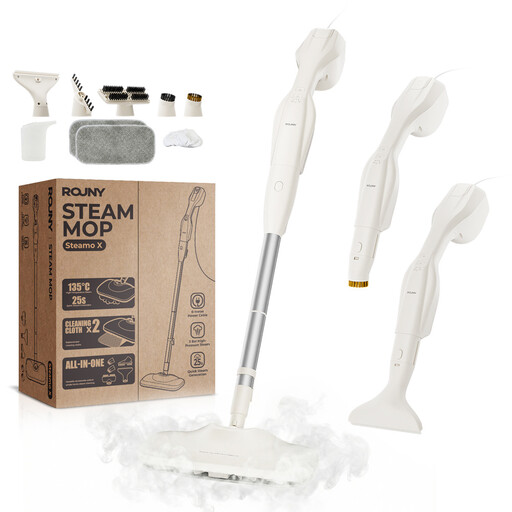
Why this product suits the profile: This appliance combines a steam mop and handheld steam cleaner in one design, making it suitable for smaller to medium daily cleaning tasks.
The specifications mention a heat-up time of around 25 seconds, two steam levels and five attachments for different areas.
2-in-1 design, 6-metre cable, 250-millilitre tank and attachments for floors, windows, walls and kitchen surfaces.
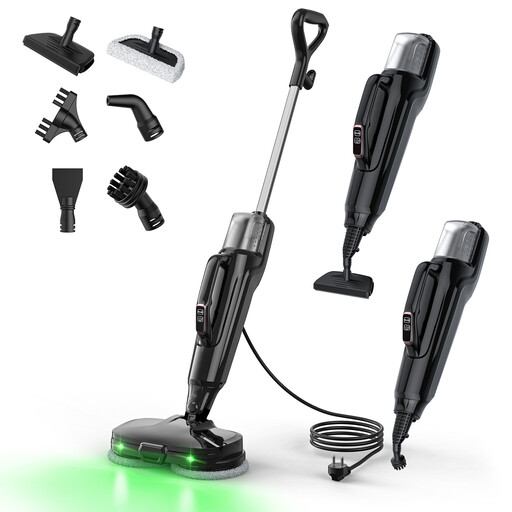
Why this product suits the profile: The combination of floor cleaning, detachable hand unit and rotating microfibre pads is aimed at households with various sealed surfaces.
The detachable design prevents you from having to rely solely on a large floor attachment for detail work.
1580 watts, 500-millilitre tank, 6-in-1 system and rotating pads with a stated speed of 140 revolutions per minute.
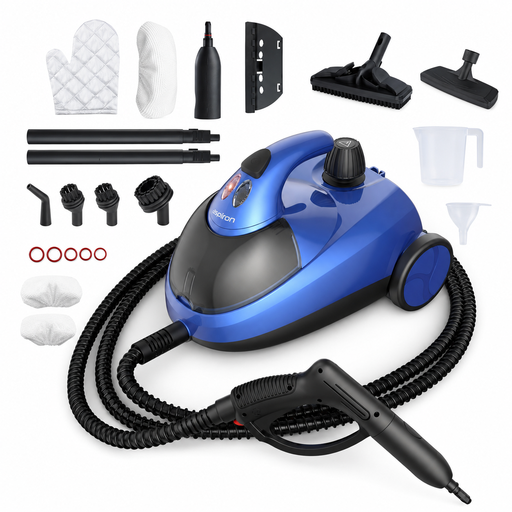
Why this product suits the profile: If you clean many rooms and different surfaces, you'll benefit from a large tank volume and extensive accessories.
The equipment isn't limited to floors: according to the product description, tools for glass, grout, detail areas and selected textiles are included.
2000 watts, up to 4 bar, 1.5-litre water tank and 13-piece accessory set according to the supplier's information.

Why this product suits the profile: This model is designed for longer cleaning sessions and offers multiple settings for different tasks.
The six steam levels allow you to adjust to the task at hand, while the 1.6-litre tank can reduce the need for frequent refilling.
Stated heat-up time of 15 seconds, 3.5 bar pressure, 1.6-litre tank and ten accessories.
We've put together a complete, regularly updated list of products that fully meet these strict selection criteria and the safety regulations in force in the EU.
Always use only water, unless the instruction manual states otherwise. Descaling may be required depending on the model; however, do not add cleaning agents, fragrances or alcohol to the tank unless expressly permitted. After use, allow the tank and attachments to cool down, then empty and dry them.
The ongoing costs mainly consist of electricity, water, replacement pads and possibly descaling. Washable microfibre pads can reduce the consumption of disposable materials. If you have hard tap water, maintenance is particularly important, as limescale can affect the steam pathways.
No. Generally, sealed, moisture-resistant hard floors are suitable. Unsealed wood, sensitive laminate or heat-sensitive coverings should only be treated if the floor manufacturer has approved it.
The service life depends on maintenance, water quality, frequency of use and availability of spare parts. Regular emptying, drying and descaling according to the instructions can help maintain functionality. Damaged cables, seals or nozzles should not be used.
That depends on your usage profile. With frequent use, the reduced need for liquid cleaners and washable pads can offer advantages. However, this must be weighed against electricity consumption, purchase costs and possible maintenance or spare parts costs. The key factor is therefore whether you regularly use the appliance on several suitable surfaces.