
Lieferung heute & morgen

Qualitätsgarantie

Willkommens-Angebote freischalten: KOSTENLOSE Lieferung | Bis zu 80 % RABATT | Kostenlose 30-Tage-JoyPlus-Testphase
App herunterladen
A steam cleaner can clean floors, tiles, grout, kitchen surfaces, windows and selected textiles using hot steam. Before you buy, however, it's worth taking a close look at the technical specifications. High wattage or extensive accessory lists alone don't tell you whether a device is right for your home.
A high power consumption rating simply describes how much electrical energy the device uses. It doesn't automatically indicate how consistently the steam is released or how well you can regulate the steam intensity. For practical use, heat-up time, steam pressure, steam volume and ease of operation are also important.
A small tank can be sufficient for quickly cleaning individual rooms. However, in larger homes it leads to frequent interruptions. Conversely, a large water tank makes the device heavier and can make handling more difficult. What really matters is the balance between tank volume, stated operating time and device size.
A steam cleaner with accessories can be versatile. However, not every accessory will be needed regularly. Check whether a floor nozzle, carpet glider, window nozzle, grout brushes or an extension hose are actually included. It's also important to know whether replacement pads and suitable spare parts are available.
Power is given in watts. Models in the comparison range sit between 1,200 and 2,000 watts, for example. A higher value can support faster steam delivery, but it doesn't replace information about actual steam output.
Steam pressure is usually given in bar. Values of around 2.5 to 4 bar are found on several multi-purpose devices. For grout, fixtures and stubborn deposits, a focused steam output can be helpful. For more delicate surfaces, however, a lower setting makes more sense.
A short heat-up time is practical if you only use the device for brief periods. Manufacturer specifications in the selection range from about 15 to 30 seconds. Bear in mind that condensation can initially collect in the hose. According to the instruction manual, this should first be released into a sink or onto a cloth.
A handheld steam cleaner with around 250 to 500 millilitres is suitable for smaller tasks such as fixtures, window frames or individual kitchen surfaces. A device with a 1.5 to 1.6 litre water tank is designed more for longer sessions. The actual running time depends on the steam level selected and should not be judged by tank size alone.
Only use the water recommended by the manufacturer. For the Monsga model, the manufacturer recommends clean or demineralised water. Cleaning agents, fragrances, alcohol or descalers should not be put in the tank unless the instructions explicitly allow it.
A steam cleaner for floors should only be used on approved, sealed surfaces. Unsealed wood, delicate plastics, natural fibres or painted surfaces can be damaged by heat and moisture. For laminate and parquet, follow the care instructions from the floor manufacturer.
For a steam cleaner for tiles and grout, small brushes and a precision nozzle are useful. A steam cleaner for windows should come with a rubber lip or squeegee. Always test delicate materials on an inconspicuous area first.
Steam and attachments become very hot during use. Unplug the device and let it cool down before refilling or changing accessories. Never direct steam at people, animals, power sockets or electrical appliances.
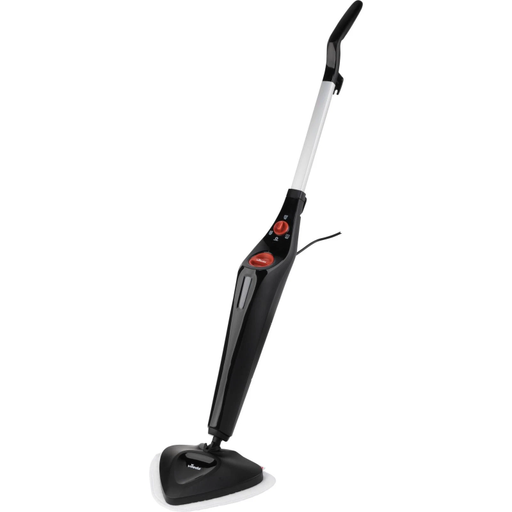
Why this product fits the profile: The compact steam mop is designed for sealed hard floors and tiles, making it ideal for regular cleaning routines on a manageable scale.
The specifications clearly state tank volume, operating time and heat-up time. This makes it easier to assess its suitability than relying on wattage alone.
According to manufacturer specifications: 1,550 watts, 0.4-litre tank, up to 15 minutes operating time, carpet glider and 2.8 kilogram weight.
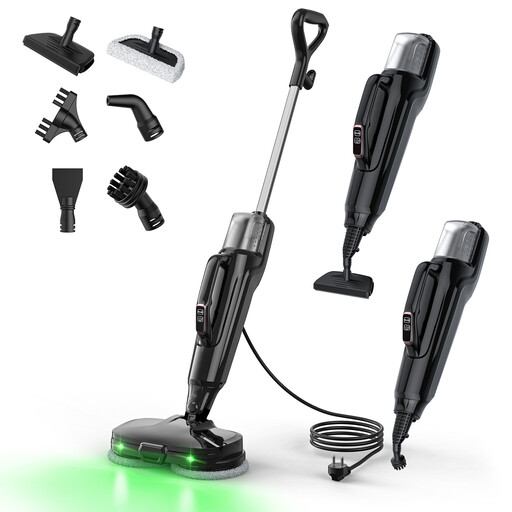
Why this product fits the profile: The combination of steam mop, detachable handheld unit and rotating cleaning pads is aimed at households that want to clean both floors and detailed surfaces with one system.
The 6-in-1 design makes the intended switch between floor cleaning and handheld applications clear. Before buying, check whether the attachments you need are included.
According to manufacturer specifications: 1,580 watts, 500-millilitre tank, dual-motor system with 140 revolutions per minute and integrated lighting.
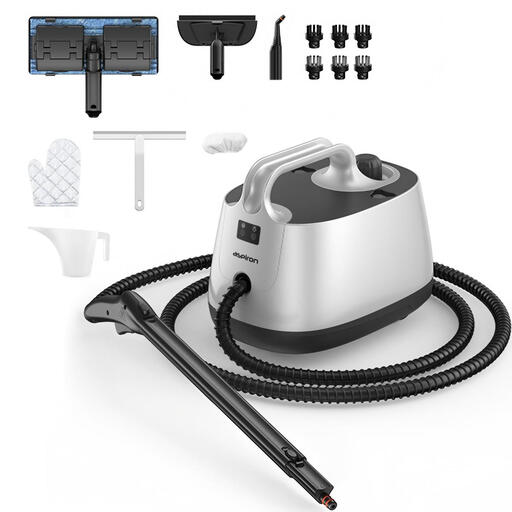
Why this product fits the profile: This multi-purpose device is ideal for households that want to clean not only floors but also windows, grout, upholstery, carpets or car interiors.
The 21 accessories are listed by area of use. Nevertheless, checking the manufacturer's approval for each surface remains essential.
According to manufacturer specifications: 1,500 watts, up to 4 bar, 1.5-litre tank and 21 accessories for various cleaning areas.

Why this product fits the profile: The large tank and adjustable steam level suit longer cleaning sessions in larger households or for regular vehicle care.
The six steam levels help you adjust the intensity to the task. However, you should still test on a hidden area when using on delicate surfaces.
According to manufacturer specifications: 1,500 watts, 3.5 bar, 1.6-litre tank, approximately 15 seconds heat-up time and up to 48 minutes of steam.
We've put together a complete, regularly updated list of products that fully meet these strict selection criteria and the safety regulations in force in the EU.
A steam cleaner without chemicals works with water as standard. This can reduce your use of conventional cleaning products, but it still uses electricity and water. A device with a larger tank needs refilling less often, but requires more energy to heat the water.
For a longer lifespan, three points are important:
With hard tap water, steam performance can decrease. Check your instruction manual to see whether filtered or distilled water is permitted.
No. Generally, only manufacturer-approved, sealed hard floors, tiles and certain carpet surfaces with a suitable glider are suitable. Unsealed wood, delicate coatings and heat-sensitive materials should not be treated with steam.
This depends on the tank size, steam level and duration of use. Compact devices with 250 to 500 millilitres are designed for short tasks. Models with 1.5 litres or more are better suited to longer sessions, but don't necessarily use less water.
Some devices offer special nozzles or squeegees for this purpose. For upholstery and textiles, the material must be explicitly suitable for steam. Test an inconspicuous area first and avoid too much moisture to prevent discolouration or material damage.