
Lieferung heute & morgen

Qualitätsgarantie

Willkommens-Angebote freischalten: KOSTENLOSE Lieferung | Bis zu 80 % RABATT | Kostenlose 30-Tage-JoyPlus-Testphase
App herunterladen
A steam cleaner can help with many cleaning tasks using hot steam – from sealed hard floors and grout to kitchen surfaces. For upholstery, carpets or the car, depending on the design, spray and suction functions may also come into play. The key is not to choose a device based solely on wattage or marketing claims.
The power consumption in watts mainly describes the electricity demand and heating output. On its own, it tells you little about how evenly steam is released, how long the device stays ready for use, or whether the steam can be adjusted. So, also pay attention to heat-up time, steam pressure, steam output and tank capacity.
A classic steam mop is usually designed for hard floors. A handheld steam cleaner with nozzles and brushes is better suited for grout, windows, fixtures and smaller areas. For carpets, sofas and car seats, you often need a device with a dirty water tank and suction power. A steam vacuum cleaner can pick up liquid, but it does not automatically replace a specialised spot cleaner.
Steam can reduce the need for cleaning products in certain situations, but it does not remove every type of dirt without some follow-up work. Furthermore, high temperatures are unsuitable for unsealed wood, delicate plastics, silk, velvet and some coatings. Before buying, check the manufacturer's specifications and test sensitive materials on an inconspicuous area.
Steam pressure is usually given in bar. A higher value can help loosen stubborn dirt, but it is not suitable for every surface. Equally important is the steam output in millilitres per minute. An adjustable steam level is practical when switching between tiles, sealed floors, glass or more delicate surfaces.
For example, the ROUNY STEAMO X is specified with 2.5 to 3 bar, two steam levels and a steam output of 18 and 24 ml/min respectively. The technical specifications should always be cross-referenced with the instruction manual and the intended area of use.
A small tank makes the device more compact, but on larger areas it leads to more frequent interruptions. For a floor steam cleaner, tank capacity and cable length are particularly important. The ROUNY model has a 250 ml water tank, a stated heat-up time of around 25 seconds and a 6 m cable. This may be sufficient for individual rooms; for a whole flat, you will need to refill.
For textile surfaces, separate tanks for fresh and dirty water are useful. The Deerma BY700 S specifies a 1.7-litre fresh water tank, a 1.4-litre dirty water tank, 13 kPa suction power and three cleaning modes: steam, warm water and water at room temperature.
In the UK, you should ensure a suitable power supply of 220–240 V and 50 Hz. Also check whether nozzles, brushes, a window attachment, carpet glider and microfiber pads are included in the delivery or need to be bought separately.
A device for the sofa and car should be as handy as possible and offer suitable small attachments. For regular floor care, on the other hand, a sturdy handle, a manoeuvrable floor head and a sufficiently long cable are important. Steam is not suitable for every material; so information about sealed floors, glass and textiles should be part of your buying decision.
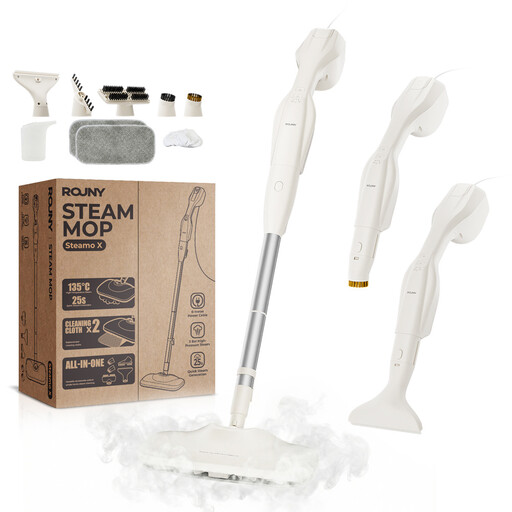
Why this product suits the profile: The 2-in-1 concept combines a floor attachment with a detachable handheld steam unit. This allows you to clean sealed floors and smaller areas in the kitchen, bathroom or on windows with one device.
Two steam levels allow adjustment for light and heavier soiling. The 6 m cable reduces the need to change sockets frequently, although the 250 ml tank limits the operating time.
Heat-up time according to the product specification is around 25 seconds; 2.5–3 bar steam pressure and several attachments for floors, windows and kitchen surfaces.
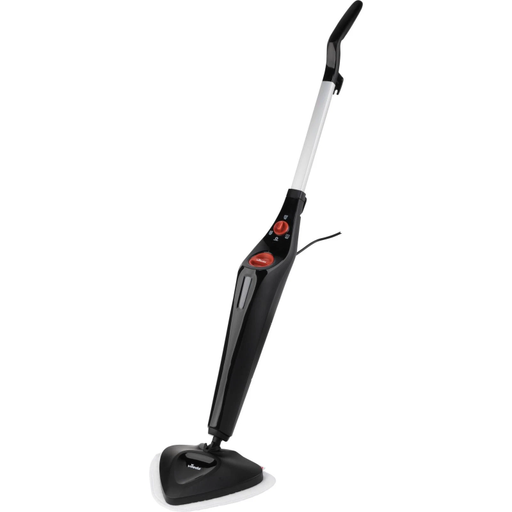
Why this product suits the profile: This device is designed for hard floors and tiles and is described as coming with a carpet glider and adapter. It is suitable for households looking for a clearly defined floor solution rather than many specialist attachments.
The intended area of use is clearly stated. According to the product information, the device is not intended for unsealed wood and delicate surfaces.
1550 W power, 0.4-litre tank, approximately 15 minutes stated operating time and a weight of 2.8 kg.
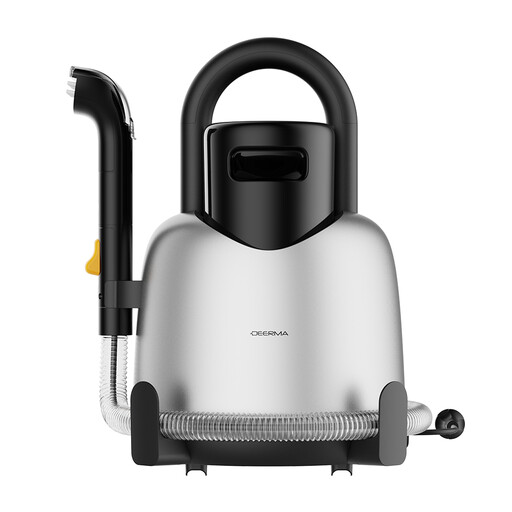
Why this product suits the profile: For sofas, carpets, mattresses, car seats and individual stains, a spot cleaner with spray, wash and suction functions is more practical than a pure steam mop.
The separate water tanks and the stated suction power make textile wet cleaning more comprehensible than with a steam device that cannot pick up liquid.
1700 W rated power, 1.7-litre fresh water tank, 1.4-litre dirty water tank and five brush attachments according to the product description.

Why this product suits the profile: The 1.6-litre tank and six steam levels are interesting for users who regularly clean several rooms, kitchen areas or vehicle interiors.
The steam intensity can be adjusted according to the specifications, rather than treating every surface with a fixed setting. Delicate materials must still be checked beforehand.
Stated heat-up time of 15 seconds, 3.5 bar steam pressure, 1.6-litre tank and accessories for various surfaces.
We have put together a complete, regularly updated list of products that fully meet these strict selection criteria and the safety regulations in force in the EU.
Always use only the type of water specified by the manufacturer. With hard tap water, regular descaling may be necessary if the instruction manual recommends it. Cleaning agents, fragrances, alcohol or other additives should not be put in the tank unless they are expressly permitted.
Before use, you should:
Electricity costs depend on power, usage time and your tariff. A device with 1500 W theoretically consumes 1.5 kWh during one hour of operation. In reality, the heating does not run at full power for the entire time, depending on the model. For the total cost, you should also consider water consumption, replacement pads, filters and possibly descaling agents.
No. Steam is not automatically suitable for all upholstery fabrics. Check the care label and manufacturer's instructions, test on a hidden area and avoid prolonged soaking. For visible stains, an upholstery cleaner with controlled water intake may be more suitable.
The lifespan depends on frequency of use, water quality, care and the availability of spare parts. Empty the tank after use, clean nozzles and cloths, and follow the descaling instructions. Without manufacturer information, it is not possible to give a reliable specific lifespan.
Use only clean water, unless the instructions allow otherwise. Steam can loosen grease and dried-on dirt, but mechanical wiping and a suitable attachment are often still necessary. For delicate or coated surfaces, prior material testing is essential.