
Lieferung heute & morgen

Qualitätsgarantie

Willkommens-Angebote freischalten: KOSTENLOSE Lieferung | Bis zu 80 % RABATT | Kostenlose 30-Tage-JoyPlus-Testphase
App herunterladen
A steam cleaner can clean floors, grout, kitchen surfaces, windows and selected textiles with hot water vapour. For private households, families and pet owners, this is particularly appealing if you want to use as little cleaning product as possible. However, the devices differ significantly in design, tank volume, heat-up time and area of use.
If you only pay attention to wattage or high temperature figures, you might end up buying a device that is too heavy, runs out quickly or is unsuitable for the surfaces in your home. The following points will help you assess marketing claims objectively.
The power consumption in watts mainly describes how much electrical energy the device needs. On its own, it tells you little about how consistently the steam is released, how well the attachment can be guided, or how quickly a tank empties. A device with 2,000 watts might be suitable for large areas, whereas a compact steam mop with less power can be more comfortable to handle for short cleaning sessions.
What matters more is the combination of heat-up time, steam pressure, steam regulation and the right attachment. The figures for bar and temperature should also be understood as technical manufacturer data, not as an automatic guarantee of a specific cleaning result.
A comprehensive set may initially seem versatile. However, what really counts is whether the nozzles, brushes and cloths suit your own household and whether they are easy to clean and dry after use. For a steam cleaner for the kitchen and bathroom, for example, a point jet nozzle, grout brush and window attachment are relevant. If you mainly care for floors, you'll need a sturdy floor attachment and washable microfibre cloths.
Unsealed wood, delicate veneers, certain plastics, silk and velvet can be damaged by heat or moisture. For laminate and parquet, you must follow the care instructions from the floor manufacturer. Before using it over a large area for the first time, it's advisable to test it on an inconspicuous spot.
A steam cleaner also doesn't automatically replace a vacuum cleaner. Coarse sand, pet hair and crumbs should usually be vacuumed up first. A steam vacuum cleaner combines vacuuming and steaming, but is generally more complex and heavier than a pure steam cleaner.
A high-pressure steam cleaner with higher pressure can direct steam more precisely into grout or hard-to-reach areas. For more delicate materials, an adjustable steam output is useful. Look for a clear indication of the heat-up time and whether you can refill it during operation.
The temperature figure alone doesn't necessarily describe the temperature that reaches the surface. Additionally, condensation water may come out of the hose at the start. This should be released into a cloth or sink before treating delicate surfaces.
A tank with 0.4 litres is compact and reduces the device's weight, but is more suitable for individual rooms or short cleaning intervals. Volumes of 1.5 to 1.6 litres allow for longer cleaning sessions, but increase weight and heat-up effort.
Also check whether the tank is removable, whether refilling during operation is possible, and whether only water should be used. Some devices recommend distilled or purified water to limit limescale build-up.
A steam mop is mainly suitable for sealed hard floors and, in some cases, for carpets with a suitable carpet glider. A handheld device is more flexible for taps, grout, extractor hoods and windows. A spot cleaner with spray and suction functions is designed for carpets, sofas, car seats and mattress surfaces.
If you want to cover several areas, pay attention to hose length, cable length, stability, weight and the availability of replacement pads. A multifunctional steam cleaner is only worthwhile if you actually use the additional attachments regularly.
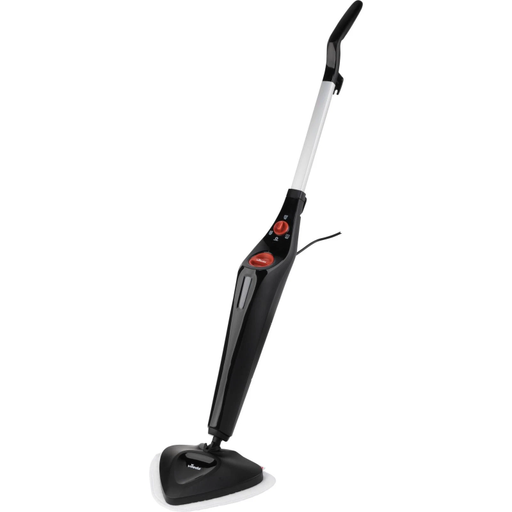
Why this product suits the profile: The steam mop is designed for tiles and sealed hard floors and remains relatively manageable at 2.8 kg.
The usage limits for unsealed wood and delicate surfaces are clearly stated. The 0.4-litre tank is manageable for shorter cleaning sessions.
1550 watts, up to 15 minutes of operating time, plus carpet glider and adapter.
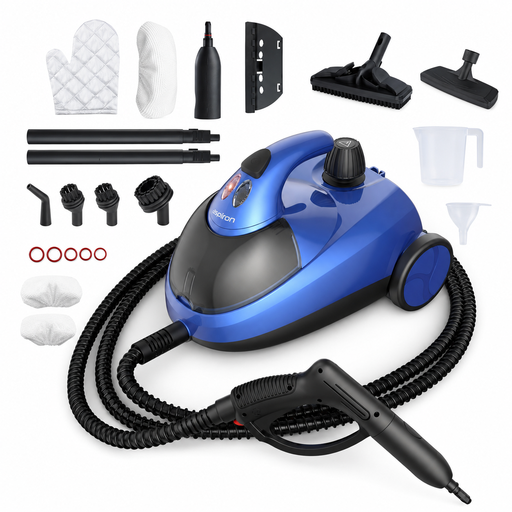
Why this product suits the profile: The combination of 2000 watts, up to 4 bar, a 1.5-litre tank and 13-piece accessory set covers various areas of the home.
The product description explicitly mentions suitable sealed surfaces and a patch test for textiles.
Suitable for floors, grout, glass, kitchen, bathroom and selected upholstery; 45 minutes of steam according to the product specification.

Why this product suits the profile: The device combines steam, spraying and vacuuming, making it ideal for users of carpets, sofas, car seats and mattress surfaces.
The separate tanks for clean and dirty water reduce the risk of simply spreading loosened dirt around.
1.6-litre fresh water tank, 0.95-litre dirty water tank and suction function according to the product specification.
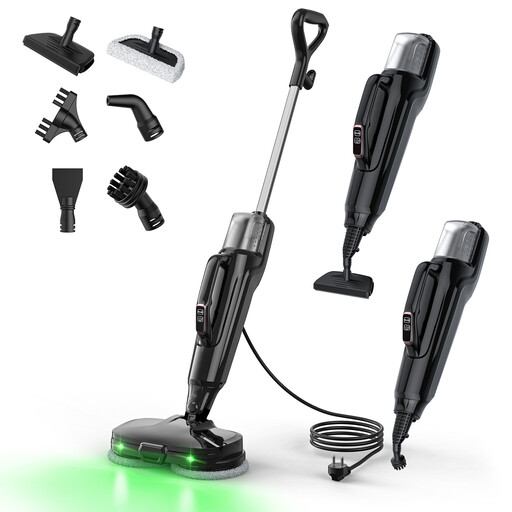
Why this product suits the profile: The detachable handheld cleaner unit and 6-in-1 system appeal to users who want to clean floors as well as smaller surfaces and grout.
The detachable design prevents you from having to use a large floor cleaner for detail work. The stated voltage of 100–120 V should be checked against the German mains supply and the product variant before purchase.
1580 watts, 500-ml tank, rotating cleaning pads and green light for better visibility of dust and hair according to the product description.
We've put together a complete, regularly updated list of products that fully meet these strict selection criteria and the safety regulations in force in the EU.
For a cleaning process that is as chemical-free as possible, plain water is usually sufficient, provided the instruction manual doesn't state otherwise. Cleaning agents, fragrances or alcohol should not be added to the tank on your own initiative. After use, the tank, cloths, brushes and filter should be emptied or cleaned and dried completely.
The running costs mainly depend on water consumption, electrical power and how often you use it. With hard tap water, regular descaling may be necessary. Replaceable cloths and easily available spare parts are more practical in the long run than a comprehensive accessory set with no option to buy replacements.
That depends on the material and the attachment. A steam cleaner for carpets and upholstery should only be used on textiles that are explicitly suitable, colourfast and heat-resistant. For deep stains, a spot cleaner with suction is often more appropriate because it can pick up the loosened liquid.
It's not possible to give a reliable lifespan for every model. Gentle operation, regular descaling, dry storage and observing the fill limits can help extend its useful life. When buying, pay attention to warranty conditions, replacement pads, filters and available accessories.
A device with 1,500 watts theoretically uses 1.5 kilowatt-hours per hour of operation at full power consumption. Since the heat-up phase and the actual steam output vary, the real consumption is usually different. For your own calculation, multiply the power consumption by the usage time and your electricity tariff.