
Lieferung heute & morgen

Qualitätsgarantie

Willkommens-Angebote freischalten: KOSTENLOSE Lieferung | Bis zu 80 % RABATT | Kostenlose 30-Tage-JoyPlus-Testphase
App herunterladen
A steam cleaner can use hot water vapour to clean floors, grout, kitchen surfaces, windows and hard-to-reach areas. However, not every appliance is suitable for every household. If you focus only on wattage, “professional performance” or an especially long operating time, you can easily overlook important details.
Typical purchasing mistakes arise from three points:
The right choice therefore depends on the combination of steam pressure, temperature, tank capacity, cable length, design and accessories.
Steam pressure is measured in bar. A higher pressure can help loosen ingrained dirt or grease. However, the adjustable steam output is also relevant when choosing a product. A low setting is more suitable for light soiling, while a higher setting can be useful for grout or stubborn deposits.
Steam temperature is often given as a range. For example, the manufacturer specifies 98 to 135 °C, a pressure of 2.5 to 3 bar and a heating time of around 25 seconds for the ROUNY Steamo X. These figures refer to the product specifications and should not be taken as a guarantee of cleaning performance on every surface.
A short heat-up time is practical too: according to the product description, the Monsga model is ready to use after around 15 seconds and operates at 3.5 bar. However, condensation may collect in the hose before the first cleaning session. Spray this into a sink or onto a cloth first.
A small tank keeps the appliance compact and lightweight. This may be sufficient for individual stains, the washbasin or a small kitchen surface. With several rooms, however, a limited capacity can lead to interruptions.
The ROUNY Steamo X has a 250-ml water tank. It offers around 10 to 14 minutes of steaming time, depending on the selected setting. This is manageable for short cleaning tasks, but less suitable for cleaning an entire home without refilling.
According to the product specifications, the Monsga steam cleaner has a 1.6-litre tank and a stated operating time of up to 48 minutes. This can be advantageous for larger areas or longer car interior cleaning sessions. The actual duration depends, among other things, on steam intensity and the pauses between applications.
A steam mop or steam floor cleaner is designed for floors. A 2-in-1 steam mop can also be used as a handheld steam cleaner. This is useful if you want to clean not only hard floors but also windows, kitchen fronts, taps, corners or wall surfaces.
Look out for:
For balconies, garden furniture, bicycles or vehicles, on the other hand, a cordless pressure washer is a different type of appliance. It uses a water jet rather than steam and is not automatically suitable for interior cleaning or delicate surfaces.
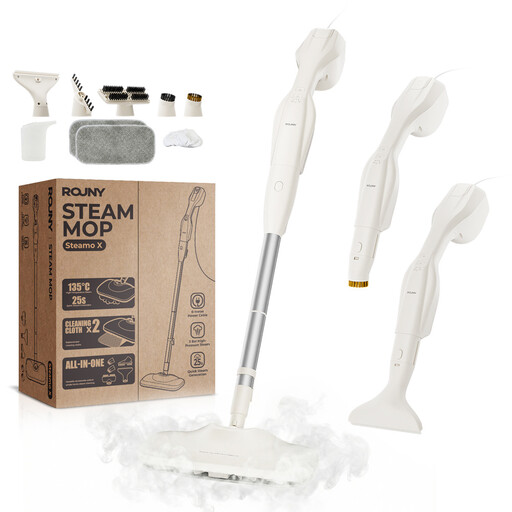
Why this product suits this profile: Combining a floor cleaner with a handheld appliance, it covers typical tasks in small to medium-sized homes without the need for two separate appliances.
The two steam levels prevent you from having to use a high setting for everything. The 250-ml tank makes the limited operating time clear and is suitable for short cleaning sessions.
2-in-1 design, 6-metre cable, 2.5–3 bar steam pressure and five stated attachments for floors, windows and kitchen areas.

Why this product suits this profile: The large tank and six steam settings are aimed at users who want to clean a range of areas, from the kitchen and bathroom to the car interior.
The steam output can be adjusted instead of treating every surface with the same intensity. The instructions also highlight delicate materials and cold glass.
1.6-litre tank, stated 15-second heating time, 3.5 bar pressure and a 10-piece accessory set.
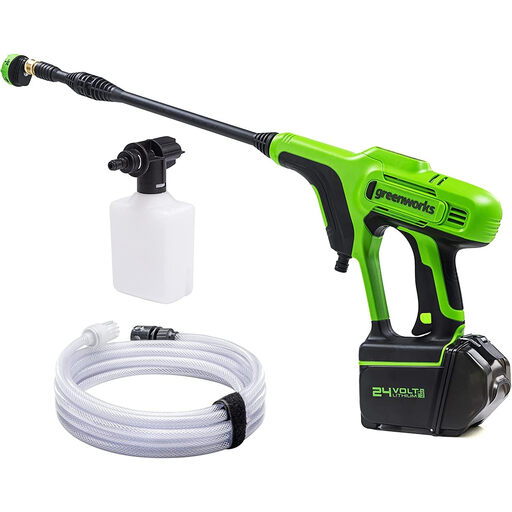
Why this product suits this profile: For bicycles, garden furniture, balconies, patios or barbecues, a cordless pressure washer is more practical than a steam cleaner designed for floors.
This appliance is not classified as a steam cleaner. This allows buyers to distinguish between hot-steam cleaning indoors and water-jet cleaning outdoors.
24 bar maximum pressure, 180 l/h flow rate, 5-in-1 nozzle, 6-metre hose and water drawn from a clean container.
We have put together a complete, regularly updated list of products that fully meet these strict selection criteria and the safety regulations applicable in the EU.
For chemical-free cleaning, use water only unless the operating instructions permit another liquid. Cleaning products, alcohol, fragrances or descaling agents should not automatically be added to the tank. If you use hard tap water, maintenance may be required according to the manufacturer’s instructions.
Also bear the following in mind:
For household use, pressure ratings alone are not enough to base your choice on. The important factors are the combination of steam pressure, temperature, adjustable steam output and a suitable attachment. A lower setting may be appropriate for light soiling, while grout and grease often require more steam and a suitable brush.
Its service life depends on how often it is used, water quality, maintenance and correct storage. Empty the tank after use, allow the appliance to cool completely and keep the nozzles and hoses free from deposits. Binding information about service life should be taken directly from the manufacturer’s information.
Running costs mainly consist of water and electricity. A small tank requires less water to heat, but may mean frequent refilling. A larger model can operate with fewer interruptions during longer cleaning sessions. For an accurate assessment, you should consider the wattage, operating time and your local electricity tariff.