
Lieferung heute & morgen

Qualitätsgarantie

Willkommens-Angebote freischalten: KOSTENLOSE Lieferung | Bis zu 80 % RABATT | Kostenlose 30-Tage-JoyPlus-Testphase
App herunterladen
A steam cleaner can make cleaning many household surfaces easier. Hot steam often dissolves grease, dust and dried-on residue without additional cleaning products. However, not every appliance is suitable for every task. Key considerations include the design, tank capacity, steam pressure, accessories and the types of surfaces approved for use.
Power consumption in watts primarily indicates how much electrical power the appliance uses. On its own, it says little about actual cleaning performance. Steam pressure, heat-up time, steam output and nozzle design are just as important.
An appliance with a high wattage can still be impractical if the water tank empties quickly or steam is only released for a short time. Always assess several technical specifications together.
A 2-in-1 steam cleaner can usually be used as a steam mop or handheld steam cleaner. However, suitable attachments are needed for windows, grout, upholstery or kitchen surfaces. A steam mop with only a large floor head is not automatically suitable for narrow corners or taps.
Look for specific details about a window attachment, brushes, grout attachment, carpet glider and cleaning pads. Accessory storage is also important, so that small parts do not get lost during everyday use.
A steam cleaner for floors is mainly intended for sealed hard floors. Unsealed wood, delicate coatings, certain plastics and materials sensitive to water can be damaged by heat and moisture. When cleaning fabrics, carpets and upholstery, first test the appliance on an inconspicuous area to check whether the colour or material changes.
Before using the appliance for the first time, always follow the manufacturer’s instructions for the surface in question. Steam is also not intended for sockets, electrical appliances, people or animals.
Steam pressure is often stated in bar. A higher value can help loosen stubborn dirt or grease. However, steam output, measured in millilitres per minute, is also important for practical cleaning. More steam can improve cleaning performance, but it also increases water consumption and residual moisture.
Several steam settings are useful if you want to tackle both light everyday dirt and more firmly stuck-on residue. A lower setting may be more suitable for delicate or smaller surfaces.
Compact handheld steam cleaners often have small tanks, making them easy to handle. However, they need to be refilled more frequently. A steam cleaner for kitchens and windows with a 250-millilitre tank may be sufficient for individual areas, while a 1.5-litre model allows longer cleaning sessions in larger homes.
Check whether the tank can be refilled while the appliance is in use. With many models, you must unplug the appliance and allow it to cool down first. This requirement is intended to ensure safety and should not be bypassed.
For German households, appliances rated at 220–240 volts and 50–60 hertz are generally suitable, provided the manufacturer’s other specifications confirm this. Models rated at 100–120 volts are not automatically suitable for a German socket. An adaptor does not automatically change the voltage.
A six-metre cable can prevent you from having to change sockets several times when cleaning floors. You should also look for clear operating instructions, an undamaged mains cable and transparent manufacturer or EU responsible-person details. A CE marking does not replace a careful review of the product information, but it is an important point of reference for electrical appliances intended for the European market.
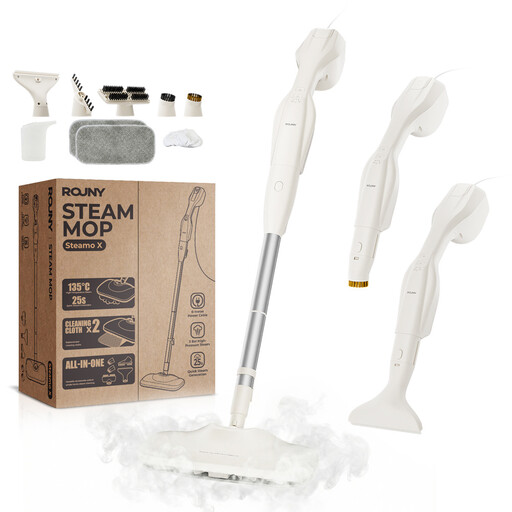
Why this product suits this profile: This model combines floor cleaning and handheld operation in one appliance. With a 25-second heat-up time and a six-metre cable, it is designed for regular household cleaning tasks.
Two steam settings and five specified attachment types make its range of uses clearer than that of a floor-only steam mop.
2.5–3 bar steam pressure, 250-millilitre tank, window and wall attachment, plus a 220–240-volt power supply.
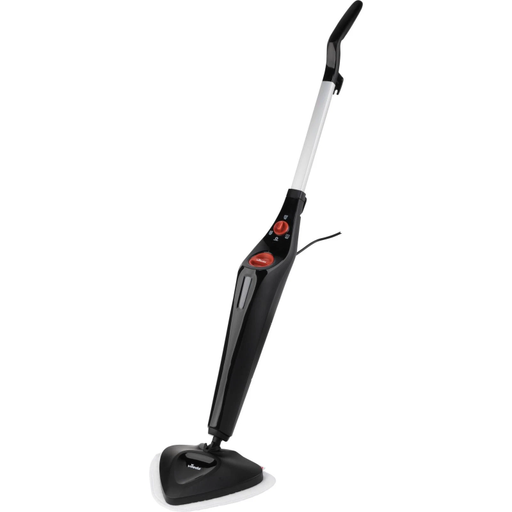
Why this product suits this profile: If you mainly clean sealed hard floors and tiles, this clearly floor-focused design with carpet glider is a suitable choice.
The intended use on tiles and hard floors is clearly specified. Unsealed wood and delicate surfaces are expressly excluded.
1550 watts, 0.4-litre tank, up to 15 minutes of operating time according to the product details, and a light weight of 2.8 kilograms.
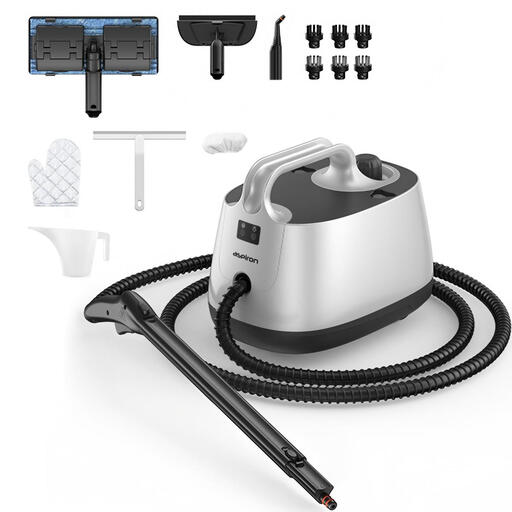
Why this product suits this profile: This model is aimed at households that want to clean not only floors but also windows, grout, carpets, upholstery and hard-to-reach areas.
The extensive selection of accessories reduces the risk of buying a floor cleaner for tasks that actually require handheld attachments.
1500 watts, 4 bar, 1.5-litre water tank and 21 specified accessories for different surfaces.
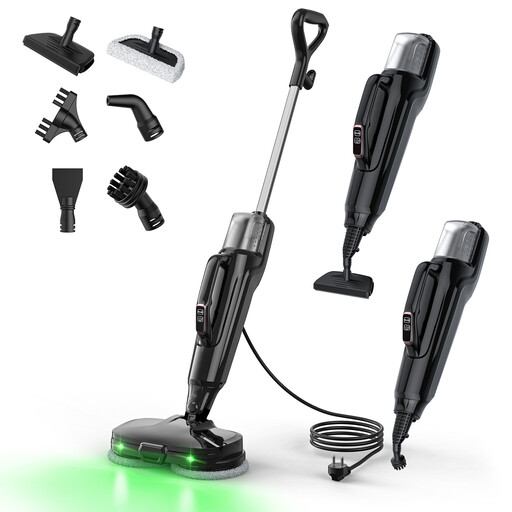
Why this product suits this profile: The specified 6-in-1 design and additional features, such as rotating pads and a light for dark areas, will appeal to users with a wide range of cleaning tasks.
The detachable handheld unit extends its use beyond floors. Important: the specified 100–120-volt power supply is not intended for German sockets without suitable voltage adjustment.
1580 watts, 500-millilitre tank, detachable handheld unit and specified pad rotation at 140 revolutions per minute.
Cleaning with steam without chemicals means using water only. On suitable surfaces, this can reduce the need for cleaning products. However, grease, limescale and dirt are not dissolved equally well on every surface. Heavy deposits may require pre-cleaning or wiping afterwards.
Do not move the steam cleaner too slowly over delicate floors, and avoid prolonged contact with one spot unless the operating instructions specify otherwise. After use, allow the tank and attachments to dry. This helps prevent unpleasant odours and deposits from building up inside the appliance.
We have put together a complete, regularly updated list of products that fully meet these strict selection criteria and the safety regulations applicable in the EU.
Running costs mainly consist of electricity and water. The key factors are power consumption, heat-up time and operating duration. An appliance with a large tank does not automatically use more electricity; what matters is how long it is used and at which setting. Cleaning products may not be necessary for suitable applications, but they cannot be replaced in every case or for every type of dirt.
The service life depends on how intensively it is used, water quality, care and the materials used for its components. Empty the tank after use, remove residue as instructed and store the appliance in a dry place. Only use liquids that are explicitly approved. Hard water can put greater strain on heating systems, so follow the manufacturer’s advice on water care.
A steam cleaner for carpets or upholstery should only be used if the manufacturer approves the relevant surface and a suitable attachment is available. Test colourfastness on a concealed area first. Excess moisture can extend drying times or damage delicate materials.