
Lieferung heute & morgen

Qualitätsgarantie

Willkommens-Angebote freischalten: KOSTENLOSE Lieferung | Bis zu 80 % RABATT | Kostenlose 30-Tage-JoyPlus-Testphase
App herunterladen
A steam cleaner can handle many household cleaning tasks: sealed hard floors, tiles, grout, kitchen surfaces, windows or certain fabrics. However, a high wattage rating alone does not automatically mean a suitable device. What really matters is whether the design, steam pressure, tank size and accessories fit your everyday routine.
A high power consumption rating only describes the energy requirement of the heating element. For practical use, what also counts are heat-up time, steam temperature, steam flow rate and pressure. A device with a large tank can work for longer, but it often takes up more space and is heavier to manoeuvre.
The phrase "up to" should also be put into context. It usually describes a maximum value under certain conditions, and not necessarily the sustained power available at the attachment.
A steam mop is primarily designed for floors. A handheld steam cleaner is better suited to taps, grout, window frames and hard-to-reach areas. For carpets and upholstery, spray and suction functions are often needed instead. A pure steam cleaner loosens dirt but does not automatically pick it up.
When buying, it is therefore important to distinguish between a steam cleaner for floors, a versatile combination device and a carpet and upholstery cleaner with a dirty water tank.
Many attachments look extensive on paper. What matters is whether a suitable floor brush, a window squeegee, small nylon or brass brushes, and fabric attachments are included. You should also consider replacement pads, whether they are washable, and how the accessories are stored.
Steam pressure is given in bar. Higher values can help to loosen stubborn dirt from tile grout or grease deposits. For more delicate surfaces approved by the manufacturer, an adjustable steam output is more practical than a permanently maximum setting.
Models with multiple levels allow better adjustment to the material and degree of soiling. Steam temperature is also relevant, but should not be taken as a blanket indication of suitability for every surface.
A tank of 250 to 500 millilitres is compact and reduces the device's weight. It can be enough for individual rooms, but on larger areas it requires frequent refill breaks. Tanks from around 1.5 litres are more convenient for extensive cleaning tasks, but they increase weight and heat-up time.
Always use only the water quality specified by the manufacturer and do not fill the tank beyond the mark. Cleaning agents, fragrances, vinegar or descalers should not be put into the water tank unless the instructions expressly allow it.
Before first use, you should test on an inconspicuous area whether the surface can withstand the heat and moisture. Unsealed wood, delicate fabrics, certain plastics and cold glass may be unsuitable.
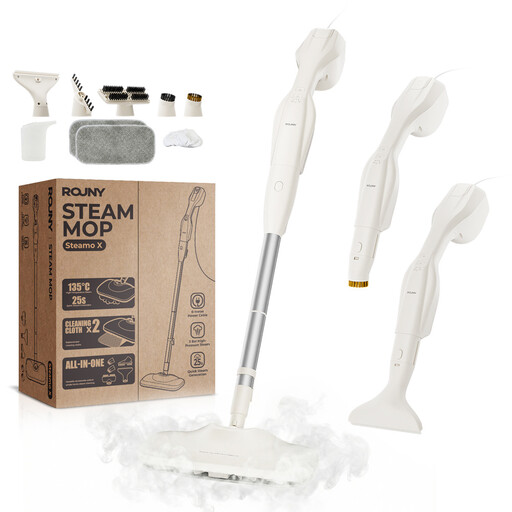
Why this product fits the profile: The combination of floor mop and handheld device covers regular floor care as well as smaller tasks in the kitchen, bathroom and on windows.
The two steam levels prevent an exclusively maximum output. With a 250 ml tank, 25-second heat-up time and 6 m cable, the key specifications are clearly assessable.
2-in-1 design, 2.5–3 bar steam pressure, up to 135 °C steam temperature and five mentioned attachment types.
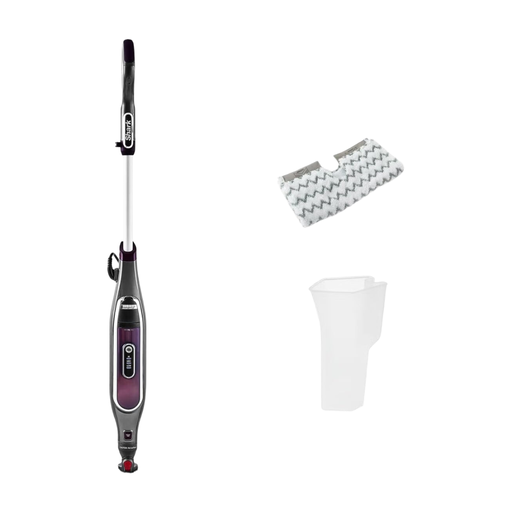
Why this product fits the profile: If you mainly clean sealed hard floors, you get a design clearly focused on this purpose with washable cleaning pads.
The scope of delivery and the intended use are clearly described. The device is not advertised as a carpet or upholstery cleaner with suction function.
1200 W, 350 ml tank, 6 m cable, three steam settings, Steam-Blaster and two machine-washable pads.
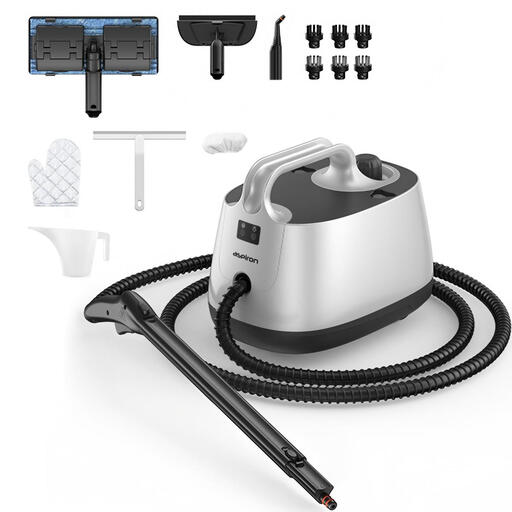
Why this product fits the profile: This model is aimed at households with many different tasks and a need for a larger tank volume and extensive accessories.
The 1.5-litre specification and 21 accessories make the intended multi-surface use clear. A patch test is still required for delicate fabrics.
1500 W, up to 4 bar, 1.5-litre water tank and accessories for floors, windows, grout, upholstery, carpets and vehicle areas.
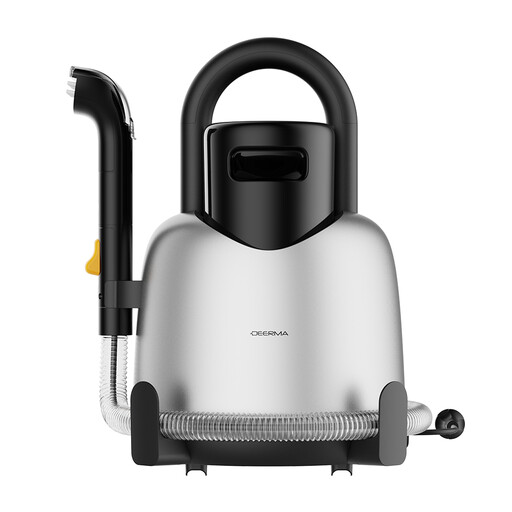
Why this product fits the profile: For sofas, carpets, car seats and other water-safe fabrics, the combination of water modes, steam and suction is more practical than a pure steam mop.
The separate containers for 1.7 litres of fresh water and 1.4 litres of dirty water show that dirt collection is part of the concept.
1700 W, 13 kPa suction power, three water or steam modes and five brush attachments.
We have put together a complete, regularly updated list of products that fully meet these strict selection criteria and the safety regulations in force in the EU.
Steam can cause burns. Never direct the jet at people, animals, sockets or electrical appliances. Before refilling and when changing attachments, the device must be switched off, unplugged and allowed to cool down.
For chemical-free cleaning, the product specifications usually only call for clean water. This does not mean that every stain will be removed without pre-treatment. With grease, limescale or dried-on residues, a longer exposure time may be necessary. Fabrics should be allowed to dry sufficiently after treatment to avoid residual moisture.
Only if the floor is sealed and suitable for steam cleaning according to the manufacturer's care instructions. Unsealed wood and sensitive coatings can be damaged by heat and moisture. Select a low steam output and test on a hidden area first.
The lifespan depends on frequency of use, water quality, care and availability of spare parts. After each use, any residual water and moisture should be removed according to the instructions. Limescale deposits can put strain on nozzles and the heating element; only use the descaling method approved by the manufacturer.
The cost depends on the power consumption and the actual operating time. A 1500 W device running continuously for one hour theoretically uses 1.5 kilowatt-hours. In practice, the heating element does not always run at full power. Tank size, heat-up time and the area being cleaned therefore influence consumption.