
Lieferung heute & morgen

Qualitätsgarantie

Willkommens-Angebote freischalten: KOSTENLOSE Lieferung | Bis zu 80 % RABATT | Kostenlose 30-Tage-JoyPlus-Testphase
App herunterladen
A steam cleaner can help with a wide range of cleaning jobs, from tile grout and taps to sealed floors and upholstery. However, impressive-sounding power specifications don’t automatically mean a cleaner is right for you. What matters is where you’ll use it, how long it takes to heat up, what accessories it comes with, the tank size and whether it’s suitable for the surfaces you want to clean.
Figures such as 3 or 4 bar describe the available steam pressure, but on their own they don’t tell you much about how suitable a cleaner is in practice. Heat and moisture can damage delicate materials such as untreated wood, certain plastics and coated surfaces. Before buying, check the instruction manual to see which materials the cleaner is approved for.
A comprehensive accessory set sounds versatile, but it’s only useful if the nozzles, brushes and cloths suit your home. Narrow brushes are useful for grout, a squeegee for windows and a sturdy floor head for floors. If you mainly want to clean upholstery or carpets, however, you’ll need a cleaner that can collect water and has separate tanks. A conventional steam cleaner isn’t always suitable for this.
A small tank reduces weight and heating time, but needs refilling more often. A larger tank lets you clean for longer between refills, but adds weight and takes up more storage space. You should also check whether the cleaner needs to cool down completely after use before you can refill it or change accessories.
Steam pressure is measured in bar. A higher figure can help loosen stubborn dirt, but it isn’t the only measure of quality. Depending on the model, heating time can range from around 15 to 25 seconds to longer wait times. For quick cleaning jobs in the bathroom, a cleaner that’s ready to use quickly can be handy.
Temperature figures should also be considered alongside the accessories and the surfaces the cleaner is approved for. Never direct steam at people, animals, sockets or electrical appliances. Chemical-free cleaning uses water alone, but that doesn’t mean every type of dirt will come off without further cleaning.
A steam mop is designed for floors and can usually be used upright. A handheld steam cleaner is better suited to taps, grout, window frames, kitchen surfaces and hard-to-reach spots. A 2-in-1 model combines both designs.
For steam cleaning in the kitchen and bathroom, a sufficiently long cable, a stable base and easy-to-change attachments are all important. Also check whether the manufacturer specifically lists the surface you want to clean as suitable.
A steam cleaner loosens dirt with hot steam, but doesn’t necessarily collect the dirty water. A vacuum mop or wet and dry vacuum cleaner picks up liquid and dirt as you mop, making it particularly suitable for sealed hard floors and spills. For carpets and upholstery, a carpet and upholstery cleaner with spray and suction functions is usually a better choice.
A robot vacuum with a mopping function, on the other hand, takes care of regular floor cleaning with little manual effort. It won’t replace a handheld steam cleaner for grout, windows or spot cleaning.
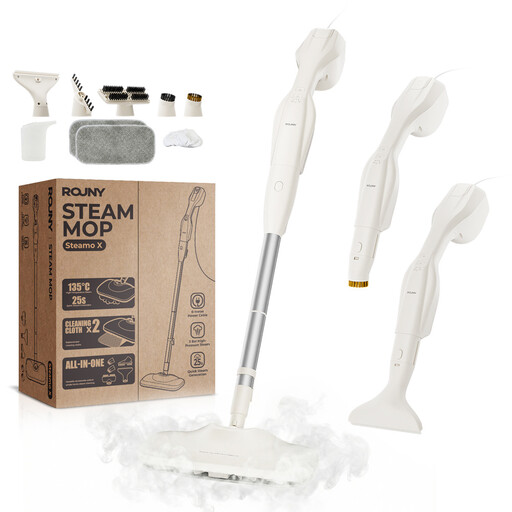
Why this product suits this type of home: This cleaner combines a steam mop and handheld steam cleaner for floors, windows, kitchen surfaces and corners. Two steam settings, a 25-second heating time and a 6 m cable make occasional household cleaning easier.
Its design and five attachments are clearly intended for use in several areas of the home. Bear in mind that runtime is relatively short: around 10 to 14 minutes, depending on the setting.
2-in-1 design, 6 m cable, two steam settings and accessories for floors, windows and kitchen surfaces.
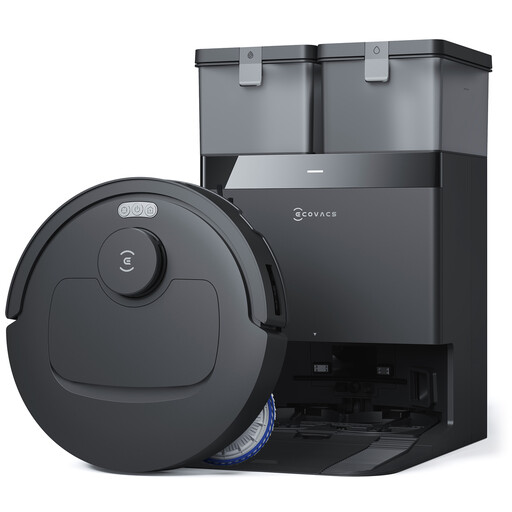
Why this product suits this type of home: For homes with mostly hard floors and carpets, this robot vacuum offers an automated combination of vacuuming and mopping. The app lets you set cleaning programmes by room or zone.
It offers more than a basic mopping function: according to the product information, it has four suction settings, automatically lifts the mop on carpets and comes with a station that washes the mop at 75 °C.
Laser navigation, up to 180 minutes of runtime, automatic dust emptying and carpet detection, according to the product description.
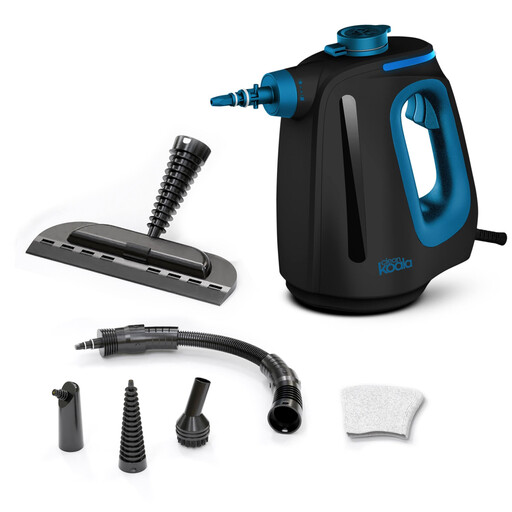
Why this product suits this type of home: This handheld steam cleaner is designed for targeted cleaning of grout, taps, windows, furniture and kitchen areas.
The box contents include twelve attachments and a 550 ml tank. This makes it clearer what the cleaner is designed for than models advertised with accessories but no specific surfaces in mind.
1350 W heating power, a heating time of around 15 seconds, 3.5 bar steam pressure and up to 30 minutes of steam, according to the product information.
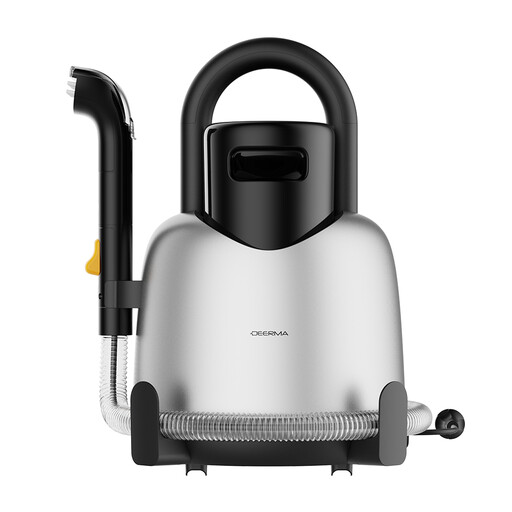
Why this product suits this type of home: This cleaner is designed for carpets and upholstery, with spray, hot water and steam modes. It’s a good fit for homes where fabric surfaces need regular spot cleaning.
This isn’t just a steam mop. Its separate 1.7 l clean water and 1.4 l dirty water tanks are designed for wet cleaning fabrics.
1700 W rated power, 13 kPa suction power, three water or steam modes and five brush attachments, according to the product description.
We’ve put together a complete, regularly updated list of products that meet these strict selection criteria and fully comply with the safety regulations in force in the EU.
For all appliances, clean and dry the water tank, filters, brushes and cloths after use. Hard water can encourage limescale build-up; check the instruction manual to see whether you can use demineralised water. Only add cleaning products to the tank if the manufacturer explicitly allows it.
Running costs include electricity, replacement pads, filters, brushes, dust bags and cleaning solution. A robot with a docking station may incur ongoing costs for dust bags and maintenance parts, while a corded steam cleaner mainly needs electricity and, where necessary, replacement cloths.
No. Sealed tiles and suitable hard floors are often approved for steam cleaning. Untreated wood, delicate coatings and certain types of laminate can be damaged by heat or moisture. Always follow the manufacturer’s guidance and test the cleaner on an inconspicuous area first.
There’s no single answer, as lifespan depends on how often you use the cleaner, water quality, maintenance and the availability of spare parts. Descaling it regularly as instructed, storing it somewhere dry and replacing cloths or filters when needed can help extend its working life.
Electricity costs depend on the cleaner’s power and how long you use it. A cleaner rated at 1,200 to 1,500 W uses approximately 1.2 to 1.5 kWh per hour of operation. You may also need to budget for replacement pads, filters and accessories. Use your own electricity tariff to work out the exact cost.