
Lieferung heute & morgen

Qualitätsgarantie

Willkommens-Angebote freischalten: KOSTENLOSE Lieferung | Bis zu 80 % RABATT | Kostenlose 30-Tage-JoyPlus-Testphase
App herunterladen
A steam cleaner can help with many cleaning tasks using hot water vapour – from sealed floors and kitchen surfaces to hard-to-reach corners. However, it is worth taking a close look at the appliance’s design before buying. Not every model is suitable for carpets, upholstery or car seats, and a high wattage alone says little about practical use.
Figures such as 105 °C or 135 °C steam temperature may sound impressive. However, it is also important to consider how consistently the steam is released, which steam settings are available and how long the water tank lasts. A small tank may require frequent refilling during intensive cleaning.
Hot steam is also unsuitable for every surface. Unsealed wood, delicate plastics, silk, velvet and certain coated surfaces can be damaged by moisture and heat. Testing an inconspicuous area and following the manufacturer’s instructions are therefore important parts of the preparation.
A steam mop with a carpet glider can freshen up carpets. However, it does not automatically collect dirty water. For areas used by pets, sofas, car seats or deeper stains, an appliance with separate clean- and dirty-water tanks and suction power is often more suitable.
If you are looking for a steam cleaner for carpets and upholstery, you should therefore distinguish between a steam-only appliance and a spray extractor or wet vacuum cleaner. The type of appliance has a significant effect on the cleaning result, drying time and maintenance required.
Many models are supplied with several nozzles and brushes. What matters is whether the accessories are genuinely suitable for your household: a window nozzle helps with glass surfaces, a grout brush with tiles, while an upholstery attachment and suction function are important for textile surfaces.
The cable length, appliance weight and storage options should also be taken into account. A 6-metre cable can be useful in larger rooms, while a compact handheld appliance is easier to store for use in the kitchen, car and on individual areas.
Steam pressure in bar describes the pressure at which the steam is released. Steam output is often stated in millilitres per minute. Both figures should be considered together. An adjustable steam setting is useful if you want to clean both light dirt and stubborn residues.
Heat-up time determines how practical the appliance is for everyday use. Models with a waiting time of around 15 to 30 seconds are ready to use quickly. For longer cleaning sessions, however, the operating time per tankful is more important.
A 250 ml tank is compact and keeps the weight down, but according to the ROUNY Steamo X product specifications, it lasts for only around 10 to 14 minutes depending on the steam setting. Larger tanks, such as the 1.6-litre tank on the Monsga model, can allow for longer cleaning sessions, but they generally increase the appliance’s weight.
Important: Only fill the tank with the liquid approved in the instructions. Several of the appliances mentioned here explicitly recommend using clean water. Cleaning products, alcohol, fragrances or descaling agents must not be added to the tank unless the manufacturer expressly permits this.
For German households, 220–240 volts and 50 Hz are standard specifications. Before buying, check the mains voltage, plug, operating instructions, markings and the responsible person in the EU. The Lubluelu JJ-SC-053A is listed in the supplied data as 100–120 V and 60 Hz and is therefore not readily suitable for German sockets.
Clear safety rules also apply when working with steam: the steam outlet and accessories become hot, and the appliance must not be directed at people, animals, sockets or electrical appliances. Unplug the appliance and allow it to cool down before refilling it or changing attachments.
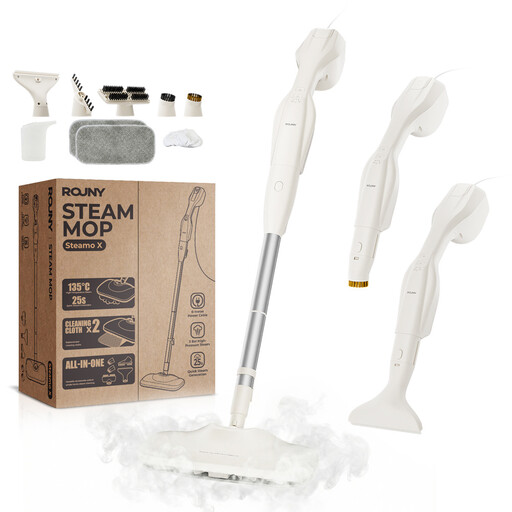
Why this product suits the profile: This appliance combines a steam mop and handheld steam cleaner in one body. With 220–240 V, a 6-metre cable, two steam settings and a heat-up time of around 25 seconds, it is designed for a wide range of household cleaning tasks.
The detachable design makes the difference between floor cleaning and detailed cleaning easy to understand. However, the 250 ml tank limits the operating time and should match the scale of your cleaning needs before you buy.
According to the product specifications: 2.5–3 bar steam pressure, steam output of 18 or 24 ml/min and five cleaning attachments for floors, windows, walls and kitchen surfaces.
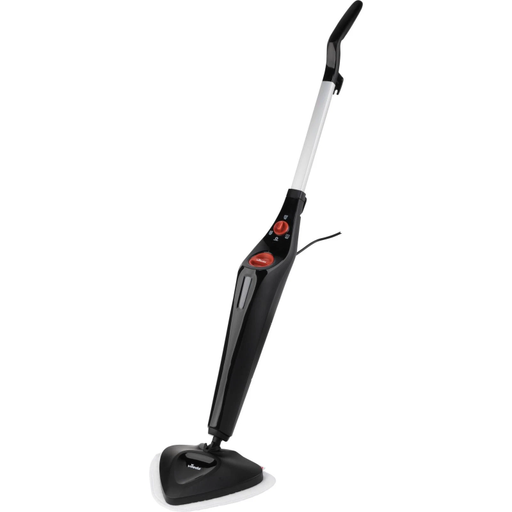
Why this product suits the profile: If you mainly want to clean sealed hard floors and tiles, this model is clearly designed for floor care and comes with a carpet glider and adapter.
Its suitability is limited to hard floors, tiles and freshening up carpets. Sofas, car seats and collecting dirty water require a different type of appliance.
According to the product specifications: 1,550 W power, a 0.4-litre tank, around 15 minutes of operating time and an appliance weight of 2.8 kg.
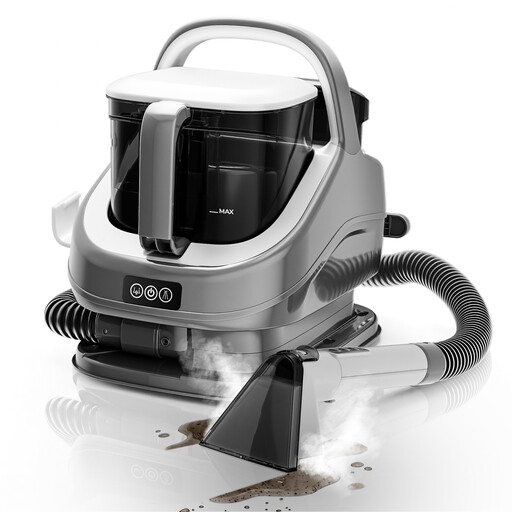
Why this product suits the profile: This compact wet-cleaning appliance is aimed at households with carpets, upholstery, pet areas, stairs or car seats. Three cleaning modes and a hose make it easier to treat stains flexibly.
It is not viewed solely as a steam cleaner: the separate tanks keep clean and dirty water apart. Testing a concealed area is still necessary for delicate textiles.
According to the product specifications: 1,300 W power, 13 kPa suction power, a 1,400 ml clean-water tank and a 1,200 ml dirty-water tank.
In this context, so-called chemical-free cleaning means that the appliance is operated with water instead of cleaning products. It does not replace suitable surface care and should not be confused with any medical or therapeutic benefit.
We have put together a complete, regularly updated list of products that fully meet these strict selection criteria and the safety regulations applicable in the EU.
No. Depending on the model, they are mainly suitable for sealed hard floors and tiles. Unsealed wood, laminate with damaged edges and materials that are sensitive to heat or moisture should only be cleaned if the operating instructions expressly permit it.
Its service life depends on how it is used, the water quality, descaling in accordance with the instructions and care of the cloths and nozzles. Any remaining water and dirt should be removed after each use. The cable, seals, tank and steam hose should be checked regularly for visible damage.
Water consumption is generally modest, but varies depending on steam output and operating time. The electrical power of the models mentioned ranges from around 1,050 to 1,650 watts. For running costs, usage time, electricity tariff and heat-up behaviour are therefore more important than wattage alone.