
Lieferung heute & morgen

Qualitätsgarantie

Willkommens-Angebote freischalten: KOSTENLOSE Lieferung | Bis zu 80 % RABATT | Kostenlose 30-Tage-JoyPlus-Testphase
App herunterladen
A steam cleaner can help with many household tasks using plain water: loosening dirt on sealed floors, cleaning grout, tackling kitchen surfaces or treating glass with a squeegee. However, a high wattage alone does not determine how practical a machine is for everyday use. If you focus only on bold advertising claims, you may end up buying a device with a short run time, unsuitable accessories or limited surface approval.
Figures such as 3 or 4 bar describe the pressure of the steam, but do not by themselves indicate how well a device cleans a surface. The actual steam output, adjustability and the suitability of the nozzle are equally important. A powerful device may even be unsuitable for delicate surfaces if the steam intensity cannot be adjusted.
A steam cleaner with a large water tank does not automatically provide a long operating time. Run time depends on the steam mode and water consumption. A 250-millilitre tank may be sufficient for short jobs, while a 1.5- or 1.6-litre tank requires fewer refills when cleaning floors and bathrooms thoroughly.
A large number of attachments is only helpful when the tools are suitable for the intended tasks. Small brushes and precision nozzles are useful for grout, a squeegee is suitable for windows, and floors require an appropriate mop attachment. Before buying, you should also check whether the surface in question is suitable for steam cleaning at all.
When comparing models, you should consider steam pressure in bar, steam output in millilitres per minute and the stated steam temperature together. A higher steam output can affect how quickly you work, while adjustable intensity provides greater control. This is particularly relevant if a device is intended to function as a steam mop, steam broom and handheld cleaner.
Temperature figures refer to the maximum temperature stated by the manufacturer and not necessarily to the temperature reaching every part of the surface. Never direct steam at people, animals, sockets, electrical appliances or heat-sensitive materials.
A short heat-up time is convenient when the device is used regularly for small areas of dirt. The ROUNY STEAMO X, for example, states a heat-up time of around 25 seconds. For larger areas, operating duration is more important. The ASPIRON AS-CA042 is advertised with up to 45 minutes of steam, while the Monsga steam cleaner is stated to provide up to 48 minutes. These figures may vary depending on the selected setting.
For a steam cleaner for floors, a sturdy floor attachment and washable mop pads are important. A steam cleaner for the kitchen and bathroom should also offer small brushes, a detail nozzle or a wall attachment. Anyone looking for a steam cleaner for windows will need a suitable window squeegee. When cleaning upholstery, carpets, laminate or parquet flooring, you must follow the care instructions for the material in question. Unsealed wood, delicate textiles and heat-sensitive plastics are often unsuitable.
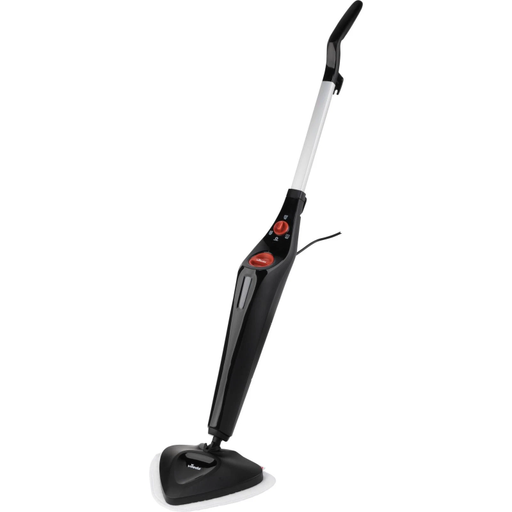
Why this product suits this profile: The device focuses on sealed hard floors and tiles, making it suitable for users looking for a straightforward steam mop for regular floor care.
Its clearly defined area of use prevents claims about accessories for numerous specialist tasks from being mistaken for comprehensive equipment.
1550 watts, 0.4-litre tank, up to 15 minutes of operating time, plus a carpet glider and adapter.
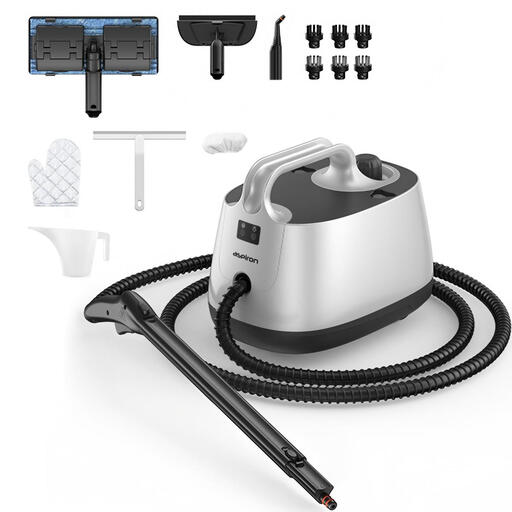
Why this product suits this profile: The combination of 1500 watts, a stated 4 bar, a 1.5-litre tank and 21 accessories is designed for households with a wide range of cleaning tasks.
The equipment is described in terms of specific attachments for floors, windows, grout, textiles and vehicle areas, rather than being promoted solely through an accessory count.
21 accessories, 1.5-litre water tank and a stated steam temperature of up to 145 °C.
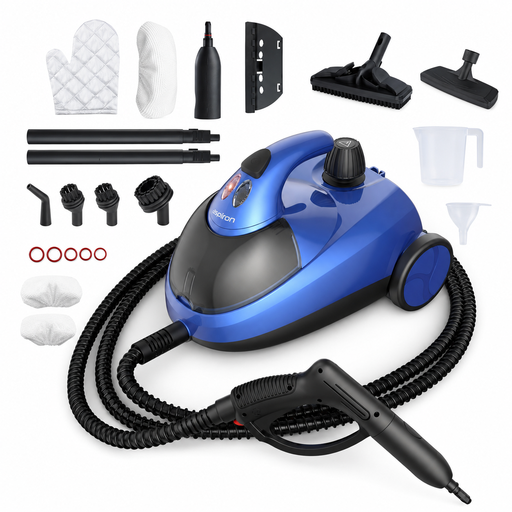
Why this product suits this profile: The large tank and accessories for bathrooms, kitchens, sealed hard floors, glass and selected textiles are suitable for frequent users looking for one device to cover several rooms.
The stated run time of up to 45 minutes and the 1.5-litre tank address the common interruption caused by refilling.
2000 watts, up to 4 bar, 13-piece accessory set and a stated steam duration of up to 45 minutes.
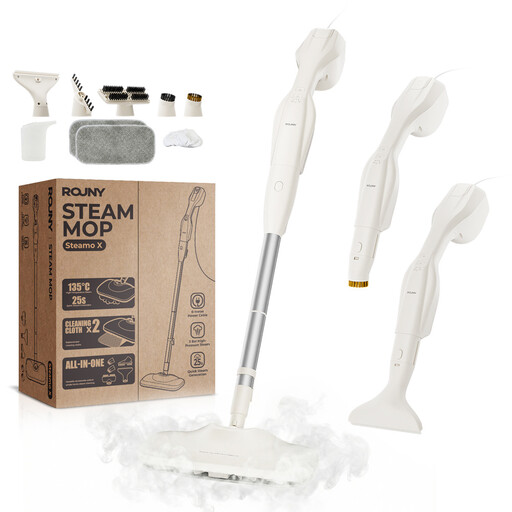
Why this product suits this profile: Switching between a floor mop and handheld steam cleaner is practical when you want to tackle tiles, kitchen surfaces, windows and corners with one compact device.
Two steam levels allow you to adjust the cleaner for light and heavier dirt, rather than relying on a single fixed intensity.
1050–1250 watts, 2.5–3 bar, heat-up time of around 25 seconds, 6-metre cable and five attachment groups.
For chemical-free cleaning, use water only unless the operating instructions permit otherwise. Cleaning products, fragrances and alcohol do not belong in the tank. Test delicate surfaces on an inconspicuous area first. With cold glass, the temperature difference should be reduced gradually, as hot steam can cause stress.
Before refilling, changing attachments or cleaning the device, disconnect the steam cleaner from the mains and allow it to cool down. After use, empty any remaining water and clean the mop pads according to the manufacturer’s instructions. Only descale the device in line with the relevant instructions.
We have put together a complete, regularly updated list of products that fully meet these strict selection criteria and the safety regulations applicable in the EU.
Consumption depends on the steam output and operating level. Small handheld devices with around 250 millilitres are more suitable for short tasks. Models with 1.5 or 1.6 litres can allow longer cleaning sessions, but require more storage space and heating energy.
Only if the flooring manufacturer expressly permits steam cleaning and the floor is sufficiently sealed. Excessive moisture or heat can damage joints, coatings and wood-based materials. The flooring manufacturer’s care instructions are decisive.
Service life depends, among other things, on water quality, descaling, storage and frequency of use. Look for clear operating instructions, suitable replacement pads and safe handling of the cable, tank and attachments. This can help reduce common causes of wear and tear in the home.