
Lieferung heute & morgen

Qualitätsgarantie

Willkommens-Angebote freischalten: KOSTENLOSE Lieferung | Bis zu 80 % RABATT | Kostenlose 30-Tage-JoyPlus-Testphase
App herunterladen
A steam cleaner can tackle bathrooms, kitchens, windows and sealed hard floors using hot steam. But to make sure your appliance is genuinely versatile for everyday use, don’t just look at its wattage and the number of accessories. Tank capacity, steam pressure, the attachments supplied and the suitability of each surface all matter too.
A 2000 W steam cleaner can heat water quickly and deliver high heating power. But wattage alone won’t tell you how consistently the steam flows or how easy the appliance is to use. Also check the stated steam pressure in bar, the heat-up time and the operating time.
A “13-piece accessory set” sounds comprehensive, but it’s only useful if the attachments suit the jobs you have in mind. For tiles and grout, for example, you’ll need a detail nozzle and a brush. Hard floors call for a suitable floor head, while windows and mirrors need a squeegee.
Also check whether the accessories are included or need to be bought separately.
Steam isn’t suitable for every material. Unsealed wood, delicate paint finishes, certain plastics and some fabrics can be damaged by heat or moisture. Always follow the floor manufacturer’s care instructions for laminate and parquet. Test steam on delicate fabrics in an inconspicuous area first.
A steam cleaner with 4 bar can release steam at the corresponding pressure. This can be particularly useful for grout, edges and hard-to-reach spots in the bathroom. However, always consider the pressure alongside the steam settings and the attachment you’ll be using.
The 2000 W rating describes the electrical power consumption or heating power. This type of appliance can be a good choice for regular cleaning in a larger household. Make sure the cable is routed safely and only use the appliance as directed in the instruction manual.
A steam cleaner with a 1.5 l water tank means fewer pauses to refill than with more compact models. The ASPIRON AS-CA042 is stated to provide up to 45 minutes of steam, according to the product description. Actual operating time depends on factors such as the steam setting and the attachment used.
Before refilling, allow the appliance to cool down as directed and unplug it from the mains. Never force open a tank that is under pressure.
For a steam cleaner for the home, it’s best to choose accessories that cover a range of tasks:
Only use cleaning products if the manufacturer explicitly allows it. Many steam cleaners are designed for water only in the tank.
The products below are suited to different tasks. The ASPIRON AS-CA042 is a steam cleaner. The other recommendations can complement your window cleaning routine, but they are not a substitute for a steam cleaner.
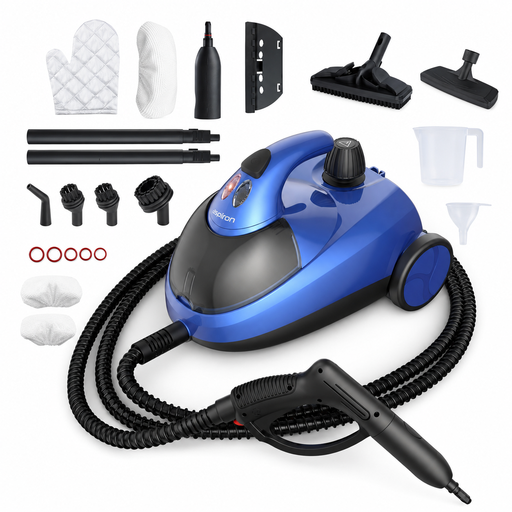
Why it suits this profile: This appliance combines 2000 W of power, up to 4 bar steam pressure, a 1.5-l water tank and a 13-piece accessory set for tackling different areas around the home.
The product information gives specific performance figures and lists the accessories, rather than making vague claims about cleaning performance. You’ll still need to check that it’s suitable for delicate surfaces.
1.5-l tank, up to 45 minutes of steam according to the product description, and attachments for floors, detail cleaning, glass and selected fabrics.
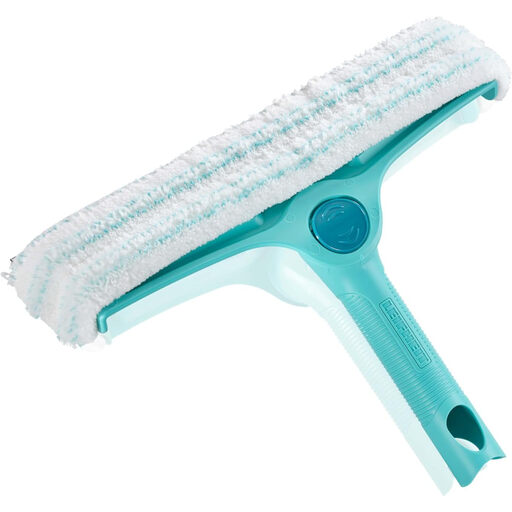
Why it suits this profile: As a complement to a steam cleaner, this model helps you clean glass, frames and corners by hand.
Its functions are clearly defined: a microfibre cloth, frame cleaning, a squeegee blade and an adjustable angle. That way, you won’t mistakenly expect a simple glass squeegee to do every job.
32-cm silicone squeegee, washable microfibre cover and three adjustable cleaning angles, according to the product details.
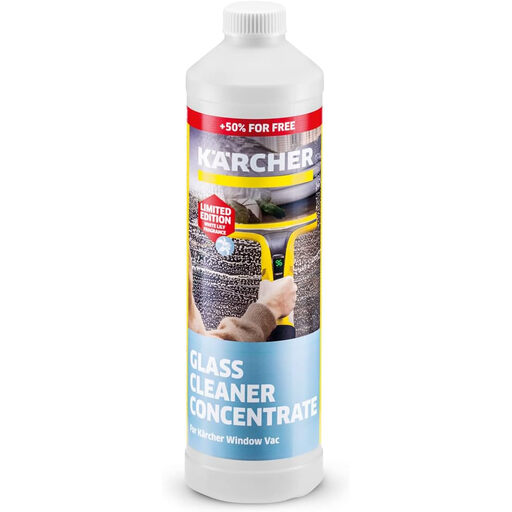
Why it suits this profile: If your home has lots of glass surfaces, a separate cleaner designed for smooth, water-resistant surfaces can complement your window cleaning routine.
This concentrate isn’t a steam cleaner. It’s used separately on glass surfaces and with compatible window-cleaning appliances.
750-ml concentrate stated to be suitable for glass and smooth, water-resistant surfaces; according to the product description, it can be diluted at a ratio of 1:30.
We’ve put together a comprehensive, regularly updated list of products that meet these strict selection criteria and fully comply with the safety regulations in force in the EU.
Before using the appliance for the first time, read the instruction manual and check that the surface is suitable for steam. The following points are particularly important:
Its lifespan depends on how often you use it, water quality, care and storage. Descaling regularly as recommended by the manufacturer, storing it somewhere dry and using suitable water can help keep it working safely. Replace wear parts such as cloths or brushes when needed.
Electricity use depends on the appliance’s power rating and how long it’s actually running. At full heating power, a 2000 W appliance uses 2 kWh per hour of operation on paper. In practice, the heater won’t necessarily run at full power continuously. To estimate your costs, multiply the power in kilowatts by the time you use the appliance and your electricity tariff.
Yes, as long as the steam cleaner has a suitable window squeegee and the glass is suitable for steam. Clean one section at a time, hold the attachment against the pane as directed in the manual, then remove the loosened water with the squeegee blade. For coated, film-covered or delicate surfaces, check the manufacturer’s instructions first.