
Lieferung heute & morgen

Qualitätsgarantie

Willkommens-Angebote freischalten: KOSTENLOSE Lieferung | Bis zu 80 % RABATT | Kostenlose 30-Tage-JoyPlus-Testphase
App herunterladen
A steam cleaner can clean floors, tiles, grout, windows, kitchen surfaces and selected textiles using heated water. Additional cleaning products are often unnecessary. This makes these appliances appealing to households with children, pets or a strong preference for chemical-free cleaning. However, not every model is suitable for every home.
Anyone who focuses solely on wattage or the amount of included accessories can overlook important details. Three common buying pitfalls are particularly relevant:
Power consumption is measured in watts. Models with 1,200 to 2,000 watts are available as both compact steam mops and multifunctional appliances. In practice, steam pressure in bar, steam output and heat-up time are also important.
For example, the ROUNY STEAMO X is described as offering 1,050 to 1,250 watts, 2.5 to 3 bar, a heat-up time of around 25 seconds and two steam settings. The stated steam output is 18 or 24 ml per minute, depending on the setting. This provides a useful basis for assessing suitability for light and heavier soiling.
For a steam cleaner designed for tiles and grout, a concentrated nozzle is often more practical than a wide floor attachment. For more delicate materials, select the lower setting and test it first on an inconspicuous area.
A 250 to 400 ml tank is suitable for smaller areas or individual rooms. The appliance usually remains more compact, but needs refilling more often. Larger models can have capacities of 1.5 to 1.6 litres, making them suitable for several rooms.
Actual operating time depends on the steam setting, attachment and cleaning method. The ASPIRON AS-CA042 is specified with 1.5 litres, up to 4 bar and up to 45 minutes of steaming time. The Monsga Steam Cleaner’s product description states 1.6 litres and up to 48 minutes. These figures should be understood as manufacturer specifications and may vary in everyday use.
Important: only use the water approved by the manufacturer. Some appliances recommend clean or distilled water. Do not put cleaning products, fragrances or alcohol in the tank unless the instruction manual expressly permits this.
A steam mop or steam broom is primarily designed for sealed hard floors. For laminate, parquet, natural stone and painted surfaces, follow the floor manufacturer’s care instructions. Unsealed wood, heat-sensitive plastics, silk and delicate upholstery can be damaged by moisture or heat.
For a 2-in-1 steam cleaner, it is important to consider how easily the handheld unit can be removed and which attachments are included. A steam cleaner with accessories may include nozzles for grout, brushes for kitchen surfaces, a window squeegee or textile attachments. Before buying, check whether replacement covers and compatible spare parts are available.
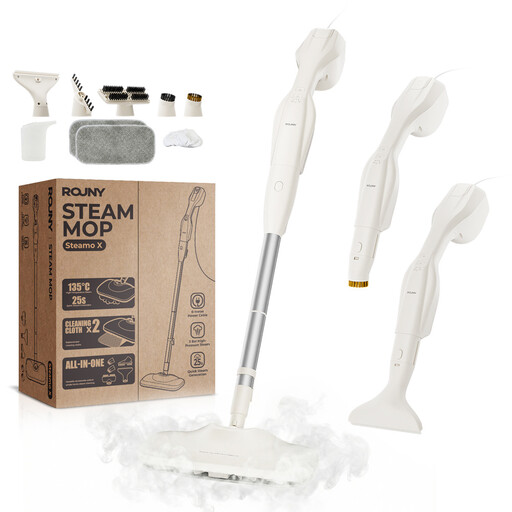
Why this product suits this profile: This model combines floor cleaning and a handheld unit in one appliance, offering a straightforward introduction to versatile steam cleaning.
The technical specifications state the heat-up time, tank capacity, steam output and cable length. This makes it easier to assess suitability than relying on wattage alone.
Around 25 seconds’ heat-up time, two steam settings, a 6-metre cable and five specified attachment types for floors, windows, walls and kitchen areas.
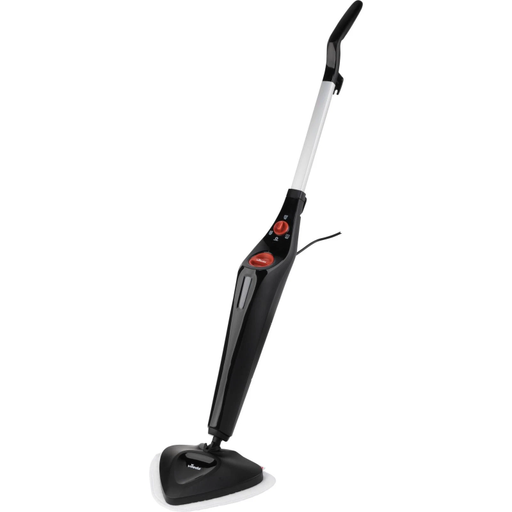
Why this product suits this profile: If you mainly want to clean hard floors and tiles, this floor model is focused on these tasks and has a straightforward design.
The usage limits are clearly stated: sealed hard floors and suitable carpets are recommended, while unsealed wood and delicate surfaces are not suitable.
1,550 watts, a 0.4-litre tank, approximately 15 minutes of stated operating time, plus a carpet glider and adapter.
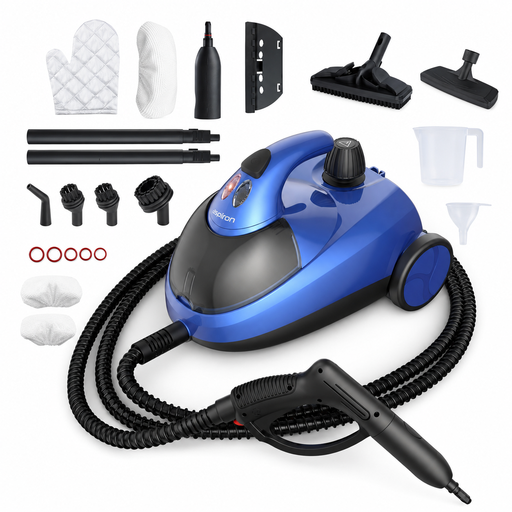
Why this product suits this profile: The combination of a large tank and multiple accessories is aimed at households that regularly clean several areas, such as the bathroom, kitchen, glass and selected upholstery.
The product description lists specific areas of use and advises testing delicate textiles on a concealed area first. This helps prevent incorrect use.
2,000 watts, up to 4 bar, a 1.5-litre tank and a 13-piece accessory set for floors, grout, glass and selected textiles.

Why this product suits this profile: For larger cleaning areas and frequent use, the six steam settings and large tank are particularly useful.
The steam intensity can be adjusted for different tasks. The product also provides guidance on condensation, cold glass and delicate materials.
1,500 watts, 3.5 bar, approximately 15 seconds’ heat-up time, a 1.6-litre tank and a ten-piece accessory set.
We have compiled a complete, regularly updated list of products that fully meet these strict selection criteria and the safety regulations applicable in the EU.
Before using the appliance for the first time, check the instruction manual and the care instructions for the surface. The following points are particularly important:
A steam cleaner does not always replace the need to remove dust and coarse dirt beforehand. Hair, crumbs and loose particles should first be picked up with a vacuum cleaner or brush.
Power consumption depends on the appliance’s power rating and its actual operating time. A 1,500-watt appliance uses 1.5 kWh during one hour of continuous operation. In practice, heating usually takes place for shorter periods, with pauses in between. There are also costs for water and, where applicable, replacement covers and descaling in accordance with the instructions.
It is not possible to give a general fixed lifespan. This depends on water quality, care, frequency of use and the availability of spare parts. Emptying and drying the appliance regularly, as well as descaling it correctly, can help with maintenance. If you notice unusual noises, damaged cables or leaking water, stop using the appliance.
Only if the surface is sealed and the floor manufacturer permits steam cleaning. Excessive heat or moisture can damage joints, coatings or wood. A low steam setting, short movements and a preliminary test on an inconspicuous area are advisable. Steam cleaning should be avoided on unsealed wood.