
Lieferung heute & morgen

Qualitätsgarantie

Willkommens-Angebote freischalten: KOSTENLOSE Lieferung | Bis zu 80 % RABATT | Kostenlose 30-Tage-JoyPlus-Testphase
App herunterladen
A steam cleaner can clean bathrooms, kitchens, sealed hard floors, glass surfaces and selected fabrics with hot steam. For households, this is particularly appealing if you want to use as few harsh cleaning products as possible. However, devices differ significantly in steam pressure, heat-up time, tank capacity, accessories and suitable surfaces.
As a Joybuy Product Recommendation Officer, I filter product specifications according to practically comparable criteria. This helps you avoid typical buying mistakes before a device ends up in your home that isn't suited to the tasks you have in mind.
The power consumption in watts mainly describes how much electrical power the device draws. It doesn't automatically tell you how consistently steam is produced or how easy a steam cleaner is to use. What also matters are steam pressure, heat-up time, steam regulation and the design of the nozzles.
A model with 1,500 watts can be sufficient for many household tasks, while a device with 2,000 watts may be more practical thanks to a larger tank and longer steam intervals.
Hot steam isn't automatically suitable for every material. Unsealed wood, delicate fabrics, leather, heat-sensitive plastics and certain types of laminate or parquet can be damaged by moisture or temperature.
When choosing a steam cleaner for floors, you should always check:
Before using it over a large area, it's advisable to test it on an inconspicuous spot.
A steam cleaner with accessories can be versatile, but the number of attachments alone isn't a sign of quality. For grout, small brushes or precision nozzles are important; for windows, a squeegee; and for floors, a suitable floor head. For upholstery, the right fabric attachment and controlled application are key.
Steam pressure is usually given in bar. Values around 3 to 4 bar can be suitable for many typical household tasks, such as tiles, grout, fittings or kitchen surfaces. However, the actual cleaning comfort also depends on the steam volume and nozzle design.
Steam regulation is helpful if a device is intended for both robust tiles and more delicate fabrics that are explicitly suitable for steam. For stubborn deposits, a concentrated nozzle can be useful; for larger areas, a wide attachment distributes the steam more evenly.
A steam cleaner with a large water tank reduces interruptions for refilling. Models with a capacity of around 1.5 to 1.6 litres are often used for several rooms. However, the stated running time depends on the selected steam intensity and is therefore a guideline.
It's also important whether the tank can be refilled during operation or whether the device needs to cool down first. If you regularly want to clean floors, the bathroom and the kitchen, you should assess tank size and the refilling process together.
For a steam cleaner for tiles and grout, detail brushes, nozzles and extensions are practical. A steam cleaner for windows should have a suitable squeegee. For a steam cleaner for upholstery, the fabric attachment must match the surface; too much moisture can penetrate fabrics.
Steam can loosen residue, but it doesn't replace mechanical wiping for every type of soiling. Loose dirt should be picked up with a clean cloth. For glass, avoid a large temperature difference, as cold panes can be stressed by direct heat.
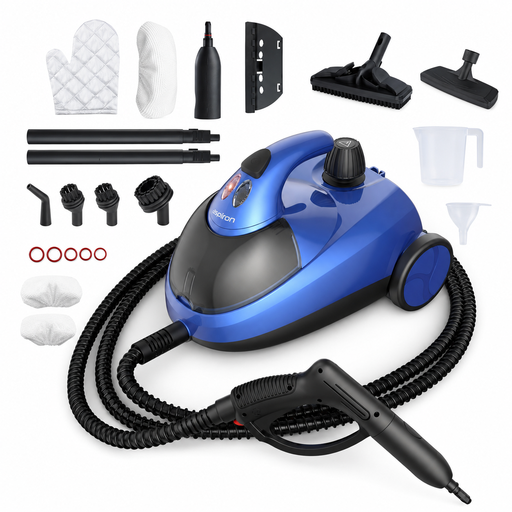
Why this product fits the profile: With 2,000 watts, up to 4 bar, a 1.5-litre water tank and up to 45 minutes of steam, this model is designed for typical tasks throughout the home.
The equipment isn't limited to a single nozzle: a 13-piece set covers floor, detail, brush, glass and fabric applications.
1.5-litre tank; up to 45 minutes of steam; suitable for selected floors, glass surfaces, tiles and fabrics after surface testing.
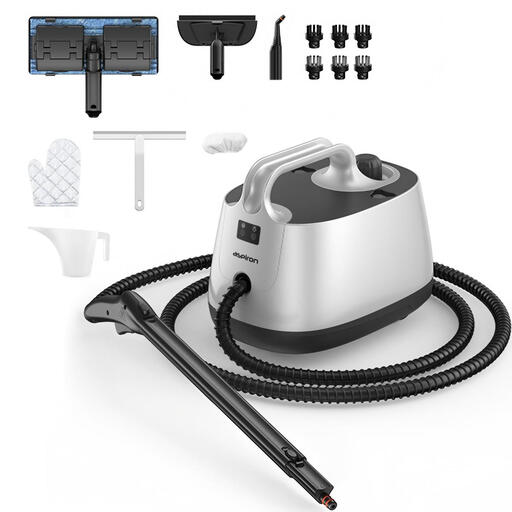
Why this product fits the profile: This device combines 1,500 watts, 4 bar, steam up to 145 °C and 21 accessories for different areas around the home.
The high number of accessories is complemented by specific areas of use: floors, windows, grout, upholstery, carpets and vehicle interiors.
21-piece accessory set; 1.5-litre water tank; 4 bar steam pressure; designed for use with water without harsh cleaning products.
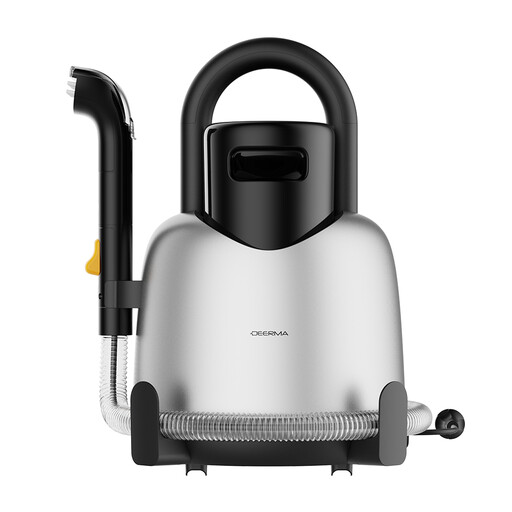
Why this product fits the profile: If you regularly clean upholstery, carpets, car seats or other fabrics, you get a device with steam, hot water and room-temperature water modes.
This model isn't just designed for steam; it has separate clean and dirty water tanks. This allows you to organise fabric cleaning more precisely.
1.7-litre clean water tank; 1.4-litre dirty water tank; 13 kPa suction power; five brush attachments and self-cleaning function.

Why this product fits the profile: The combination of a 1.6-litre tank, six steam levels and a stated heat-up time of 15 seconds suits multiple rooms and recurring cleaning tasks.
The six steam levels allow adjustment to different tasks. For delicate surfaces, a prior material test is still necessary.
1.6-litre tank; 3.5 bar pressure rating; six steam levels; ten accessories; operation only with suitable water as per the instruction manual.
We've put together a complete, regularly updated list of products that fully meet these strict selection criteria and the safety regulations in force in the EU.
Before buying and using a steam cleaner, you should read the safety instructions provided by the manufacturer. The following points are particularly important:
A steam cleaner without chemicals means in practice that no additional cleaning products are added to the tank for the cleaning process. The water alone doesn't always completely dissolve soiling; after steaming, a dry or damp cloth may be needed.
The consumption depends on the power and operating time. A device with 1,500 watts theoretically uses 1.5 kilowatt-hours during one hour of continuous operation. In practice, consumption is often lower because the heating doesn't run at full power constantly. For a realistic estimate, use this calculation: power in kilowatts × usage time in hours × your own electricity price.
Only if the floor manufacturer permits the application and the surface is sufficiently sealed. A low steam output, short contact time and a suitable floor cloth attachment can reduce the risk. For unsealed wood as well as damaged or open joints, you should avoid steam cleaning.
The lifespan depends on usage intensity, water quality, descaling, filter and attachment care, and storage. After each use, any residual water and moisture should be removed according to the manufacturer's instructions. Regular maintenance prevents deposits and keeps nozzles and hoses functional.