
Lieferung heute & morgen

Qualitätsgarantie

Willkommens-Angebote freischalten: KOSTENLOSE Lieferung | Bis zu 80 % RABATT | Kostenlose 30-Tage-JoyPlus-Testphase
App herunterladen
By the Joybuy Product Recommendation Officer, August 28, 2026
Steaming is a time-tested method for gently cooking food while preserving nutrients. Vegetables retain their vibrant colour and crisp texture, fish stays moist, and flavours can develop to their fullest potential. However, the market for steam cookers is crowded and confusing. Many buyers invest in products that quickly prove to be impractical or low-quality. Before you make a decision, you should be aware of the typical pitfalls that lead to disappointment.
This guide will help you separate the wheat from the chaff. We focus on the objective features that truly matter and show you how to make the right choice for your kitchen.
Many products promise more than they can deliver. Pay close attention to these three weak points to avoid a bad purchase:
steamer pot only to find it doesn't work on your induction cooktop at home. Not every stainless steel pot is automatically induction-compatible. If it lacks a ferromagnetic base, the pot will remain cold.steamer insert for pots that wobbles inside the pot, lids that don't seal tightly and let steam escape, or hard-to-clean corners and edges can significantly diminish the joy of cooking. A thoughtful design is crucial for daily use.To avoid these problems, you should focus on three core aspects. These determine the longevity, functionality, and safety of your steam cooker.
The material has a direct impact on heat conduction, durability, and taste.
steaming vegetables in the upper part. They are extremely durable and suitable for all stovetop types.bamboo steamer is placed on top of a wok or pot filled with water. The porous material absorbs excess steam, preventing the food from becoming soggy. Ideal for dim sum, baozi, or fish.Your existing kitchen equipment and cooking habits will determine which system makes sense for you.
healthy cooking.Before buying, be sure to check its suitability for your type of stovetop. An induction steamer pot requires a base with magnetisable properties. You can tell if a pot is induction-compatible by the coil symbol on the packaging or the bottom of the pot. A simple test: if a magnet sticks to the bottom of the pot, it's suitable for induction.
We have selected products tailored to specific needs that meet the quality criteria mentioned above.

Why This Fits Their Persona: This set is ideal for individuals or small households looking for a compact and durable solution. It's perfect for daily preparation of vegetables, fish, or baby food without taking up much space.
The set bypasses the material trap by using 316 stainless steel, which has high corrosion resistance. As a complete, induction-ready system, it also eliminates compatibility issues.
The combination of a pot and a perfectly fitting steamer insert offers high functionality. The tri-ply base ensures even heat distribution on all stovetops.
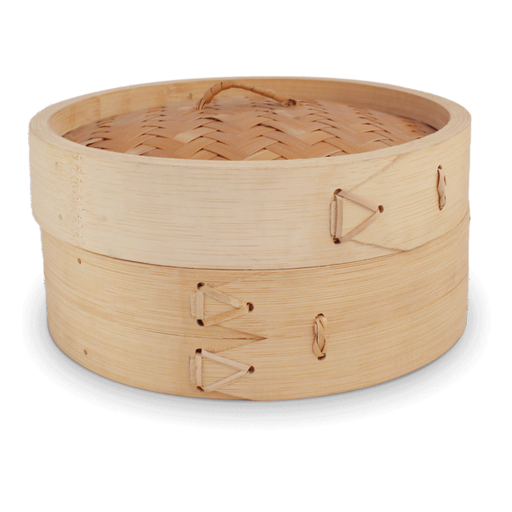
Why This Fits Their Persona: For fans of Asian cuisine, a bamboo steamer is essential. It's perfect for preparing dim sum, baozi, or steamed vegetables, and it imparts a subtle, natural aroma that can't be achieved with metal pots.
This product is designed for a clear purpose, avoiding the complexity of multi-function devices. It focuses on the traditional steaming method, thus bypassing issues like stovetop compatibility, as it can be used on any pot or wok with a matching diameter.
The bamboo material absorbs condensation and ensures a perfect cooking result. The baskets are stackable, allowing multiple dishes to be prepared at the same time.
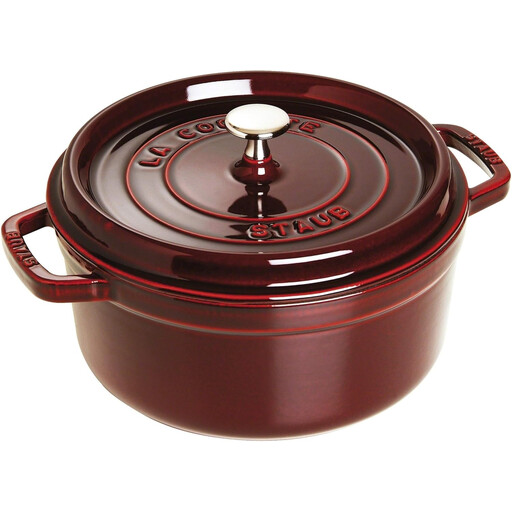
Why This Fits Their Persona: For families or ambitious home cooks who often prepare larger quantities and value versatility and durability. This 3-in-1 cast iron system is an investment that enables high-level roasting, braising, and steaming.
Thanks to the solid cast iron and high-quality enamel coating, material warping and compatibility issues are completely avoided. The roaster is suitable for all stovetops, including induction and ovens, and is extremely robust.
Excellent heat retention and distribution. The lid, with its special self-basting spikes, ensures exceptionally moist results as condensed steam drips back evenly onto the food.
We have compiled a complete, up-to-date list of products that fully meet these strict selection criteria and German safety regulations.
A bamboo steamer should never be put in the dishwasher or cleaned with dish soap, as the wood would absorb the soap. After use, clean it with hot water and a brush. Then, let it air dry completely before storing to prevent mould growth. Using parchment paper or lettuce leaves inside the basket protects it from getting dirty.
The most important factor is the fit. Measure the inner diameter and height of your pot. The insert should sit stably in the pot without wobbling. Additionally, the pot lid must still be able to close snugly. Adjustable inserts with fan-like fins offer high flexibility as they adapt to different pot sizes.
Yes. When steaming, the food only comes into contact with hot water vapour and doesn't sit directly in water as it does when boiling. As a result, water-soluble nutrients, such as vitamin C and various B vitamins, are much better preserved. The method is therefore a recognised form of nutrient-preserving cooking.