Frequent ironers with limited storage
If you regularly iron several aprons, you’ll need room for the steam generator, hose and ironing board. So don’t just look for a compact design: think about where you’ll store the whole appliance afterwards.


If you regularly iron several cotton aprons and have room for the base unit, hose and ironing board, a compact steam generator could be a good option. Steam and space claims for individual models come from their manufacturers and aren’t based on a standardised ironing test. If you only iron occasionally, a standard steam iron may take up less space, as it doesn’t have a separate base unit. Always follow the care label for the whole apron when setting the temperature and steam, rather than relying on the fact that it’s made of cotton.
If you regularly iron several aprons, you’ll need room for the steam generator, hose and ironing board. So don’t just look for a compact design: think about where you’ll store the whole appliance afterwards.
If you only need to smooth out an apron now and then, first check whether your existing steam iron will do the job. A separate steam generator needs extra space for both use and storage.
If your apron has ties, pockets, prints or different materials, check the care label for the whole garment and look for an iron with a tip that can reach tricky areas easily.
A good choice if: You regularly iron several aprons and have a safe place for the base unit and ironing board.
Things to consider: “Compact” doesn’t mean you can skip checking the measurements; you’ll also need to store the hose and cable. Manufacturers’ claims about steam and space apply to individual models.
A good choice if: You only iron aprons occasionally or don’t have a safe place to use and store a separate steam generator.
Things to consider: There’s no separate base unit to store, but that alone doesn’t tell you whether a particular iron will smooth your aprons faster or more slowly.
When choosing an ironing solution for cotton aprons in a small flat, the main thing is to decide which requirements matter most for the way you’ll use it.
| What matters | What to check before buying | Who will find this especially important? |
|---|---|---|
| Storage and safe positioning | Measurements of the complete appliance, plus space for the base unit, hose, cable and ironing board. | If I don’t have much spare storage after ironing, I need to be able to put the whole steam generator somewhere safe. Around 33% of consumers say storage is their main consideration when buying. |
| Smoothing apron panels and seams | Compare the continuous steam output and iron tip design for the exact model; don’t confuse continuous steam with a steam shot. | If I iron several aprons one after another, I compare the continuous steam output and check whether the tip can reach seams and pockets easily. Around 33% of consumers rank smoothing performance as their top buying priority. |
| Care labels and details | Check the care symbols for the whole apron and set the temperature and steam accordingly. | If my apron has prints, ties or other materials, I follow its care instructions rather than relying on the fact that it’s made of cotton. Around 17% of consumers put fabric care first. |
| Descaling and ongoing maintenance | Check the model’s instructions on water, descaling and access to the appliance; balance tank size against the space available and how easy it is to refill. | If I use the steam generator regularly, I want to know how to fill and descale it according to the instructions. Around 17% of consumers prioritise keeping maintenance to a minimum. |
According to the guide provided by GINETEX Germany and the German Cosmetic, Toiletry, Perfumery and Detergent Association, the dots in the iron symbol indicate temperature settings. Also check any instructions about steam and look out for the “Do not iron” symbol.
A steam shot and continuous steam output are two different manufacturer specifications. A high steam-shot figure doesn’t show how much steam the appliance produces during a longer ironing session.
If you’re ironing several aprons, compare the stated continuous steam output for the complete model. Treat these figures as manufacturer specifications, not the results of a standardised ironing test.
Even a compact steam generator needs room for the base unit, hose and ironing board.
Measure the space where you plan to use and store it, then compare this with the dimensions of the complete appliance. Check how the hose and cable can be stored, too.
For the Rowenta DG7623, a Joybuy listing differs from Rowenta’s product description: the listing says it has a removable tank, while the manufacturer describes an integrated tank.
Check the exact model reference to confirm the specifications before planning to remove the tank.
The Express Essential SV6115 is a specific steam generator with manual steam and temperature settings, which may suit aprons with different care requirements.
Braun says the CareStyle Compact combines a slim storage design with a separate steam generator.
The Compact Steam Pro DG7623 is described as suitable for regular ironing where space is limited. Rowenta says it has a transport lock.
The BA 3192 is a steam generator with a larger tank. It’s an alternative if avoiding frequent refills matters more than minimising storage space.
This selection includes steam generators for ironing several aprons, plus a standard steam iron without a separate base unit.
 No image available
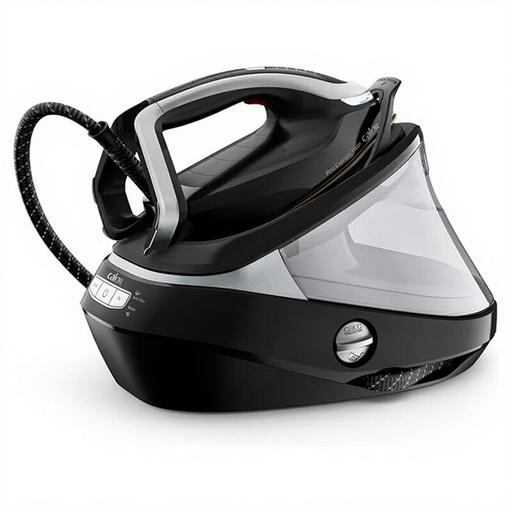
If you’re ironing several aprons one after another, the stated continuous steam output is a useful comparison point. Also check that the steam generator will fit in your storage space.
180 g/min continuous steam; 800 g/min steam shot; removable 1,2-l tank; 3000 W; self-cleaning function.
 No image available
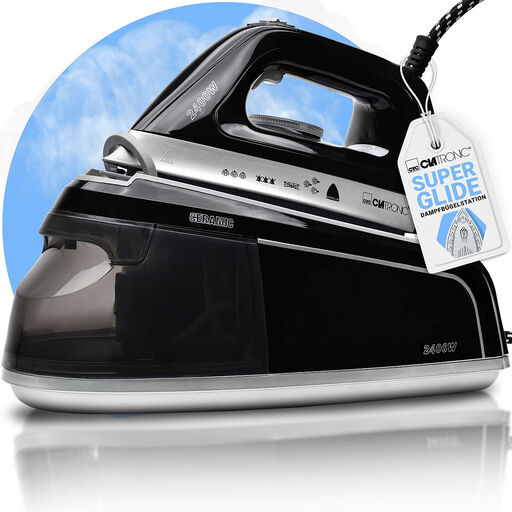
The cable storage compartment and transport lock are useful if you put the steam generator away after ironing. Still, check the space you have against the measurements of the complete appliance.
3,5 bar; steam output of up to 90 g/min; 1,2-l tank; 2400 W; cable storage compartment and transport lock.
 No image available
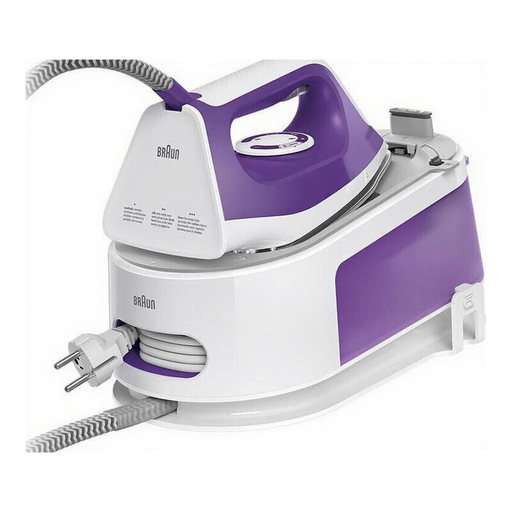
The stated continuous steam output and precision thermostat are useful features if you iron several aprons with different care requirements.
120 g/min continuous steam; 6 bar; 1,5-l tank; precision thermostat; vertical steam function; Calc’n clean descaling system.
 No image available
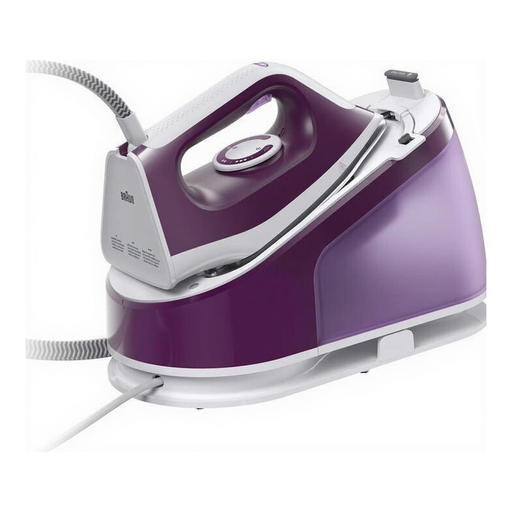
If you iron several aprons, compare the stated continuous steam output and tank capacity with your needs and the space you have available.
120 g/min continuous steam; 6 bar; 1,7-l tank; four temperature settings; vertical steam function; Easy CalcClean system.
 No image available
This standard steam iron is an alternative if you don’t want to make room for a separate steam generator.
40 g/min continuous steam; 160 g/min steam shot; 250-ml tank; 2500 W; vertical steam function.
No. Follow the ironing symbol on the specific apron. The guide provided by GINETEX Germany and the German Cosmetic, Toiletry, Perfumery and Detergent Association explains the temperature settings and warns against using steam at the lower setting. It also includes the “Do not iron” symbol.
Follow the descaling method in the instructions for your exact model. Philips warns that limescale can cause marks and reduce steam output. The steps it describes apply only to the Philips ranges specifically listed, so don’t assume they’re suitable for other steam generators.
For electrical appliances that EU rules require to carry a CE marking, the manufacturer uses it to declare that the relevant product requirements have been met. The European Commission says it isn’t an independent assessment of ironing performance. When looking at a specific listing, check for the marking and make sure the product is clearly identified.
No. As the Verbraucherzentrale explains, if a product is faulty, your statutory rights are against the seller. A manufacturer’s guarantee is a voluntary promise and is subject to its own terms. Online purchases may also come with a legal right to cancel, subject to specific conditions and exceptions.