People who iron shirts regularly
If you iron several cotton shirts in one go, continuous steam and a convenient way to top up the water are important points to compare. Philips and Tefal list these features on selected models.


If you’re ironing several cotton shirts in a row, focus on continuous steam, whether you can top up the water and how easy the tip is to manoeuvre. A short burst of steam alone tells you little about how well an iron will handle a whole batch of shirts. If space is limited or you live in a hard-water area, also consider the dimensions of the base, any moisture on the ironing board and how the specific model is descaled. Always follow the care label for the correct temperature for each shirt.
If you iron several cotton shirts in one go, continuous steam and a convenient way to top up the water are important points to compare. Philips and Tefal list these features on selected models.
When it comes to collars, cuffs and button plackets, the shape of the tip and how easily you can manoeuvre it may be deciding factors. Rowenta lists a precision tip for the DG9246, while Braun gives several operating modes for the IS 5245 BL.
If storage, descaling or keeping your work surface dry matters to you, check the dimensions, maintenance process and how the iron handles condensation. Philips notes that harder water can lead to limescale build-up and that moisture may form on the ironing board cover.
| What you need | What to check when buying | Who is this important for? |
|---|---|---|
| Ironing several shirts in one go | Compare continuous steam output, tank type and whether you can refill while the iron is in use. | If I’m ironing several shirts one after another, I want to stop for a refill as rarely as possible. Around 36% of consumers prioritise ironing a batch of shirts without interruption. |
| Working on collars, cuffs and button plackets | Check the tip’s shape, steam output at the tip, ease of handling and operating modes on the specific model. | When working on small shirt details, I want to be able to guide the iron precisely rather than focus only on tank size. Around 29% of consumers pay particular attention to detail work. |
| Allowing for limescale and moisture | Check the model’s instructions for its descaling process and the type of water you can use; check the ironing board cover for moisture. | If hard water or a damp cover could be a problem for me, I want to understand the maintenance requirements and steam settings. Around 21% of consumers prioritise maintenance and a dry work surface. |
| Setting up and storing the base | Check the base’s dimensions and weight against the space you plan to use; make room to store the hose and cable. | If I have limited surface space, I want to know whether the base and iron will be easy to put away after use. Around 14% of consumers prioritise the space needed. |
A steam boost is not the same as the continuous steam output you’ll use to iron a whole batch of shirts. Tefal lists continuous steam of 130 g/min and a steam boost of 520 g/min for the Express Protect SV9202.
Compare the two figures separately, and consider the tank and ease of handling too.
Philips notes that harder water can cause deposits to build up more quickly, potentially affecting steam output and cleanliness.
Before you buy, check how the specific model is descaled and what type of water the instructions say you can use.
Cleaning your model correctly takes time, so follow its instructions.
Philips explains that steam can condense on the ironing board cover. You’ll also need a suitable place for the base.
Measure the space available, and check whether the cover or board gets damp during longer ironing sessions.
The PerfectCare 6000 PSG6020/30 may suit longer ironing sessions, provided the tank and dimensions work for your space.
The Express Protect SV9202 is an option if a removable limescale collector and the ability to refill while ironing suit your needs.
The CareStyle 5 IS 5245 BL may appeal to buyers looking for a choice of operating modes.
The Silence Steam Pro DG9246 is worth considering if a precision tip and adjustable settings matter more to you than having the largest possible tank.
These steam generator irons are aimed at people who iron cotton shirts and want to compare continuous steam, tank size, ease of handling or maintenance.
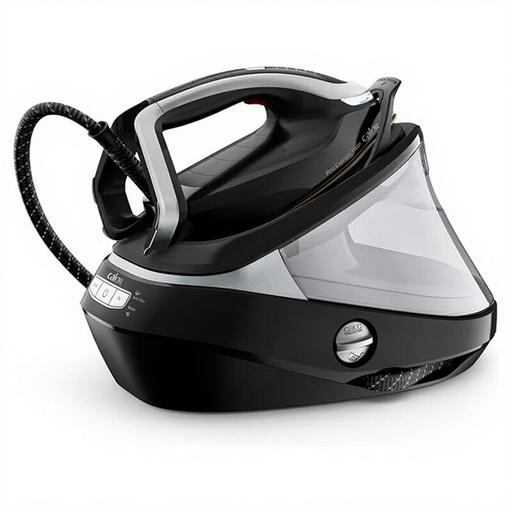 No image available
For longer ironing sessions, if continuous steam and a removable tank suit your needs.
3000 W; 1.2 l tank; 180 g/min continuous steam; 800 g/min steam boost. The product description lists a self-cleaning function.
Unplug before filling, cleaning or leaving unused for an extended period; the product description warns that the soleplate and steam get hot.
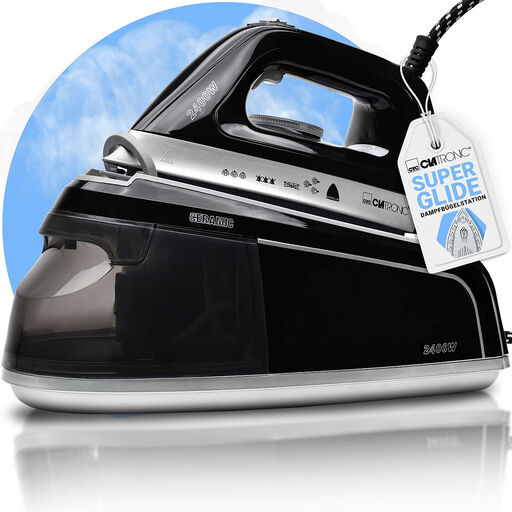 No image available
For shoppers who want to compare tank capacity and adjustable temperature when choosing an iron.
Ceramic soleplate; 3.5 bar; 1.2 l tank; up to 80 minutes’ operating time; consistent steam up to 90 g/min. The description lists stepless temperature control and an electronic anti-drip system.
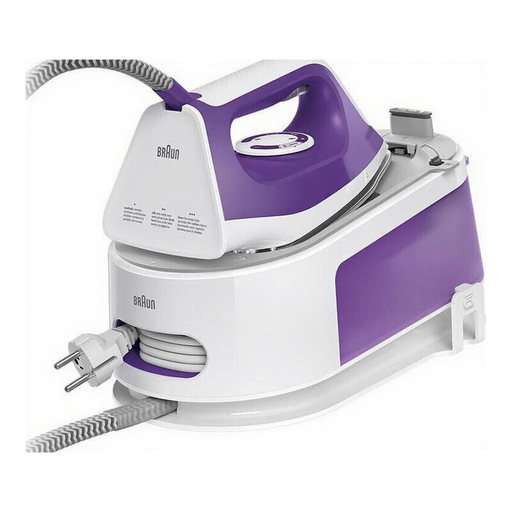 No image available
For longer ironing sessions, if continuous steam and a larger water tank suit your needs.
Ceramic soleplate; 120 g/min continuous steam; 1.5 l tank. The description lists vertical steam, drip stop and Calc’n clean.
Unplug the iron before filling, emptying or cleaning it; the description warns that surfaces and steam get hot.
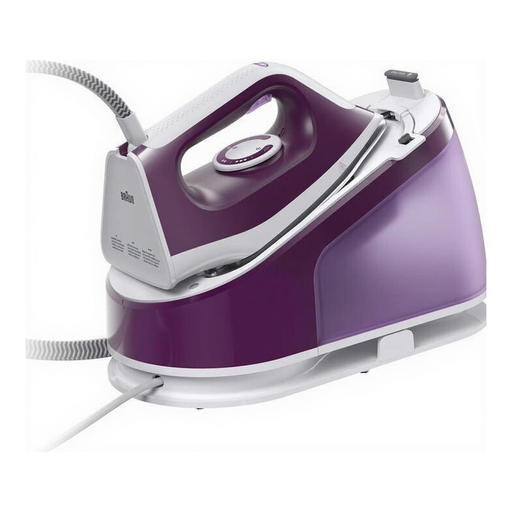 No image available
For shoppers comparing tank size, continuous steam and a soleplate shape that’s easy to guide over a shirt.
120 g/min continuous steam; 1.7 l tank; ceramic soleplate with FreeGlide 3D. The description lists four temperature settings, vertical steam and a descaling reminder.
Unplug the appliance before filling it; the description warns that surfaces and steam get hot.
No. Follow the maximum ironing temperature on each shirt’s care label rather than relying on the fact that it’s made from cotton. An automatic temperature setting on your iron does not override the care label.
Check the troubleshooting advice for your model and the condition of the ironing board cover. Philips lists condensation in the hose and moisture forming on the board as possible causes; if condensation is the issue, a lower steam setting may help.
Yes, if the instructions for your specific model say so. Philips notes that limescale can build up more quickly in hard water; the right process depends on the appliance.
For your statutory consumer rights, the seller is generally your first point of contact. The Verbraucherzentrale describes a two-year statutory warranty period for new goods and distinguishes it from a voluntary manufacturer’s guarantee; the rights available to you depend on the specific purchase and fault.
Look for product labelling, manufacturer details and German instructions that include the necessary guidance and safety warnings. The Bundesnetzagentur lists these points as part of its market surveillance. According to the European Union, the CE marking indicates that the manufacturer declares the product meets the relevant EU requirements. It is not an independent quality mark.