Short on space after ironing
If you iron cotton skirts but have little room to leave the steam generator iron, ironing board and possibly slightly damp clothes out, storage and condensation are important considerations.


Choose a steam generator iron for cotton skirts based on the care label, adjustable steam and the space needed for the appliance, ironing board and airing clothes – not just the size of the base. Being able to reduce the steam output can be an important consideration when drying space is limited. A powerful steam output is more useful if you’re ironing several heavily creased, ironable items and have enough room to air them afterwards. Philips notes that steam ironing can cause condensation and leave clothes slightly damp; the manufacturer’s steam output figures don’t tell you how damp your skirt will be after ironing.
If you iron cotton skirts but have little room to leave the steam generator iron, ironing board and possibly slightly damp clothes out, storage and condensation are important considerations.
If you often iron heavily creased, ironable cotton skirts, you can weigh up continuous steam, tank capacity and ease of use against the space required and the chance of clothes becoming damp.
If you also iron blended fabrics, linings or delicate details, as well as cotton, adjust the steam and temperature according to the care instructions for the whole garment.
Measure the space you’ll need for the steam generator iron, ironing board and airing clothes, and check whether the steam output can be reduced on the specific model. Applicable EU product regulations apply to electric steam generator irons. According to Your Europe, the CE marking is the manufacturer’s declaration, not proof of independent product testing. So check the markings and product documentation for the appliance you’re considering.
The percentages refer to consumers choosing a steam generator iron for cotton skirts when drying space is limited; each figure represents their main purchasing priority.
| Priority | What to check when buying | Who is this most important to? |
|---|---|---|
| Space and dampness | Check the dimensions and storage requirements of the steam generator iron and ironing board, and whether the steam output can be adjusted or reduced. | If I have very little room to air clothes, storage space and less condensation matter more to me than a high steam output. Around 33% of consumers are likely to share this priority. |
| Creases in cotton | Distinguish continuous steam from a short burst of steam; check the steam settings and soleplate on the specific model. | If I often iron heavily creased, ironable cotton skirts, I look for continuous steam rather than just a short burst. Around 27% of consumers are likely to prioritise smoothing out stubborn creases. |
| Care labels and details | Check the care symbols for the whole skirt and see whether the steam can be reduced or switched off as needed. | If a skirt has a lining, blended fabric or delicate details, I want to be able to follow its care label. Around 20% of consumers are likely to prioritise gentle fabric care. |
| Descaling and maintenance | Check the descaling process and any parts required in the instructions for the exact model number. | If I use my steam generator iron regularly, I want to know how descaling and maintenance work before choosing a model. Around 20% of consumers are likely to make easy maintenance their main priority. |
Even a compact steam generator iron needs a work surface. During longer ironing sessions, condensation can leave the ironing board cover or clothes slightly damp; Philips notes this can happen with its steam generator irons.
Measure the space you have for using and storing the appliance alongside the ironing board, and plan where you’ll air the skirt and cover after ironing.
A short burst of steam doesn’t tell you how much steam is released continuously during longer ironing strokes. Tefal and Rowenta list these figures separately for their respective models.
For the model you’re considering, compare continuous steam, adjustability and tank capacity rather than focusing only on the highest advertised figure.
Care symbols may specifically prohibit steam. GINETEX Germany notes that steam can cause damage where the care label indicates this; an automatic setting doesn’t override the care label.
Read the care label for the whole skirt and set the temperature and steam accordingly.
The recall published by Philips on 9 December 2024 affects certain combinations of model and serial numbers in the PSG8, PSG90 and GC96 ranges, not every Philips steam generator iron.
Check both numbers against the manufacturer’s information. If your appliance is affected, stop using it, unplug it and contact Philips for a remedy.
According to Philips, the PerfectCare 6000 Series PSG6023/20 is a compact steam generator iron with a removable 1,8-l tank and OptimalTEMP technology for ironable fabrics.
According to Tefal, the Power Pro Compact 200 SV6211 has a fixed 1,7-l tank and manually adjustable steam.
The CareStyle Compact range, including the IS 2144 BK, is designed to save space and features a 1,5-l tank, vertical steam and automatic shut-off.
According to Rowenta, the Compact Steam Pro DG7623 is a compact steam generator iron with an integrated, refillable 1,1-l tank and vertical steam.
This selection features steam generator irons with vertical steam for refreshing ironable skirts on the hanger. For precise creases and hems, vertical steam isn’t necessarily a substitute for ironing on a flat surface.
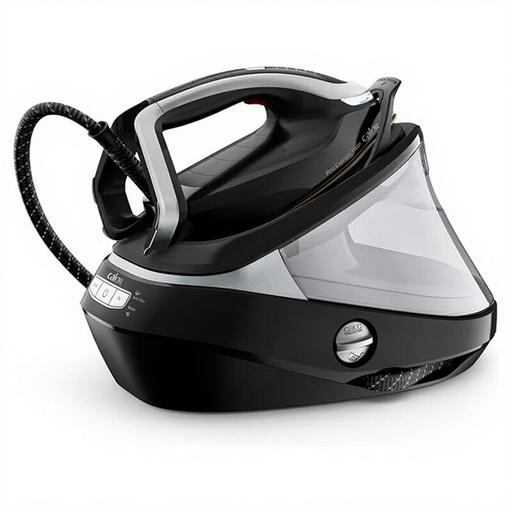 No image available
Vertical steam is one way to freshen up ironable skirts on the hanger; a flat ironing surface is still useful for hems.
Removable 1,2-l tank; 180 g/min continuous steam; Durilium AirGlide soleplate. The product name also lists a steam boost of 800 g/min, which shouldn’t be confused with the continuous steam figure.
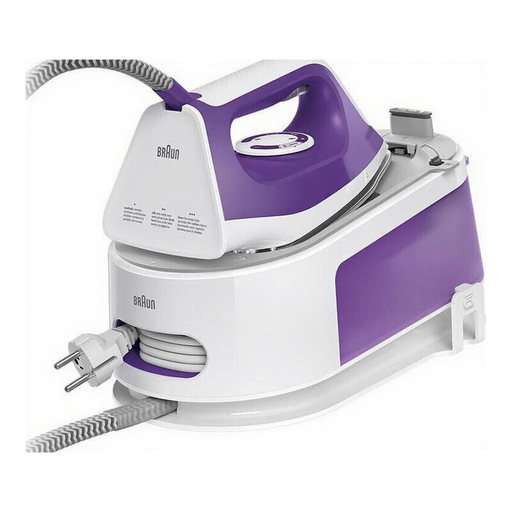 No image available
The product details list vertical steam as a way to freshen up a suitable skirt on the hanger.
1,5-l tank; 120 g/min continuous steam; ceramic soleplate; precision thermostat.
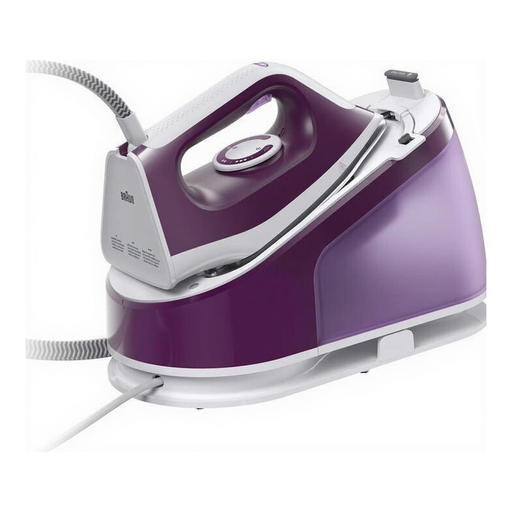 No image available
The product details list vertical steam for freshening up suitable garments on the hanger.
1,7-l tank; 120 g/min continuous steam; ceramic soleplate; four temperature settings.
No. Follow the care label for the specific skirt, even if it contains cotton. GINETEX Germany explains that care symbols show which treatments are permitted. If the label says to iron without steam, an automatic fabric setting doesn’t mean you can use steam.
First check whether the padding in the cover is worn, and reduce the steam if your model allows it. Philips says that its steam generator irons can cause condensation on the cover and leave clothes slightly damp. Let the skirt and cover air thoroughly before putting them away.
Follow the descaling instructions for the exact model number. Manufacturers recommend different methods: a reusable Smart-Calc-Clean container for the Philips PSG6023/20, self-cleaning for the Tefal SV6211 and an anti-calc flush system for the Rowenta DG7623.
No. According to Your Europe, the CE marking is the manufacturer’s declaration that the product meets the applicable EU requirements; it isn’t proof of independent product testing. The Bundesnetzagentur lists checking the marking and product identity as relevant aspects of market surveillance.