People with set times for ironing linen scarves
If you iron several scarves during an agreed time slot, it’s worth considering warm-up time, refilling and how easy the appliance is to use.


Start by choosing a setting permitted by the care label on each scarf; a powerful steam setting isn’t suitable for every one. If you have several scarves to iron within a set time, warm-up time, refilling and appliance care also matter. An automatic temperature setting can make it easier to switch between fabrics that can be ironed.
If you iron several scarves during an agreed time slot, it’s worth considering warm-up time, refilling and how easy the appliance is to use.
If you’re ironing linen, blended fabrics or scarves with different care instructions, the treatment must be suitable for the label on each item.
If you put the iron away after use or share it with others, also consider the transport lock and the care instructions for the specific model.
Check the care label on each scarf before choosing a temperature or steam setting. GINETEX recommends following the maximum temperature permitted by the label, rather than choosing a setting based on the fibre alone.
| What matters | What to check when buying | Who will find this especially important? |
|---|---|---|
| Stubborn creases | Check the care label and compare continuous steam and steam boost separately. | If I want to smooth out creases, I look at the continuous steam available and whether the care label permits this treatment. Around 36% of consumers list crease removal as their main concern. |
| Shared time slot | Check the warm-up time, tank capacity and whether you can refill while ironing. | If I only have a set time slot, I want to get started quickly and be able to plan for interruptions. Around 29% of consumers say their main concern is being able to plan their ironing sessions. |
| Different care labels | Check the ironing symbol and steam instructions; see what manual settings are available and how far the automatic settings can go. | If I switch between scarves with different care labels, I want to choose the setting to suit each one. Around 21% of consumers say following care labels and protecting fabrics are their main concerns. |
| Storage and descaling | Compare the transport lock and the descaling method for each model. | If I put the appliance away after sharing it, I want a suitable lock and a straightforward care routine. Around 14% of consumers prioritise storage and appliance care. |
A steam boost is a short burst and doesn’t tell you how much steam is available continuously. Tefal lists separate figures for continuous steam and steam boost for the SV9202E0.
Compare the two figures separately and choose a setting that follows the care label on each scarf.
The fibre alone doesn’t determine the permitted temperature. GINETEX advises checking the care label on each individual item.
Check the ironing symbol on every scarf before using a high temperature or powerful steam.
The models considered here use different methods, including Calc-Clean, a removable limescale collector or a rinsing function.
Follow the instructions for your specific model, particularly if several people use the iron.
The CareStyle 3 IS3231GY illustrates the choice between Eco iCare and a Turbo mode.
The PerfectCare 6000 PSG6023/30 is designed for people who don’t want to adjust the temperature manually when switching between fabrics that can be ironed.
The Express Protect SV9202E0 is an example of an iron with no manual temperature selection, a refillable tank and a removable limescale collector.
The Turbosteam VR8320F0 is an option for people who want to set the temperature and steam themselves and refill during a longer ironing session.
This selection includes steam generator irons for people who want to set the steam and temperature themselves and iron linen scarves during shared ironing sessions.
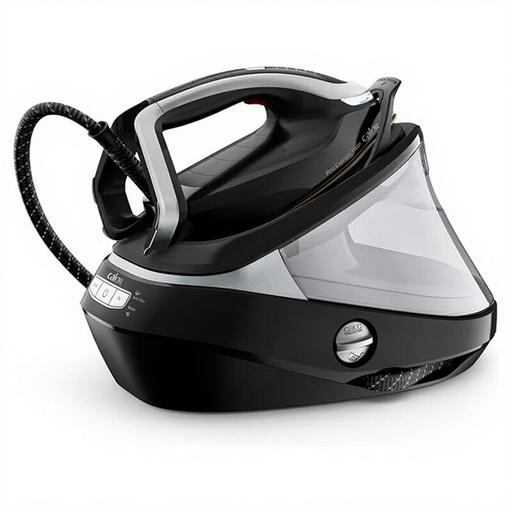 No product image available
Manual temperature and steam settings suit people who want to choose their settings based on the care label.
3000 W; 1,2-l water tank; 180 g/min continuous steam; 800 g/min steam boost.
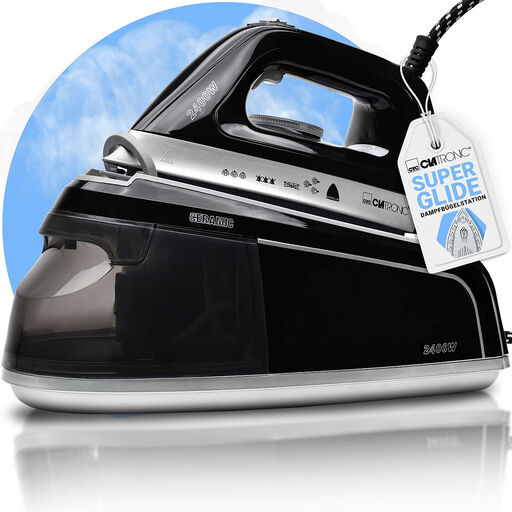 No product image available
Manual settings suit people who want to adjust the temperature and steam themselves to match the care label.
3,5 bar; 1,2-l water tank; 80 minutes’ operating time; 2400 W; Superglide soleplate.
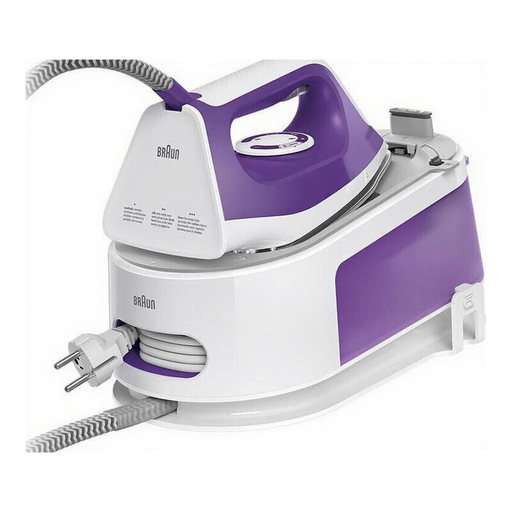 No product image available
Manual temperature control suits people who want to choose the right treatment themselves by checking the care label.
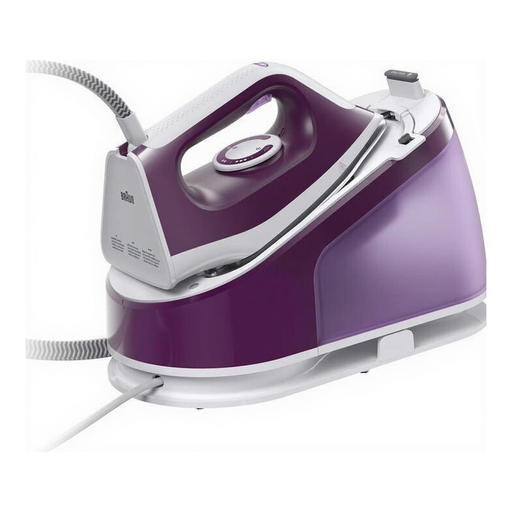 No product image available
Manual settings with several temperature levels suit people who want to adjust the settings themselves to match the care label when switching between scarves.
No. Don’t choose a setting based on linen as a fibre alone. GINETEX recommends checking the care label on the specific item to find the maximum permitted temperature; the symbol for a maximum of 110 °C means you should iron without steam.
Check the warm-up time for the specific model and whether you can refill it while ironing. The manufacturers state that both the Tefal SV9202E0 and Rowenta VR8320F0 take two minutes to heat up and can be refilled continuously. This doesn’t give you a measured total ironing time for your scarves.
Follow the instructions and cleaning indicator for your specific model. Tefal notes that water hardness affects how often the appliance needs cleaning; Philips lists Smart Calc-Clean with a reminder function for the PSG6023/30. There isn’t one descaling schedule that applies to every iron.
Your statutory rights are a claim against the seller; a manufacturer’s guarantee is a separate, voluntary benefit. The Verbraucherzentrale states that statutory rights generally apply for two years from the date of purchase or handover, and explains the conditions for making a claim when goods are faulty.
According to the Bundesnetzagentur, appliances with formal defects, such as a missing CE mark where one is required or missing details of the responsible economic operator in the EU, must not be offered for sale in Germany. A label alone doesn’t replace checking the specific product listing. The Bundesumweltministerium advises that a discarded iron should be taken to an authorised collection or return point, not put in household waste. Retailer obligations depend on the requirements set out in law.