Who should consider this?

Families who often repair clothes with patches

If you’re repairing children’s jeans, for example, first check that the patch, the fabric it’s going on and the ironing method are compatible. Prym recommends sewing patches on as well when repairing areas of jeans that get a lot of wear.

Families with extra ironing to do

If you regularly iron several garments as well as carrying out repairs, ease of use, tank capacity and storage space will all play a part in your choice. Comparing manufacturers’ specifications for individual models can help you assess these features.

Households with delicate fabrics

If you also repair nylon or technical clothing, check whether a no-heat method is more suitable for the material. Prym offers self-adhesive patches for nylon, polyamide and technical fabrics.

What should you look for when buying?

Your existing iron or a no-heat repair method

A good fit if: you only apply patches occasionally or repair delicate fabrics.

Bear in mind: The patch instructions and the fabric’s suitability determine the method. You may also need to sew on a patch if it’s going on an area of jeans that gets a lot of wear.

Steam generator iron with manual temperature control

A good fit if: you regularly iron the family laundry and need to set a specific temperature for a patch.

Bear in mind: Manual controls don’t confirm that a model can press a particular patch at the right temperature without steam.

Steam generator iron with automatic temperature control

A good fit if: you mainly want to smooth a variety of ironable fabrics and don’t need to select a specific bonding temperature.

Bear in mind: A manufacturer’s claim that a model is suitable for ironable fabrics doesn’t confirm that it’s suitable for adhesive layers or can be used without steam.

Priority What to check when buying Who considers this important?
Applying a patch correctly Patch instructions and care label; temperature control and dry-ironing function. When I attach a patch to clothing, I want to follow the adhesive and fabric instructions. Around 40% of consumers put getting the application right first.
Ironing the family laundry Compare the amount of ironing, tank capacity and space required. When there’s laundry to iron for several family members regularly, I care about how easy the appliance is to use day to day. Around 30% of consumers prioritise having extra laundry to iron.
Protecting delicate materials Check the fibre content, care label and whether the repair method is expressly suitable. When I’m repairing nylon or technical fabric, I don’t want to apply unsuitable heat. Around 20% of consumers put fabric suitability first.
Space and maintenance Footprint and storage; descaling instructions for the specific model. If I have limited space or want to keep maintenance to a minimum, the appliance needs to be easy to set up and care for in my home. Around 10% of consumers prioritise space and appliance maintenance.

Common mistakes when ironing on patches

  • Assuming more steam means a stronger bond

    Instructions vary: one supplier of iron-on badges says to use the iron without steam, while Vlieseline specifies using a damp cloth for one step when working with Vliesofix.

    First check the instructions for the specific patch and the garment’s care label. Then choose the appliance settings accordingly; steam output figures don’t prove that an adhesive will bond more effectively.

  • Assuming a temperature setting for laundry will work for adhesive patches

    Philips describes OptimalTEMP as suitable for ironable fabrics. This doesn’t confirm that it provides the right bonding temperature for the adhesive on a particular patch.

    If the patch instructions specify a temperature, check whether the specific model lets you select it and work without steam.

  • Buying a steam generator iron for every type of repair material

    Prym offers self-adhesive patches for nylon and technical fabrics. An iron is therefore not automatically the right method for every repair.

    First check the material, care label and patch instructions. Then consider a steam generator iron based on how much extra ironing your household needs to do.

Brands and models to help you choose

Rowenta

The Perfect Steam Pro DG8626 has manual steam and temperature controls. It may suit households that iron clothes as well as applying patches.

  • Rowenta lists a precision tip, a 1,1-l tank and automatic shut-off for the DG8626.
  • The model specifications don’t confirm that it offers the right bonding temperature or is suitable for a particular adhesive patch.

Tefal

The Express Essential SV6115 has manual controls, while Tefal says the Express Vision SV8152 doesn’t require settings to be selected.

  • Tefal lists a 1,4-l tank and compact footprint for the SV6115, and a 1,8-l tank and removable limescale collector for the SV8152.
  • These ease-of-use features apply to the models listed and don’t confirm that they can be used to apply a particular patch.

Philips

The PerfectCare 6000 PSG6022/20 may suit households that want straightforward temperature control when ironing ironable fabrics.

  • Philips lists OptimalTEMP, a removable 1,8-l tank and Smart Calc-Clean.
  • The manufacturer’s claims about ironable fabrics don’t confirm that the model is suitable for adhesive layers or a specific bonding temperature.

Braun

The CareStyle 7 IS7262GY may suit those who iron regularly and want Eco, iCare and Turbo programmes.

  • Braun lists a constant steam output of 150 g/min for this model and highlights its handle and soleplate with its own product specifications.
  • The specifications don’t confirm that you can manually select a bonding temperature or use it with a particular patch.

Steam generator irons for the family laundry and patches

The steam generator irons below are intended for households that iron the family laundry as well as applying patches. Before using one to apply a patch, check whether it can be used without steam and whether it meets the instructions for that specific patch.
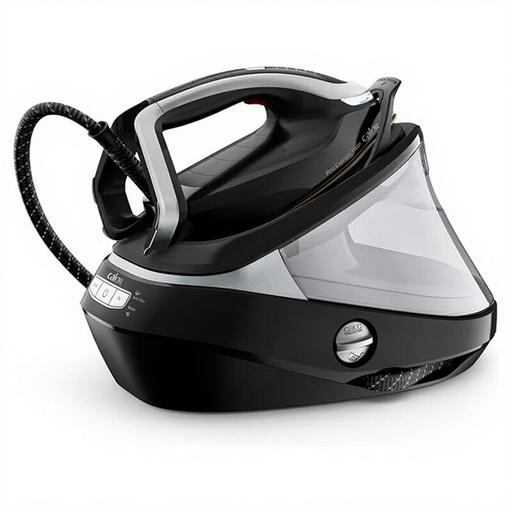
Tefal Pro Express Vision GV 9821 steam generator iron

Tefal Pro Express Vision GV 9821 steam generator iron

For households that regularly iron clothes as well as applying patches; for patches, the temperature and dry-ironing function need to match the relevant instructions.

Tank capacity: 1,2 l.

View at Joybuy
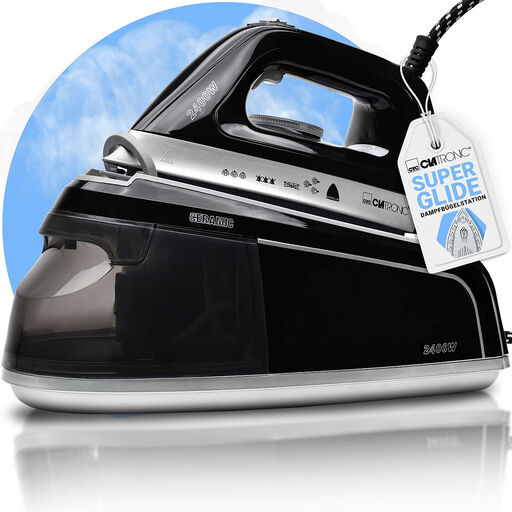
Clatronic DBS 3749 steam generator iron, black

Clatronic DBS 3749 steam generator iron, black

For households that iron clothes in addition to carrying out occasional repairs; check the temperature setting and whether dry ironing is possible before using it with patches.

Tank capacity: 1,2 l.

View at Joybuy
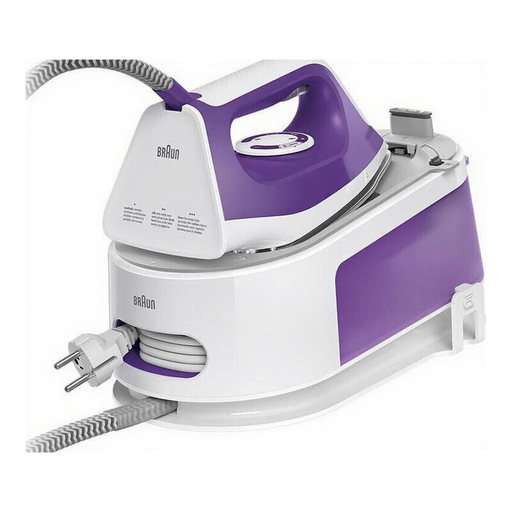
Braun CareStyle 1 IS1014VI steam generator iron, white

Braun CareStyle 1 IS1014VI steam generator iron, white

For households that iron clothes as well as carrying out repairs; whether it’s suitable for patches depends on the material instructions and whether the specific model can be used without steam.

View at Joybuy
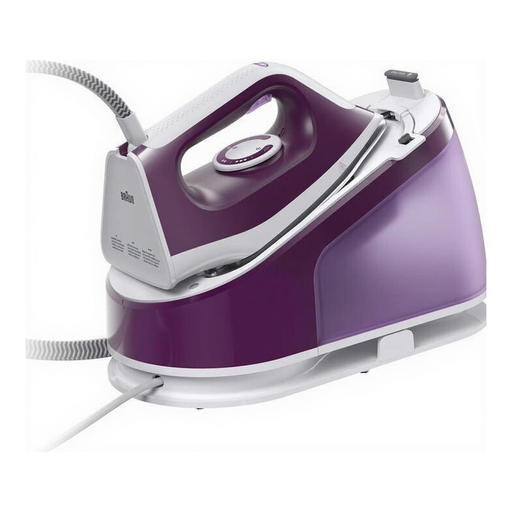
Braun CareStyle 1 Pro IS1514VI steam generator iron, purple

Braun CareStyle 1 Pro IS1514VI steam generator iron, purple

For households that iron the family laundry as well as applying patches; before ironing one on, make sure the instructions, temperature and dry-ironing function are all compatible.

View at Joybuy

Frequently asked questions

Should I use steam when ironing on every patch?

No, there’s no one-size-fits-all rule. One supplier of iron-on badges expressly says to iron them on without steam, whereas Vlieseline specifies using a damp cloth for one step when working with Vliesofix. Always follow the instructions for the specific material and check that the fabric it’s going on can withstand the treatment.

What’s different about repairing nylon or technical clothing?

First check for a repair method specifically designed for the material. Prym offers self-adhesive patches for nylon, polyamide and technical fabrics, which you stick onto a clean, dry area.

How can I avoid maintenance problems with a steam generator iron?

Follow the descaling instructions for your specific model. Philips explains that limescale can cause marks and reduce steam output in steam generator irons; maintenance methods vary between model ranges.

What are my rights if a steam generator iron bought in Germany is faulty?

For consumer purchases from a trader in the EU, there is generally a statutory minimum period of two years for claims relating to faults, starting from the date you receive the goods. Your Europe, the European Union’s information portal, states this minimum period; the seller is generally responsible for dealing with statutory claims. This is separate from any voluntary manufacturer’s warranty.

What markings and documents should I check when buying?

Mains-powered household appliances covered by the EU Low Voltage Directive must meet the relevant safety and conformity requirements. The German Federal Network Agency lists the CE marking and German-language instructions with the required usage and safety warnings among the things to check. The CE mark alone doesn’t show that an appliance is suitable for a particular iron-on patch.