For regular small batches
If you often iron just one or a few waistcoats, consider whether setting up and storing a steam generator iron suits your routine.


A steam generator iron can make sense if you regularly iron several items in one go and have space for the base, hose and rest. If you only iron one waistcoat at a time, a suitable steam iron you already own is often the more economical place to start. The German Environment Agency generally considers steam generator irons to use more electricity than steam irons in the home. Whatever the appliance, the care symbols on the entire waistcoat determine whether heat and steam are suitable.
If you often iron just one or a few waistcoats, consider whether setting up and storing a steam generator iron suits your routine.
A well-balanced soleplate and a clearly specified precision tip can be important features for pressing edges and tight areas. Always follow the care label.
If you iron other items as well as waistcoats, compare the temperature settings, tank handling and descaling requirements of the specific model.
A better fit if: you regularly iron several items in one go and have space for the appliance.
Things to consider: the base, hose and rest need extra space; there’s no evidence of a time saving specifically for waistcoats.
A better fit if: you usually iron one waistcoat at a time, have limited storage space or your existing iron can reach narrow areas well enough.
Things to consider: whether it is suitable for steam, the right temperature and detailed work depends on the iron and the care label.
Ironing symbols specify the temperature range and may warn against using steam. GINETEX Germany and the German Association of Cosmetic, Toiletry, Perfumery and Detergent Products provide care guidance that applies to the entire waistcoat.
| What matters | What to look for | Who is it important to? |
|---|---|---|
| Pressing in line with care instructions | Check whether the temperature and steam settings of the specific appliance are suitable for the care symbols on the entire waistcoat. | When I iron a waistcoat, I follow its care label rather than relying on the fact that the fabric is cotton. Around 28% of consumers put treating garments appropriately first. |
| Short ironing sessions | Compare the stated heat-up time and check whether the tank can be removed for filling. | If I often have only a short window for ironing, I want to keep the repeated preparation to a minimum. Around 22% of consumers prioritise ease of use for short sessions. |
| Narrow areas | Check the exact model to see whether it has a precision tip and how easy the iron is to manoeuvre. | For edges and tight areas, I value a tip that’s easy to guide more than a single headline figure for the steam boost. Around 22% of consumers prioritise precise handling. |
| Space and running costs | Measure the space needed for use and storage, including the hose and rest. The German Environment Agency generally considers steam generator irons to use more electricity than steam irons in the home. | If I only iron a few items, the base and rest need to fit into my available work and storage space. Around 17% of consumers put space and running costs first. |
| Descaling | Read the instructions for the specific model variant and compare the required maintenance steps. | Before choosing, I want to know what descaling I’ll need to do regularly. Around 11% of consumers prioritise straightforward appliance maintenance. |
The fabric description alone doesn’t determine how the finished waistcoat can be treated. Ironing symbols specify temperature ranges and may warn against using steam.
Check the care label on the entire waistcoat before ironing and follow the instructions shown there.
A steam boost and continuous steam output are two different specifications. The tip and how easy the iron is to guide also matter for narrow areas.
Check the precision tip and controls on the exact model rather than focusing only on the headline figure.
A stated quick heat-up time doesn’t tell you how long the whole session will take. The German Environment Agency generally considers steam generator irons to use more electricity than steam irons in the home.
First check whether a suitable steam iron you already own can meet your needs.
Descaling methods and maintenance steps vary by model. Philips notes that limescale can affect steam performance and cause stains.
Read the instructions for the exact variant before buying, and follow its safety and maintenance guidance when descaling.
The Express Easy SV6131E0 and Express Protect SV9202E0 differ in features including their controls and specified features.
Philips describes the PerfectCare 6000 PSG6023/30 as a compact steam generator iron with OptimalTEMP and a removable 1.8-l tank.
The Compact Steam Pro DG7623F0 is a steam generator iron with manual settings, a specified precision tip and an integrated tank.
According to Braun, the CareStyle 3 IS 3132 WH offers Eco, iCare and Turbo settings, as well as a descaling warning.
This selection includes steam generator irons and steam irons as an alternative for smaller loads. The right type for you depends on factors including how much you iron at a time and how much space you have available.
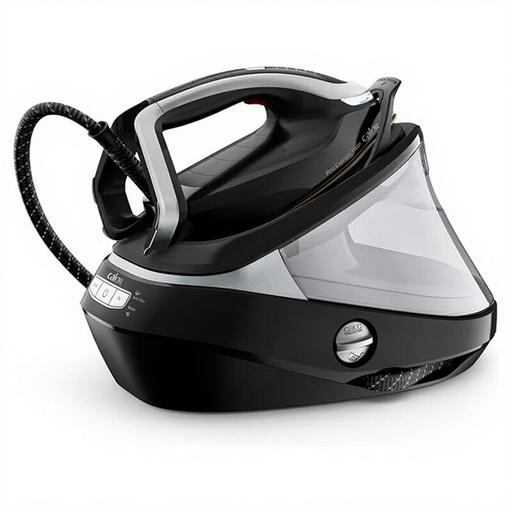 No image available
A steam generator iron for shoppers comparing models with manual temperature settings.
Specifications listed in the product name: 3000 W, 1.2-l tank, 180 g/min continuous steam and 800 g/min steam boost.
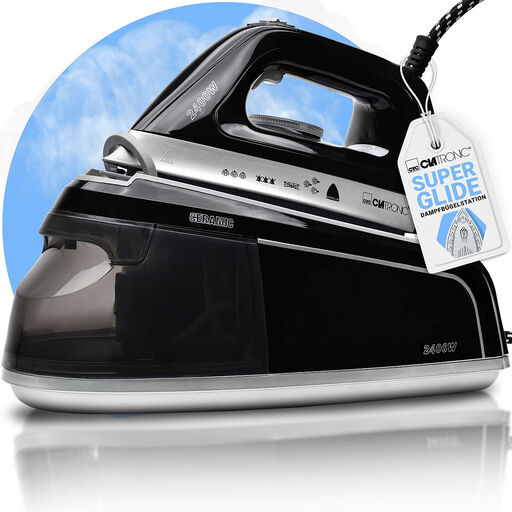 No image available
A steam generator iron to compare if you’re considering a ceramic soleplate and a removable tank.
Specifications listed in the product name: 3.5 bar, 1.2-l water tank, 2400 W and ceramic soleplate.
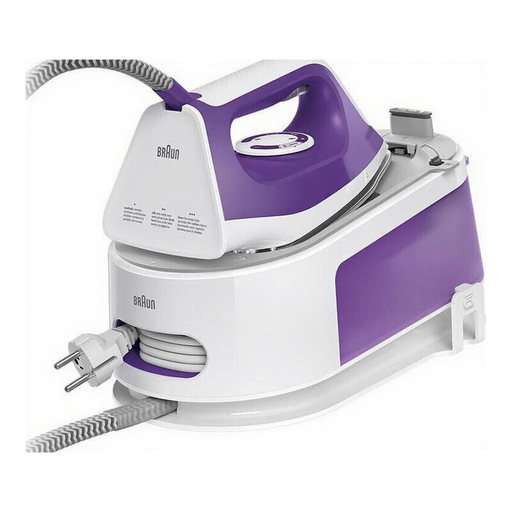 No image available
A steam generator iron to compare if you’re specifically looking for this type of appliance for your ironing sessions.
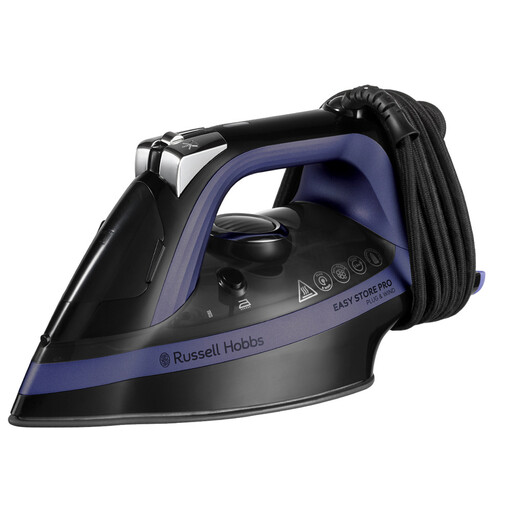 No image available
A steam iron as an alternative if you usually iron small loads and don’t want to set up a steam generator iron.
Specifications listed in the product name: One-Temp technology, 2400 W, 200 g/min steam boost, ceramic soleplate and 320-ml water tank.
 No image available
A steam iron to compare if you don’t want to assume that a steam generator iron is the right choice for occasional or small ironing sessions.
Specifications listed in the product name: 2500 W, 40 g/min continuous steam, 160 g/min steam boost, Eco function and 250-ml water tank.
No, not just because it’s made of cotton. GINETEX Germany and the German Association of Cosmetic, Toiletry, Perfumery and Detergent Products explain that ironing symbols specify temperature ranges and may warn against using steam. Check the care label on the entire waistcoat before ironing.
Make sure you have a safe surface for the appliance and the iron, and follow the instructions for the specific model. Philips describes different descaling methods for different models; some specifically require you to unplug the appliance and let it cool before opening it. Don’t apply these steps to other models without checking.
No. A model’s stated heat-up time doesn’t measure the time it takes to iron a whole waistcoat. According to the German Environment Agency, steam generator irons generally use more electricity than steam irons in the home. The right choice also depends on how often you iron and how many items you have.
The European Union explains that the CE mark indicates the manufacturer’s declaration that a product meets the relevant EU requirements; it isn’t an independent quality mark. Your statutory rights against the seller are separate from a voluntary manufacturer’s guarantee. The German Consumer Advice Centre describes an additional right to repair for certain product groups, but this doesn’t establish whether steam generator irons are included.
Under the conditions set out in § 17 ElektroG, a retailer may be required to accept an old appliance of the same type free of charge when you buy a new one. This take-back obligation applies to retailers that are subject to the rules and have at least 400 square metres of sales floor space for electrical and electronic equipment. Check the return arrangements with the retailer you’re buying from; this doesn’t mean that any particular shop has agreed to take it back.