Waistcoat wearers with limited storage
If you iron waistcoats regularly but have limited space to store the station and hose afterwards, the appliance’s exact dimensions and a practical hose or cable storage system are important things to consider.


If you iron several cotton waistcoats, a compact steam generator iron could be a good fit, provided you have enough room for the base and hose and the specific model will fit in your space. Before ironing, check the care label for the entire waistcoat: the lining or interfacing may have different requirements, and you must not use steam if the label says so. If you only iron occasionally, a standard steam iron may be the more space-saving choice.
If you iron waistcoats regularly but have limited space to store the station and hose afterwards, the appliance’s exact dimensions and a practical hose or cable storage system are important things to consider.
If a waistcoat is made from different materials, set the temperature and steam according to the care label for the whole garment, not just the cotton outer fabric.
For small areas such as button plackets and edges, the soleplate tip and ease of handling are important things to check. A claimed steam output alone won’t tell you how easy the iron is to guide around these areas.
When comparing steam generator irons for cotton waistcoats, don’t just look at the steam settings. The space they take up, care requirements, detail work and maintenance all matter too.
| What matters | What to check when buying | Who should pay particular attention? |
|---|---|---|
| Space and storage | Compare the base dimensions with your available worktop and storage space; check how the hose and cable are stored. | If there’s little room for the base and hose after ironing, exact dimensions matter more than the word “compact”. Around 36% of consumers say space is their main buying concern. |
| Fabric protection | Read the care label for the whole waistcoat; check the model’s temperature and steam controls. | If the lining or interfacing needs different care from the cotton fabric, I’d follow the care label for the whole garment. Around 29% of consumers prioritise protecting every part of the waistcoat. |
| Buttons and edges | Check the soleplate tip and handle; consider continuous steam and steam boost separately. | For button plackets and narrow edges, I want to be able to guide the tip precisely; a high steam boost figure doesn’t answer that question. Around 21% of consumers prioritise precise detail work. |
| Descaling and care | Check the model’s descaling process and any accessories you may need. | If I want to keep looking after the station simple in everyday use, I’d find out in advance how to descale the specific model. Around 14% of consumers see maintenance as their main concern. |
The label tells you neither the exact dimensions of the unit nor whether the base, hose and iron will fit in your ironing space.
Measure the space available for use and storage, then compare it with the dimensions of the specific model.
Care symbols may restrict steam or rule out ironing altogether. GINETEX warns that steam can cause irreparable damage when the ironing symbol indicates a maximum temperature of 120 °C.
Check the label and take the outer fabric, lining and interfacing into account. Don’t use steam if the label says not to.
A steam boost figure doesn’t describe the same operating mode as a continuous steam rating.
Read the two figures separately and, for button plackets, check the shape of the soleplate tip too.
Philips says limescale can reduce steam output and contribute to white or brown marks.
Before buying, check the descaling process for the specific model, as well as the guidance on suitable water and any accessories required.
The PerfectCare Compact GC7844/20 is worth considering if exact dimensions, hose storage and ironing without manually selecting a temperature are important to you.
According to the manufacturer, the Power Pro Compact 200 SV6211 combines manual temperature and steam controls with a 1.7-litre tank.
The CareStyle Compact IS 2144 BK is a compact, upright station with several programmes.
The Compact Steam Pro DG7623 is a compact high-pressure model with a precision tip and manual controls.
This selection includes steam generator irons for regular ironing, as well as a standard steam iron as a space-saving alternative for occasional use.
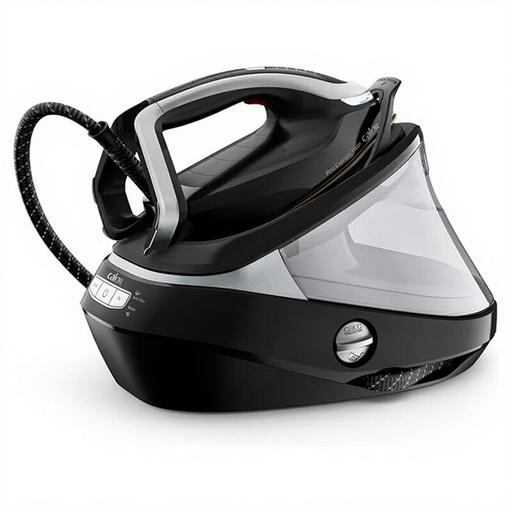 No image available
A station with a removable tank and temperature settings for different fabrics.
3000 W; tank: 1.2 l, removable; continuous steam: 180 g/min; steam boost: 800 g/min.
Check the care label for the whole waistcoat before ironing.
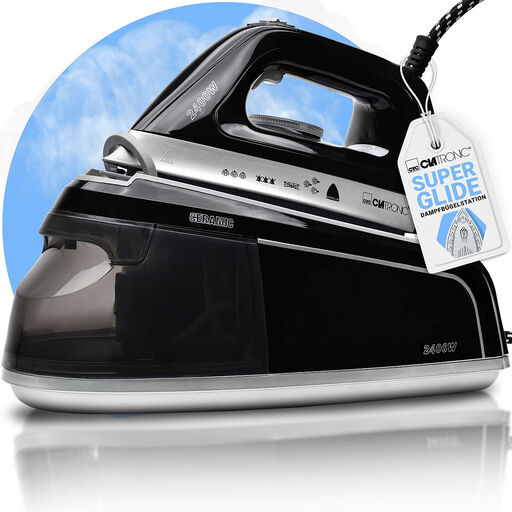 No image available
A station with a cable storage compartment and travel lock, if you want to put the appliance away after ironing.
2400 W; 3.5 bar; tank: 1.2 l, removable; stated operating time: 80 min; continuously variable temperature control; horizontal ironing and vertical steaming.
Check the care label for the whole waistcoat before ironing.
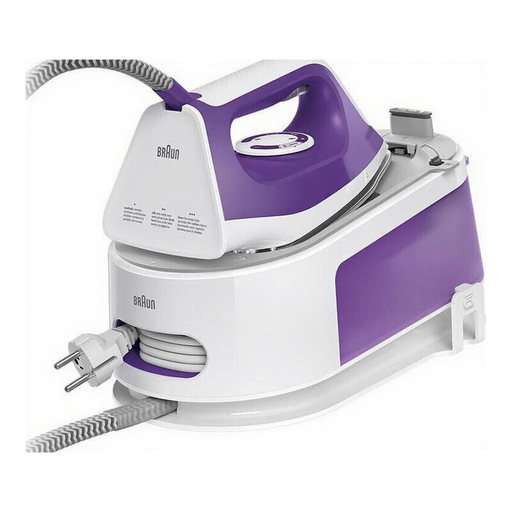 No image available
A station with temperature controls and a vertical steam function, if those are features you’re looking for.
Tank: 1.5 l; continuous steam: 120 g/min; precision thermostat; vertical steaming; Calc’n clean.
Check the care label for the whole waistcoat before ironing.
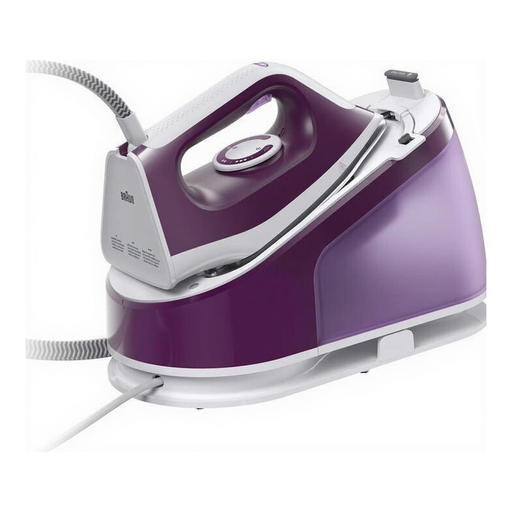 No image available
A station with several temperature settings and a vertical steam function.
Tank: 1.7 l; continuous steam: 120 g/min; four temperature settings; vertical steaming; Calc’n clean.
Check the care label for the whole waistcoat before ironing.
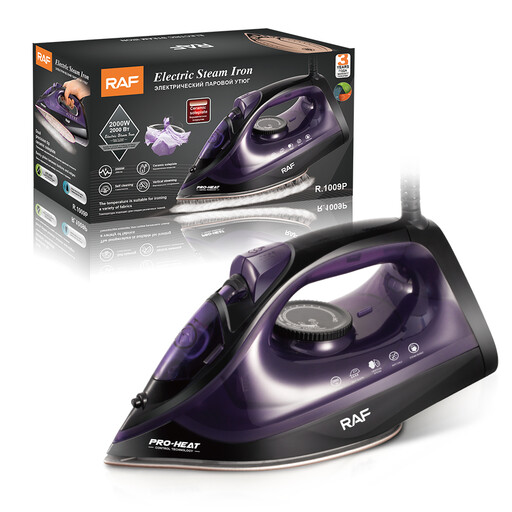 No image available
An alternative to a separate station for occasional ironing, if you don’t want to find space for a base unit.
Ceramic soleplate; tank: 210 ml; self-cleaning function; vertical steaming.
This is a steam iron, not a separate steam generator iron. Check the care label for the whole waistcoat.
No. Follow the care label for the whole garment, not just the outer fabric. GINETEX distinguishes between ironing temperatures, ironing without steam and not ironing; the symbol for a maximum of 120 °C means steam may cause irreparable damage. Whether you can steam a particular waistcoat depends on its care label.
Descale it according to the instructions for your specific model. Philips describes different processes for different ranges; with certain Easy De-Calc systems, you must not open the cap while the appliance is hot. Unplug it and follow the stated cooling time.