Uniform wearers with limited drying space
If you need to put freshly pressed sleeves away soon afterwards, use steam sparingly and allow enough time for them to dry.


For neatly pressed uniform sleeves when drying and storage space are limited, you’ll need to consider the care label, steam settings, a safe resting surface and the appliance’s dimensions together. Look for a pointed soleplate that’s easy to manoeuvre, and use steam only if the care label allows it. A powerful steam boost doesn’t mean a sleeve will be dry afterwards. Allow time for the garment to dry before putting it away.
If you need to put freshly pressed sleeves away soon afterwards, use steam sparingly and allow enough time for them to dry.
For narrow sleeves and edges, look for a pointed soleplate that’s easy to guide and check what treatment the care label allows. GINETEX notes that some care symbols rule out ironing or steam.
If space is limited, plan where the station and a stable resting surface will go, as well as where you’ll store them afterwards.
First check the uniform’s care label, then consider how easily you can guide the iron around the sleeve, followed by the space it needs and the maintenance involved.
| Concern | What to check when buying | Who it matters most to |
|---|---|---|
| Moisture after ironing | Check whether the steam output is adjustable and whether the ironing board is suitable for steam generator irons. | If I need to put my uniform away soon, how much steam I use and whether there’s time for it to dry both matter. Around 36% of consumers give greatest weight to residual moisture. |
| Precise sleeve pressing and permitted treatment | Check for a precision tip and read the care label; use steam only if the label allows it. | For narrow sleeves, I want to control the tip and settings while following the care label. Around 29% of consumers prioritise precise treatment that’s permitted for the fabric. |
| Space for use and storage | Check the dimensions of the station and resting surface against the available storage space. | If my ironing space is limited, I need room for both the station and its resting surface, and somewhere to put them afterwards. Around 21% of consumers prioritise space for use and storage. |
| Refilling and descaling | Check the specific model to see whether the tank is removable and how descaling works. | If I have several uniform items to press, I want to be able to plan refilling and descaling easily. Around 14% of consumers focus first on refilling and appliance care. |
An appliance’s stated steam boost doesn’t tell you how damp a particular uniform will be after ironing.
Follow the care label and allow time for the uniform to dry before putting it away.
Even a compact base needs a suitable, stable resting surface and enough room to work.
Before buying, check the appliance’s dimensions against the resting surface and the space available for storage.
If you don’t already have a suitable, stable surface that’s safe for steam, make sure to include one in your plans.
A manufacturer’s claim that an appliance is suitable for ironable fabrics doesn’t override care symbols that rule out ironing or steam.
Read the care label on the specific uniform before choosing an appliance and setting.
The manufacturer information below applies to the specific models or ranges mentioned. It shouldn’t be taken as a general claim about every product from each brand.
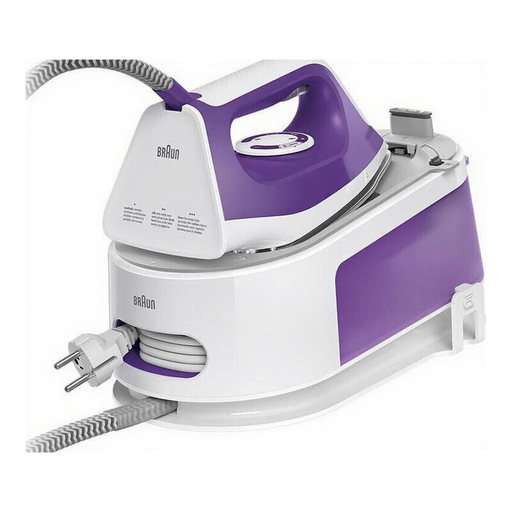
The Express Essential SV6115 is a compact station with manual controls.
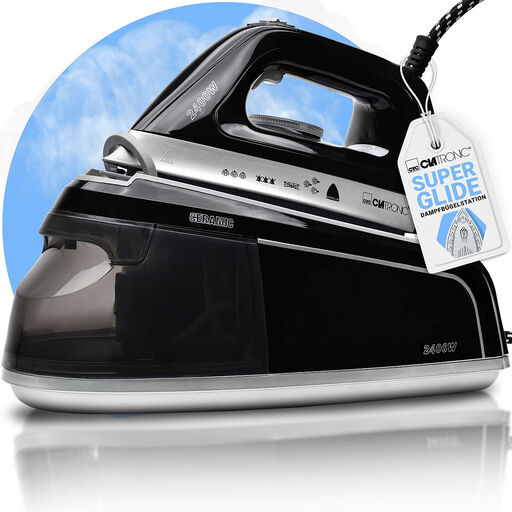
The PerfectCare Compact GC7844/20 is an option for fabrics explicitly labelled as suitable for ironing, if you don’t want to choose the temperature manually.
The Turbosteam VR8320 is worth considering if a removable tank is important to you.
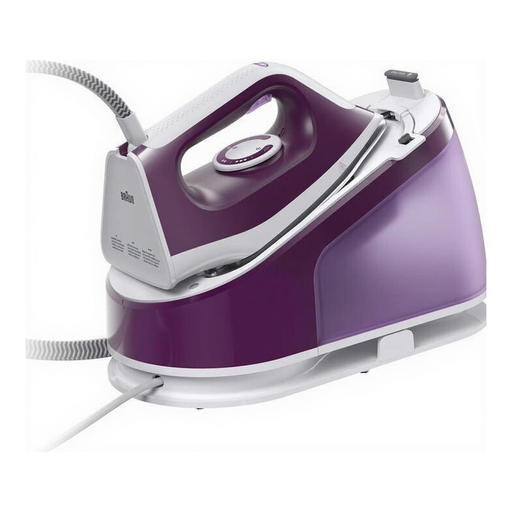
According to the manufacturer’s overview, the CareStyle 3 range includes several different steam generator irons.
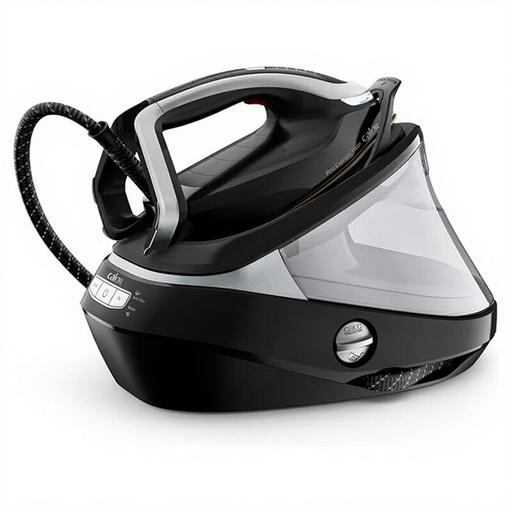
The La Vaporella XT90C is a boiler-based station with pre-set programmes.
The steam generator irons below are suitable for pressing uniform fabrics only where the care label permits the relevant treatment.
 No image available
If the care label permits steam, the adjustable steam setting is a feature worth checking.
The tank holds 1,2 litres and is removable; the product information also lists a self-cleaning function.
The stated dimensions of 25 × 30 × 45 cm need to fit your available space.
 No image available
If you need to match the temperature to the care label, the continuous adjustment is a useful feature to consider.
The product information lists a removable 1,2-litre tank, as well as horizontal and vertical steaming.
A transport lock is also listed.
 No image available
If different ironing temperatures are recommended for your ironable uniform fabrics, adjustable temperature is a useful feature to compare.
According to the product information, this model has a 1,5-litre tank, a precision thermostat and a Calc’n-clean system.
 No image available
If you want to choose between several temperature settings for ironable uniform fabrics, the specific settings are an important detail to check.
The product information lists four temperature settings, a 1,7-litre tank, self-cleaning and automatic shut-off.
No. Check the care label on the specific garment: GINETEX explains that some care symbols rule out ironing or warn that steam may cause irreparable damage. A setting for ironable fabrics doesn’t override these restrictions.
Check that the resting surface is stable, compatible with the base and covered with a steam-resistant cover. For the Air Board Express M Solid Leaf, Leifheit lists a steam-permeable cover and a 26 × 37 cm resting surface for the station. These dimensions apply to this ironing board, not to every model.
Compare the care instructions for the specific model: Philips lists Smart Calc-Clean without cartridges for the GC7844/20, while Rowenta lists an anti-scale rinse function for the VR8320. This doesn’t establish a general maintenance schedule or cost; water hardness and how often you use the appliance also matter.
When you buy from a trader in the EU, you have a statutory right to a minimum two-year guarantee of conformity from the date you receive the goods. The seller is responsible for these rights; a separate manufacturer’s warranty is different.
No. According to the European Commission, the CE marking is the manufacturer’s declaration that the product meets the relevant requirements. In general, no central EU body issues a CE certificate.