
Lieferung heute & morgen

Qualitätsgarantie

Willkommens-Angebote freischalten: KOSTENLOSE Lieferung | Bis zu 80 % RABATT | Kostenlose 30-Tage-JoyPlus-Testphase
App herunterladen
Wrinkled shirts, creased bed linen, and an old iron that's more trouble than it's worth—choosing the right appliance can be the difference between a tedious chore and an efficient task. The market offers a wide variety of models, from classic steam irons and flexible cordless irons to powerful steam generator irons.
This guide provides a clear overview of the most important features. We'll introduce you to different types of irons and their specific uses, so you can make an informed decision when you're ready to buy a new steam iron.
To find the right iron for your needs, a few technical specifications are key. Instead of relying on marketing promises, you should focus on objective parameters.
The power, measured in watts (W), determines how quickly the iron heats up and maintains its temperature. Models with 2000W or more are generally sufficient for most household needs.
An even more critical factor is the steam output. This is measured in grams per minute (g/min) and indicates how much steam is continuously emitted. A steam iron with a high steam output (e.g., over 40 g/min) or a powerful steam boost (over 150 g/min) penetrates deeper into the fabric, effortlessly smoothing out even stubborn creases in thick materials like linen or denim.
The soleplate is the surface that comes into contact with your laundry. An iron with a ceramic soleplate offers key advantages:
Modern irons offer features that make the ironing process significantly easier:
Based on the criteria above, we've curated a selection of models suitable for different needs and household sizes.
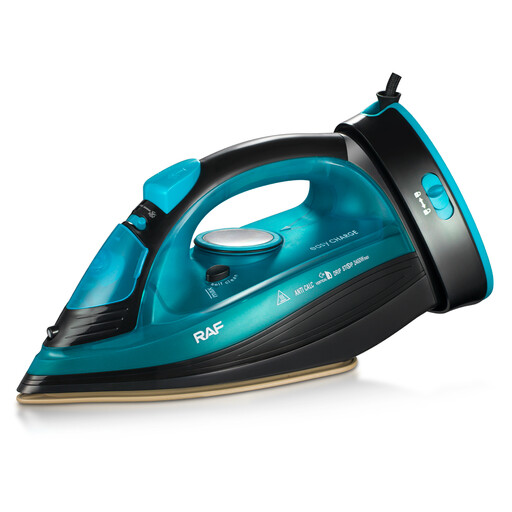
Why it stands out: The RAF iron R.1210B combines the power of a conventional steam iron with the freedom of a cordless design. Its 360° charging base allows for rapid heating and easy placement during ironing.
Pros:
Who is it for? Individuals and small households who value freedom of movement and want a hassle-free solution for their weekly laundry. It's especially practical for ironing large textiles or in places without a power socket right at the ironing board.

Why it stands out: This steam generator iron is designed for high performance and efficiency. With 3100W of power and a steam output of up to 180 g/min, it effortlessly tackles large piles of laundry and thick fabrics.
Pros:
Who is it for? Families and demanding users with high laundry volumes. Anyone who regularly irons bed linen, tablecloths, or multiple layers of fabric will benefit from the constant, powerful steam performance.
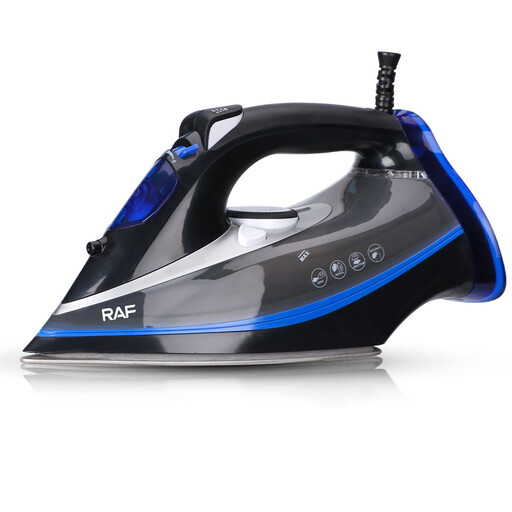
Why it stands out: The R.1215 is a classic steam iron that focuses on reliability and a solid set of essential features for everyday use. The extra-large water tank is a practical touch for longer ironing sessions.
Pros:
Who is it for? Anyone looking for a powerful yet straightforward iron for everyday laundry. It's a well-balanced model that delivers great results on shirts, trousers, and other daily wear.
Choosing the right iron depends heavily on your personal habits and requirements. If the models featured here don't quite match what you're looking for, there are many other alternatives to discover.
Browse our wider selection to find more models. For example, discover other appliances with a high-quality blue ceramic soleplate and other useful features in our iron category.
1. How many watts should a good steam iron have? For normal household use, a power rating between 2000 and 2400 watts is a good benchmark. This ensures rapid heating and a stable temperature during ironing. Steam generator irons often have higher power (up to 3100W) to quickly generate the steam needed for high steam pressure.
2. What is the advantage of a ceramic soleplate on an iron? A ceramic soleplate glides very smoothly and with low friction over textiles, which makes ironing easier and is gentler on the fabric. It also distributes heat very evenly, reducing the risk of heat spots or damage to delicate materials.
3. How often should you use a self-cleaning iron's function? The frequency of using the self-cleaning function depends on the water hardness in your area and how often you use the appliance. As a general recommendation, you should run the function about once a month. This helps remove limescale and mineral deposits, maintaining the iron's steam performance and lifespan.