For occasional shirt ironing
If you only iron a few cotton shirts between shared laundry days, quick, straightforward sessions and an appliance that’s easy to store are important.


For a few shirts ironed in short sessions, a steam iron with an easy-to-manoeuvre tip and suitable steam control is a sensible starting point. If you regularly build up a pile of shirts, a steam generator could be a good fit, provided you have a dedicated space for it. Philips lists a removable 1.8-litre tank for the PSG6023/20; this figure doesn’t indicate how many shirts you can iron per fill. Set the temperature according to the care symbol on each shirt: GINETEX Germany says the dots indicate temperature ranges.
If you only iron a few cotton shirts between shared laundry days, quick, straightforward sessions and an appliance that’s easy to store are important.
If you save up several shirts for a shared laundry or ironing day, weigh up fewer breaks to refill against the space needed for a larger steam generator.
If collars and button plackets matter most, look for a tip that’s easy to manoeuvre and consider how the specific model feels to use, rather than comparing wattage alone.
The key question is whether you iron individual shirts in short sessions or regularly tackle a whole pile at once. A steam iron, a steam generator and a garment steamer are designed for different jobs.
A good fit if: you iron individual cotton shirts in short sessions and prefer an appliance that’s compact enough to put away easily.
The trade-off: The built-in tank limits the amount of water available between refills. In practical tests, ease of use and how much an iron drips can vary, even between models with similar wattage.
A good fit if: you regularly have several shirts to iron and have a dedicated space for the separate base unit.
The trade-off: Philips says the PSG6023/20 has a removable 1.8-litre tank. The base takes up space, and according to the manufacturer, the automatic temperature setting is for ironable fabrics.
A good fit if: you want to freshen up an already smooth shirt on a hanger and aren’t aiming for a sharp crease.
The trade-off: For precise pressing around collars and button plackets, a garment steamer isn’t a like-for-like replacement for an iron and ironing board.
For new mains-powered irons covered by the EU Low Voltage Directive, the CE mark is the manufacturer’s declaration of conformity, not an independent quality mark. Check the specific product listing (European Commission; Your Europe/EU).
| Priority | What to check when buying | Who is this important to? |
|---|---|---|
| Quick ironing sessions | Check the stated heat-up time for the specific model and that it has a safe place to rest. | If I only iron individual shirts between shared laundry days, I want to get started easily and avoid needing much storage space. Around 33% of consumers prioritise short, predictable ironing sessions. |
| Several shirts without frequent refills | Compare the model’s tank capacity and how it can be refilled, as well as the space needed to use and store it. | If I save up shirts to iron them all at once, I want to refill as infrequently as possible and can make room for the appliance. Around 27% of consumers prioritise a longer ironing session. |
| Collars and button plackets | Look for a tip that’s easy to manoeuvre and adjustable steam; choose the temperature according to the care symbol. | If I want to smooth collars and button plackets as precisely as possible, ease of use matters more to me than high wattage alone. Around 27% of consumers prioritise precision on shirt details. |
| Care and safety information | Check the descaling instructions and CE marking for the specific mains-powered model. | If I share the appliance and want to keep on top of care and safety information, I look for clear guidance for the specific model. Around 13% of consumers prioritise care and safety. |
In a practical test by ARD’s consumer editorial team and SWR Marktcheck, five irons rated at around 3,000 W varied in ease of handling and how much they dripped. Electrical power alone doesn’t tell you about these differences.
Also compare the steam control, the tip and how the specific model handles.
The removable 1.8-litre tank on the Philips PSG6023/20 may be useful for longer ironing sessions, but it won’t solve a lack of space. Philips gives this tank capacity for this specific model.
First consider whether you usually iron individual shirts or a pile of them, then check that you have a permanent space for the base unit.
Even appliances with a descaling system need looking after. Tefal says local water hardness affects how often a steam iron needs cleaning.
Read the care instructions for the specific model before buying, and don’t assume that a general descaling method is suitable for every appliance.
TexStyle handheld irons are an option for quick ironing sessions. The details below apply to the SI9661VI model.
Azur handheld irons and PerfectCare steam generators use different designs; features of one model don’t automatically apply to the other.
The Ultimate Pure FV9844 is a steam iron; the manufacturer’s specifications refer to this model.
The models below include steam irons for quick sessions or ironing a pile of shirts, as well as a steam generator for longer ironing sessions.
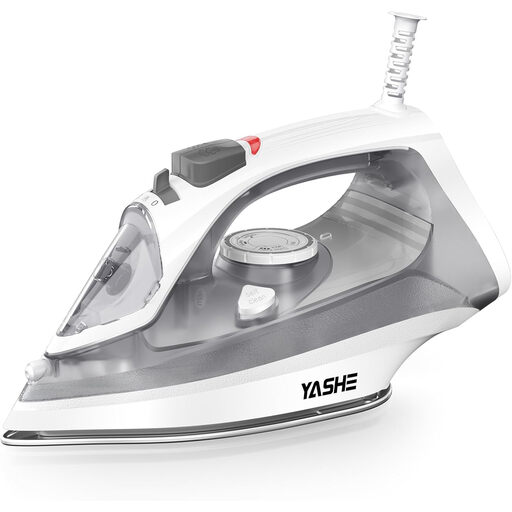 No image available
This handheld iron is worth considering for planned ironing sessions without a separate steam generator.
Water tank: 300 ml; steam boost: 150 g/min; non-stick soleplate; self-cleaning function; anti-drip protection.
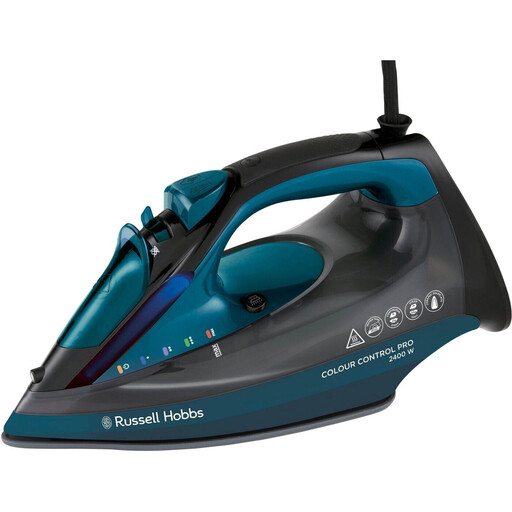 No image available
This steam iron is a handheld option if you iron shirts in planned sessions.
 No image available
This handheld model is an option if you want to press cotton shirts with an iron rather than a separate steam generator.
Non-stick soleplate; automatic cleaning function; anti-drip protection.
 No image available
With its built-in tank, this handheld iron is an option if you want to iron without a separate steam generator.
2500 W; continuous steam: 40 g/min; steam boost: 160 g/min; Eco function; anti-drip; tank: 250 ml; weight: 1.5 kg.
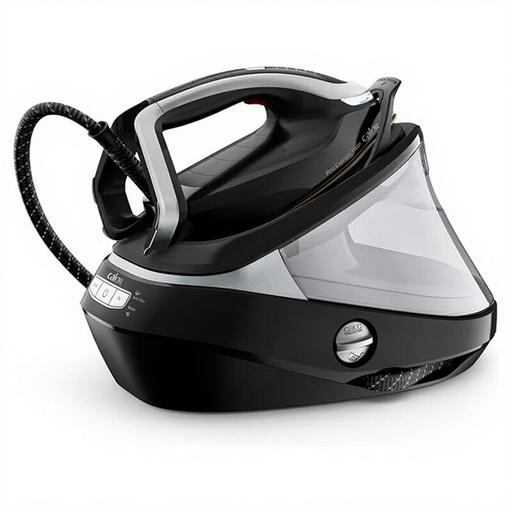 No image available
This steam generator is worth considering if you have several shirts to iron and can set up the separate base unit securely.
3000 W; tank: 1.2 l; Durilium AirGlide Autoclean; continuous steam: 180 g/min; steam boost: 800 g/min.
The steam generator needs a stable, level, heat-resistant surface.
No. Follow the care symbol on each shirt. GINETEX Germany says the dots indicate temperature ranges; the EU information about fibre composition is a separate matter.
Follow the instructions for your specific model on water and descaling. Tefal points out that local water hardness affects how often the appliance needs cleaning. A limescale system or reminder doesn’t mean that no maintenance is needed.
In Germany, the retailer is initially responsible for statutory consumer rights when a product is faulty; this is separate from any voluntary manufacturer’s guarantee. The Verbraucherzentrale (consumer advice centre) identifies repair or replacement as the first step.
No. For mains-powered irons covered by the EU Low Voltage Directive, CE is the manufacturer’s declaration that the product meets the relevant requirements, not an independent certificate issued by a central body. The CE mark alone doesn’t establish that a specific product listing is compliant (European Commission; Your Europe/EU).