Ironing collars with precision
If you mainly want to tackle narrow collars and seams, check the tip shape specified for the exact model. Tefal specifies a precision tip for narrow areas on the FV9851.


For narrow shirt collars, a precision tip specified for the exact model matters more than a powerful steam shot. Tefal explicitly distinguishes between steam at the tip of the soleplate and a precision tip, which the SV6131 does not have. A steam generator is a better fit if you regularly iron other parts of your shirts too, and are happy to make room for it and allow for the extra set-up and maintenance. If you mostly iron individual collars, a steam iron with a specified precision tip is the simpler option. The German Environment Agency notes that steam generators generally use more electricity than steam irons and do not offer a general advantage in ironing time.
If you mainly want to tackle narrow collars and seams, check the tip shape specified for the exact model. Tefal specifies a precision tip for narrow areas on the FV9851.
If you often iron only small loads, compare the full heating time and the effort involved in setting up and putting away a separate steam generator with the benefits it offers.
If your shirts have different care instructions, set the temperature and steam according to the label. GINETEX Germany warns that steam can cause damage when the permitted ironing temperature is low.
If you often iron small loads of shirts, it’s worth checking the collar tip, full heating time and the effort involved between ironing sessions separately.
A better fit if: you regularly iron other parts of your shirts as well as collars, and have room for the base unit and ironing surface.
The trade-off: you’ll need to set it up and maintain it; the German Environment Agency also notes that steam generators generally use more electricity than steam irons.
A better fit if: you usually iron individual collars or just a few shirts, and don’t want to make room for a separate base unit. Tefal specifies a precision tip for the FV9851.
The trade-off: if you’re ironing for longer, you may need to refill it more often than a steam generator with a separate tank.
| What matters | What to look for | Who will find it especially important |
|---|---|---|
| Precision around collars | Check whether a precision tip is explicitly specified for the exact model. Steam at the tip of the soleplate isn’t necessarily the same thing. | If I want to reach narrow collars and seams precisely, the tip shape matters more than a powerful steam shot; around 31% of consumers put precision around collars first. |
| Short ironing sessions | Compare the model’s full heating time, not the time required for another function. Tefal gives a full heating time of two minutes for the SV9202. | If I often iron just a few shirts, I want to keep preparation to a minimum; around 25% of consumers prioritise a straightforward routine for small loads. |
| Fabric care | Follow the care label and compare automatic settings with those you can adjust manually. GINETEX Germany warns that steam can cause irreversible damage when the permitted ironing temperature is low. | If my shirts have different care instructions, I want to set the temperature and steam accordingly; around 19% of consumers put fabric care first. |
| Space for use and storage | Compare the dimensions of the whole steam generator with the space you have for ironing and storage. Philips gives the dimensions of the GC7844/20 as 19,3 × 22,3 × 37,3 cm. | If I need to put the steam generator away between short sessions, the space it takes up is crucial; around 13% of consumers prioritise space for use and storage. |
| Descaling and maintenance | Check the care instructions for the exact model and follow the guidance on water hardness. Philips says limescale builds up more quickly in hard water. | If I want to minimise limescale care and ongoing effort, I look at the descaling process; around 12% of consumers put maintenance requirements first. |
The Tefal SV6131 is specified as having steam at the tip of the soleplate, but not a precision tip.
If you mainly iron collars, check both features separately against the full model code.
Tefal gives the SV9202 a full heating time of two minutes; the separately stated 30 seconds refers to vertical steaming.
For collars laid flat on the ironing board, the full heating time is the relevant figure.
Rowenta describes the DG7623’s tank as fixed, while the Joybuy product page says it is removable.
Don’t base your choice on whether the tank is removable until you’ve confirmed the design of the specific version.
The German Environment Agency notes that steam generators generally use more electricity than steam irons and do not offer a general advantage in ironing time.
Choose the type of appliance to suit the amount you actually iron, and follow the garment’s care instructions.
The features below relate to the models and versions mentioned, not to every appliance made by each brand.
The Compact Steam Pro DG7623 is a steam generator for shoppers looking for a compact appliance with a specified precision tip.
The Express Protect steam generator SV9202 and the FV9851 steam iron offer two different appliance types for short sessions and precision ironing.
The PerfectCare Compact GC7844/20 is aimed at shoppers looking for a compact steam generator with no need to adjust the temperature manually.
The CareStyle 1 Pro IS1514VI is a steam generator for shoppers who prefer to adjust the temperature themselves.
The Joybuy options below include a steam iron for small loads, as well as steam generators if you prefer a separate base unit. Steam generators powered by mains electricity that are newly placed on the German market must meet the applicable safety requirements. The German Federal Institute for Occupational Safety and Health explains that the specific appliance version must comply with these requirements. Check the product documentation for the model you’re considering.
 No image available
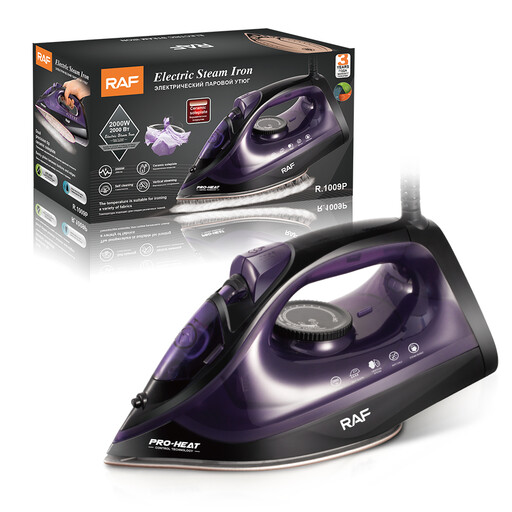
As a steam iron without a separate steam generator, it’s worth considering for small loads.
1600 W; ceramic soleplate; 210 ml water tank; steam shot and spray function; self-cleaning function.
 No image available
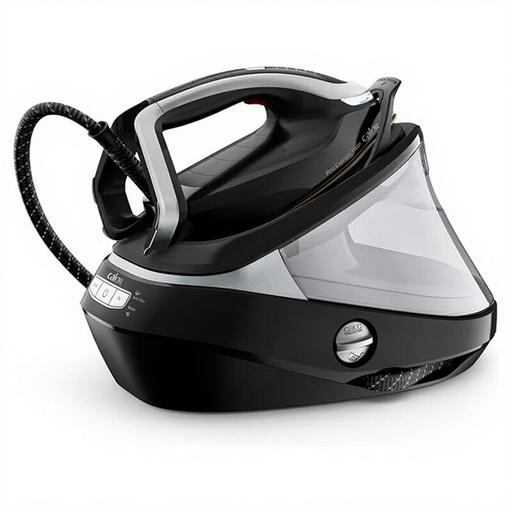
With its separate base unit, it’s worth considering if you iron other parts of your shirts as well as collars and have room for it.
3000 W; 1,2-litre tank; Durilium AirGlide Autoclean; continuous steam output of 180 g/min; 800 g/min steam shot.
The German Environment Agency notes that steam generators generally use more electricity than steam irons; there is no proven general advantage in ironing time.
 No image available
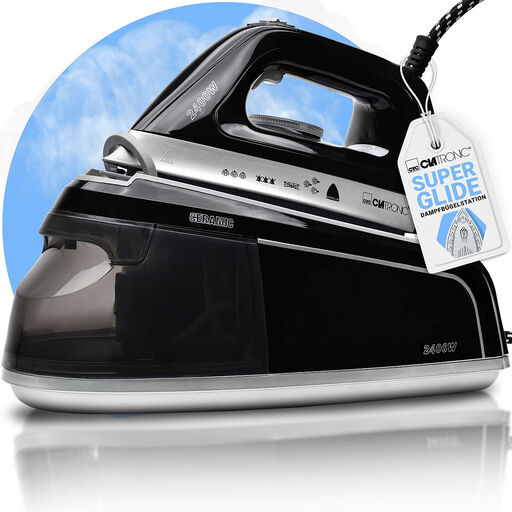
As a separate steam generator, it’s a better fit if you can make room for it and want to adjust the temperature yourself.
2400 W; 3,5 bar; 1,2-litre tank; continuous temperature control; Superglide soleplate; anti-drip function.
The German Environment Agency notes that steam generators generally use more electricity than steam irons; there is no proven general advantage in ironing time.
 No image available
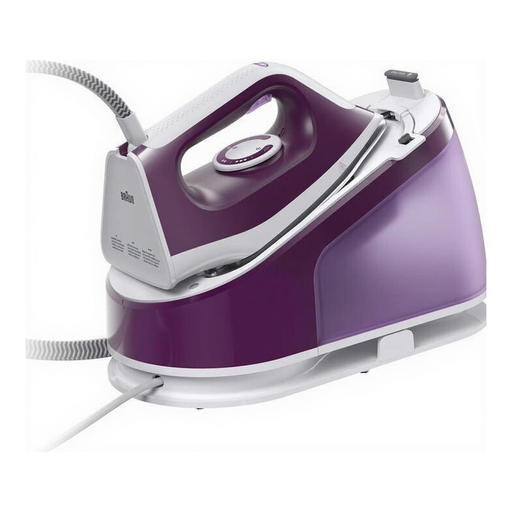
Manual temperature control is useful if you prefer to choose the settings yourself and follow the care label.
Thermostat dial with four temperature settings; 1,7-litre tank; continuous steam output of 120 g/min.
The German Environment Agency notes that steam generators generally use more electricity than steam irons; there is no proven general advantage in ironing time.
No. Check the tip shape for the exact model too. Tefal specifies steam at the tip of the soleplate for the SV6131, but not a precision tip.
No. Always follow the care label. GINETEX Germany explains that steam can cause irreversible damage when the permitted ironing temperature is low. You should also follow the ‘do not iron’ symbol.
Follow the instructions for the specific steam generator and check the guidance on water hardness. Philips says limescale builds up more quickly in hard water; failing to descale the appliance can cause stains and reduce steam output.
No. According to the German Federal Institute for Occupational Safety and Health, the CE marking indicates conformity with relevant regulations and is not an independent safety certification mark. The voluntary GS mark is based on testing by a GS testing body.
The retailer is responsible for handling your statutory rights when goods are faulty. A manufacturer’s guarantee is a separate, voluntary service with its own terms and conditions. The rights you have in a particular case depend on factors including the purchase and the fault.