
Lieferung heute & morgen

Qualitätsgarantie

Willkommens-Angebote freischalten: KOSTENLOSE Lieferung | Bis zu 80 % RABATT | Kostenlose 30-Tage-JoyPlus-Testphase
App herunterladen
A steam mop can simplify floor care if your home has sealed hard floors, tiles or stubborn, stuck-on dirt. These appliances work with heated water and, depending on the model, don't require any additional cleaning products. However, not every offer is right for every household. The key factors include the right floor type, tank size, cable length and the actual versatility of the device.
A figure like 1,500 or 1,580 watts simply describes the electrical power consumption. On its own, it doesn't tell you how evenly steam is released or how smoothly a mop glides across the floor. For practical use, you also need to consider heat-up time, steam control, mop head shape and accessories.
A high-power appliance can also use more electricity. If you only clean small areas regularly, you may not need a large steam cleaner with extensive accessories.
Steam isn't suitable for every floor covering. Unsealed wood, sensitive plastics, unglazed tiles and heat-sensitive surfaces can be damaged by moisture or heat. Before first use, you should check the instruction manual and test the steam mop on an inconspicuous area.
For a steam mop for hard floors, you should only use sealed surfaces approved by the manufacturer. A carpet glider may extend the range of use on some models, but it doesn't replace material testing.
A 6-in-1 steam cleaner or a steam mop with a handheld steam cleaner sounds versatile. However, what matters is whether the attachments for your desired tasks are included and how easy they are to swap over. For grout, for example, you'll need a precision nozzle or brush; for windows, a suitable squeegee; and for fabrics, the right attachment.
The power supply is also occasionally overlooked: the Lubluelu JJ-SC-053A model is specified with 100–120 V, 60 Hz according to the product details. In the UK, household sockets are typically rated at 230 V. So before buying, you must check whether the specific device is intended for the UK mains supply. An adapter alone won't safely convert the voltage automatically.
A steam mop with a water tank of around 0.35 to 0.5 litres is often suitable for smaller to medium floor areas. A larger tank reduces interruptions but often makes the device heavier. It's also important whether the tank is removable and easy to fill.
For larger homes or many rooms, a classic steam cleaner with a long hose and a tank volume of over a litre may be more practical. The actual run time depends on the steam intensity selected and shouldn't be judged solely by tank size.
Multi-stage steam control makes it easier to adapt to different surfaces approved by the manufacturer. Lower settings can be intended for more delicate materials, while higher levels may be more suitable for tiles or heavier soiling.
According to product details, the heat-up time for different models is between around 15 and 30 seconds. This is handy for short cleaning sessions. With a steam mop that has no adjustable output, you'll have less control over the amount of moisture.
Washable microfiber pads reduce ongoing costs compared to disposable materials. Pay attention to the attachment method, washability and whether replacement pads are available. A swivel head and a low profile make it easier to clean under furniture.
For corded appliances, cable length and cable storage affect ease of use. A 6-metre cable, like on the Shark S6003EU, can reduce the need to change sockets across several rooms. Cordless models offer more freedom of movement, but you'll need to consider battery life and charging time.
The following selection groups specific devices according to clear requirements. Details on power, tank, accessories and functions come from the respective product descriptions.
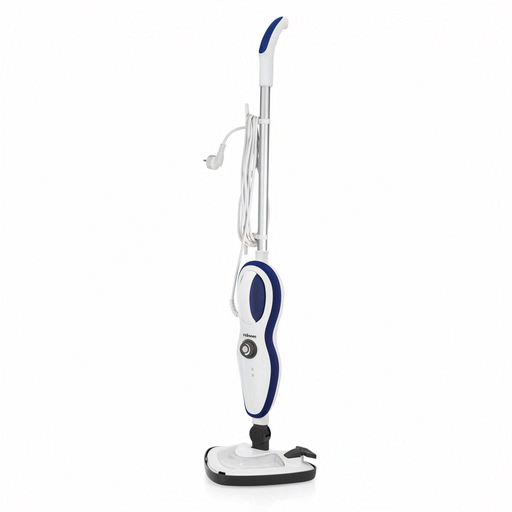
Why this product fits the profile: The 2-in-1 design combines floor cleaning and a handheld device. With 1,500 watts, a 0.4-litre tank and around 30 seconds heat-up time, this model is suitable for regular cleaning tasks in smaller to medium households.
The detachable pole and adjustable steam avoid a purely floor-focused approach. Before use, you should still check the material approval for your specific floor covering.
2-in-1 use, 5-metre cable, removable 0.4-litre tank and accessories for various surfaces.
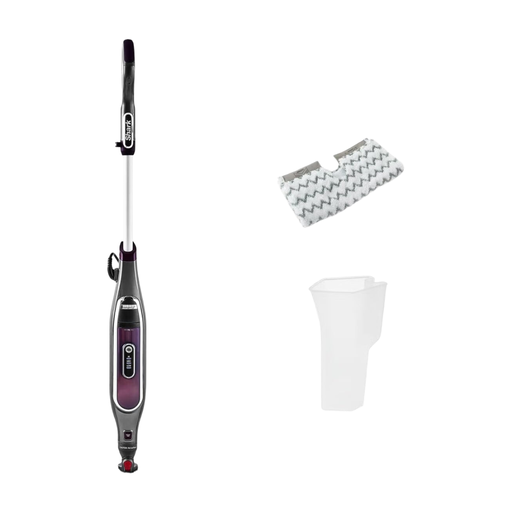
Why this product fits the profile: This model is aimed at households that value adjustable steam levels, reusable pads and a longer reach.
The intelligent steam control is more sophisticated than a simple on/off function. The pads are machine-washable and designed for double-sided use.
1,200 watts, 380 ml tank, 6-metre cable, two washable Dirt-Grip pads and an additional steam burst.
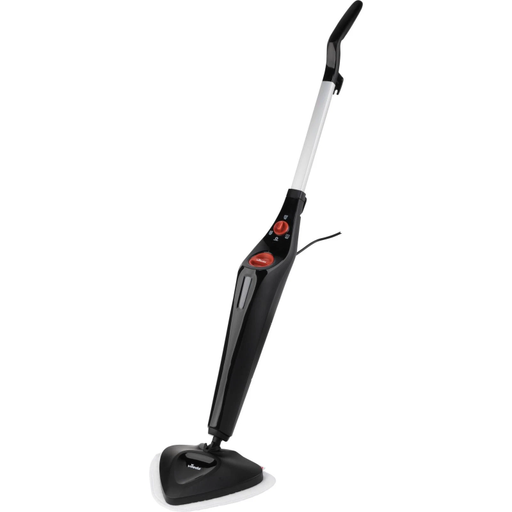
Why this product fits the profile: This steam cleaner is designed for tiles and hard floors and also comes with a carpet glider. Its weight of 2.8 kilogrammes makes it relatively easy to handle.
The intended area of use is more clearly defined than with vague "suitable for all surfaces" claims. The carpet glider is listed as a separate accessory.
1,550 watts, 0.4-litre tank, up to 15 minutes according to product details, plus carpet glider and adapter.
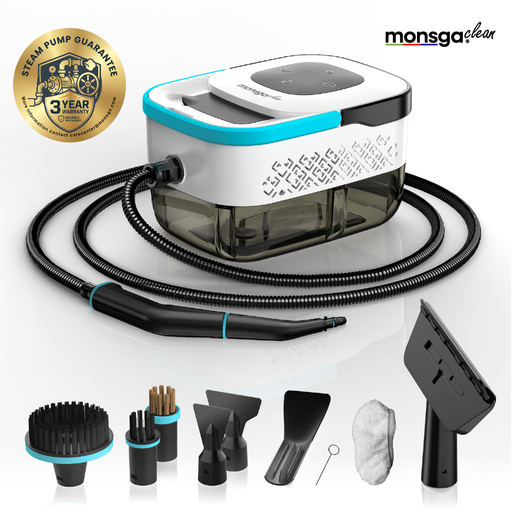
Why this product fits the profile: This classic steam cleaner with a hose is ideal for users who want to tackle not just floors but also grout, windows, upholstery, curtains or car interiors.
The large tank reduces the need for frequent refills during extensive tasks. According to the product description, the steam intensity is adjustable in six levels.
1.6-litre tank, 1,500 watts, 3.5 bar according to the supplier's details and a 10-piece accessory set.
We've put together a complete, regularly updated list of products that fully meet these strict selection criteria and the safety regulations in force in the EU.
For a chemical-free floor clean, the devices mentioned only need clean water, unless the instructions state otherwise. Cleaning agents, fragrances, vinegar or descaler don't automatically belong in the tank. They can damage components or produce unwanted fumes when heated.
Ongoing costs mainly include electricity, water and replacement pads. Washable pads are practical for frequent use, but they must be cleaned according to the instructions and dried completely after each use. Hard tap water can affect the lifespan; whether filtered or distilled water can be used should be taken exclusively from the manufacturer's instructions.
If you have pets, a steam mop for pet hair can be helpful when hair and dust are lying on a suitable hard floor. However, steam doesn't replace picking up loose pet hair beforehand. The green light on the Lubluelu model can, according to the product description, make dust and hair more visible in dark areas; its voltage suitability for the UK remains a crucial point to check.
Only if the laminate is sealed and expressly approved by the steam mop manufacturer. Too much moisture or heat can damage the joints and surface. Test the device on a hidden area first and work with the lowest suitable steam setting.
It's not possible to give a reliable general lifespan. It depends on the water's limescale content, cleaning frequency, storage, spare parts availability and careful use. The tank and accessories should be emptied or cleaned after the device has cooled down; the appliance must not be used with a damaged cable.
The purchase price is higher, but you may save on ongoing costs for cleaning products. However, you'll have electricity costs and possibly costs for replacement pads. Whether it's worth buying therefore depends on how often you clean, the size of your home and the accessories you want.