Which option is right for you?

Class leaders preparing several portions

If you’re cooking for a group, suitable moulds and enough usable space are essential. Cavity capacity and container size aren’t the same thing, so the specifications for individual Bosch, Tefal and WMF appliances can’t be used to work out directly how many rice cakes you can make.

Class kitchens getting a new built-in appliance

If the kitchen will also be used for baking or roasting, check the stated steam function and the dimensions of the specific built-in model. Brands such as NEFF, Siemens and AEG offer different appliance ranges and functions for this purpose.

Occasional rice cake groups

If you’ll mainly be steaming and want to put the appliance away after the class, a separate countertop model could be a good option. Check that its containers suit your moulds and that you have enough room to use and store it.

What should you look for when choosing?

Criteria What to check before buying Who it matters most to
Usable space and portions Compare the mould diameter and base area with the interior dimensions, tiers and accessories. Then decide how many cooking cycles you’re planning. If I’m planning for several class participants, the moulds need to fit and the portions need to be easy to divide up. Around 33% of consumers are likely to prioritise the number of portions they can prepare for a class.
Dedicated steam cooking function Check the operating modes for the exact model. A burst of steam or steam-cleaning function doesn’t automatically mean it can steam-cook independently. Don’t assume that recipe timings will transfer unchanged. If you want to make rice cakes specifically by steaming, you need a dedicated steam-cooking setting, not just extra oven functions. Around 33% of consumers are likely to prioritise the cooking method above all else.
Suitability for the class kitchen For built-in appliances, check the niche dimensions and connection requirements; for countertop models, allow space to use and store them. If I’m choosing an appliance for a particular kitchen, it needs to fit the space available and suit the kitchen’s other uses. Around 20% of consumers are likely to prioritise how well the appliance fits their kitchen.
Care and ongoing effort Read the instructions for the water tank, cleaning and descaling. If you’ll be serving portions later, plan for chilling or suitable hot holding. If you plan to use the appliance regularly in your classes, factor in cleaning and water care, as well as how you’ll store prepared food. Around 14% of consumers are likely to put ease of use and maintenance first.

Avoid common buying mistakes

  • Assuming “steam” in a product name means dedicated steam cooking

    NEFF clearly distinguishes Full Steam from appliances with burst-of-steam assistance. So an appliance name or steam-cleaning function won’t tell you whether the model offers the operating mode you need.

    Check the operating modes for the exact model and look for a clearly specified steam-cooking function.

    If it doesn’t have the function your recipe needs, you may need another cooking option.

  • Taking the oven capacity in litres as a measure of rice cake capacity

    Maangchi’s Baekseolgi recipe uses a 20-cm mould. A capacity figure alone won’t tell you whether that mould, or several moulds for a class, will fit in an appliance.

    Before deciding how many portions to make, compare the mould dimensions with the interior space, containers and tiers.

    Depending on the fit, you may need to plan for extra cooking cycles or different moulds that are suitable.

  • Assuming a keep-warm function guarantees safe hot holding

    The German Federal Institute for Risk Assessment specifies that heated food should be kept at a minimum of 60 °C throughout. A function label doesn’t prove that this temperature is reached throughout the rice cake.

    For portions you’ll serve later, plan to chill them quickly to no more than 7 °C or keep them hot in a way that ensures at least 60 °C throughout.

Relevant brands and appliance ranges

Bosch

The CDG714XB1 is a separate built-in steam oven for kitchens with a suitable niche and an existing oven.

  • Bosch lists a temperature range of 30–100 °C, a 38 l cavity and perforated and unperforated containers for this model.
  • It won’t replace a full-size oven. You’ll need to check the niche dimensions and whether your moulds will fit separately.

AEG

According to AEG, the TP9SB82WAB is a built-in steam oven with SteamPro and conventional oven functions.

  • AEG lists a 70 l oven cavity and built-in dimensions of 590 × 560 × 550 mm for this model.
  • The oven capacity doesn’t tell you how many rice cake moulds will fit. The manufacturer’s statements about cooking results are claims made by the manufacturer.

Siemens

The iQ700 HS736G3B1 is a built-in steam oven with a specified “Dampfgaren Plus” function.

  • Siemens lists appliance dimensions of 595 × 594 × 548 mm and a steam function of up to 120 °C for this model.
  • The appliance dimensions don’t confirm that it will fit your existing niche or that a particular rice cake mould will fit inside.

NEFF

NEFF describes the B64FS31N0 as a Full Steam oven and distinguishes Full Steam from Vario Steam, which adds bursts of steam.

  • NEFF lists appliance dimensions of 595 × 596 × 548 mm for the B64FS31N0.
  • The appliance dimensions alone don’t confirm that it will fit your built-in niche or accommodate your moulds.

Tefal

The VC1451 is a separate countertop steamer for people who don’t need another oven appliance.

  • Tefal lists two stackable stainless-steel containers with a combined capacity of 6 l, a rice container and a refillable water tank. According to the manufacturer, certain parts are dishwasher-safe.
  • The total capacity doesn’t confirm that a particular cake mould will fit; this countertop appliance won’t replace an oven.

WMF

The KÜCHENminis steamer is a compact countertop appliance with two independently adjustable cooking compartments.

  • WMF lists a capacity of 2.15 l per compartment and a 40-minute keep-warm function.
  • The size of the cooking compartments may limit the width of moulds you can use for a class. A keep-warm function doesn’t prove that a particular temperature is reached throughout the rice cake.

Joybuy products for steaming on the hob

The following Joybuy products are steamer pots for use on a compatible hob, not steam ovens. They’re an option if you want to steam rice cakes on the hob and your mould fits inside the relevant insert.
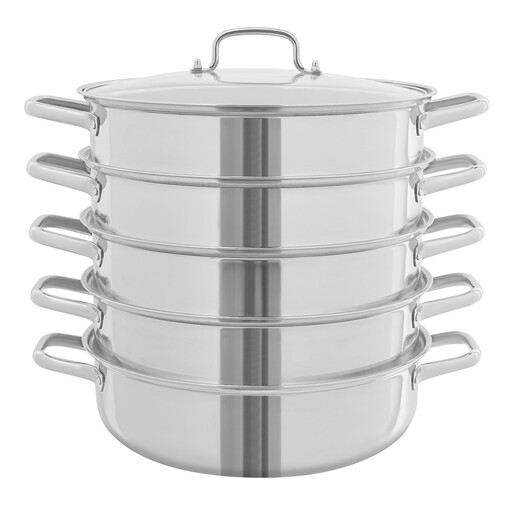
Stainless-steel steamer pot, 4 tiers, 32 cm

Stainless-steel steamer pot, 4 tiers, 32 cm

The four stackable tiers may be useful for preparing several portions, provided your moulds fit inside.

The product title specifies stainless steel, four tiers and 32 cm. This cookware needs a compatible hob and won’t replace a steam oven.

View at Joybuy
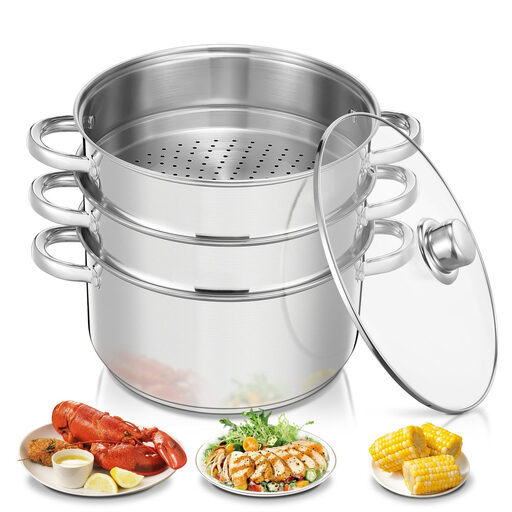
Stainless-steel steamer pot, 26 cm, with steaming insert

Stainless-steel steamer pot, 26 cm, with steaming insert

The steaming insert and trays let you steam food on the hob; check that your mould fits before buying.

The product title specifies 26 cm, two trays, a glass lid and compatibility with various hob types, including induction. This set won’t replace a steam oven.

View at Joybuy
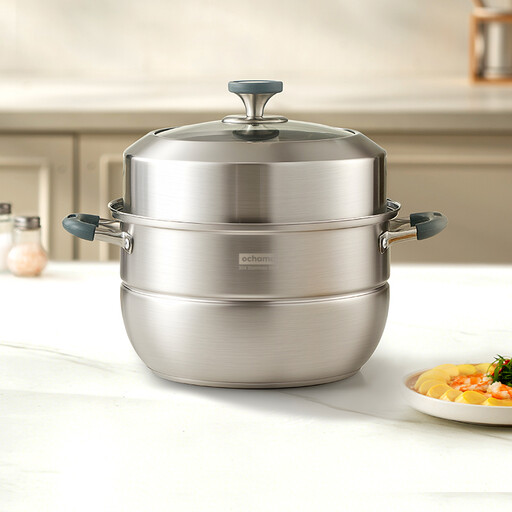
ochama 304 stainless-steel steamer pot, 2 tiers, 28 cm

ochama 304 stainless-steel steamer pot, 2 tiers, 28 cm

The two stackable baskets can make it easier to separate different foods, provided your moulds fit inside them.

The product title specifies 304 stainless steel, two tiers and 28 cm, as well as compatibility with induction and gas hobs. This cookware needs a compatible hob and won’t replace a steam oven.

View at Joybuy

Frequently asked questions

Do rice cakes always need to steam for the same length of time?

No. Maangchi’s Baekseolgi recipe uses a 20-cm mould and gives a steaming time of 30 minutes over a strong steam, while also noting that rice flour can vary in moisture content. This is an example from one recipe, not a universal setting for every recipe or appliance.

How can I safely store rice cakes made before the class?

The German Federal Institute for Risk Assessment recommends rapidly chilling heated food to no more than 7 °C or hot holding it at a minimum of 60 °C throughout. An appliance function called “keep warm” doesn’t, on its own, show that this temperature is maintained throughout the rice cake.

How much maintenance does a steam appliance need?

It depends on the model. Bosch recommends regularly descaling its steam appliances in accordance with the instructions. Tefal says that certain trays and accessories for the VC1451 are dishwasher-safe; this doesn’t apply generally to the electrical base.

Does a weekend cookery class in Germany need to be registered as a food business?

You can’t tell from the term “cookery class” alone. The German Federal Portal says food businesses must register with their local food safety authority; check with the relevant authority whether your specific arrangements count as a food business. The information requirement under § 43 IfSG applies to commercial activities under § 42 IfSG when the conditions set out there are met, and doesn’t apply automatically to every private rice cake preparation.

What are my rights if an appliance is faulty?

For a consumer purchase covered by EU rules, Your Europe says you’re generally entitled to a minimum two-year legal guarantee from the seller; an additional manufacturer’s guarantee doesn’t replace it. If you’re buying the appliance specifically for a commercial cookery class, the terms of the particular purchase contract need to be assessed separately.