
Lieferung heute & morgen

Qualitätsgarantie

Willkommens-Angebote freischalten: KOSTENLOSE Lieferung | Bis zu 80 % RABATT | Kostenlose 30-Tage-JoyPlus-Testphase
App herunterladen
A steamer is ideal for vegetables, fish, dim sum, baozi and many other dishes. However, before you buy, it’s worth taking a close look at the construction and intended use. Some products boast extensive features, even though they can’t actually be used on your hob. Other models need more storage space than expected, or are difficult to clean.
This buying guide shows you which specifications really matter, and which steamer suits different households.
A steaming insert or steamer attachment must match the diameter of the pan you’re using. If it’s too small, it can slip. If it’s too large, the lid may not sit properly. For a stainless steel steamer, specifications like 24 cm, 26 cm or 28 cm diameter are therefore crucial.
The shape also matters: round inserts don’t always fit square or particularly wide pans. Before buying, you should measure the internal diameter of your existing cookware.
A steamer for induction requires a magnetic, suitable pan base. For gas, electric and ceramic hobs, other features are important, such as a stable base and even heat distribution. The manufacturer’s information should explicitly state whether the model is suitable for gas, electric, ceramic or induction.
For an electric appliance, there are additional points to consider: power, capacity, programmes, cable storage and instructions for handling hot steam. A pan insert, on the other hand, is independent of electricity and can be used on your existing hob.
A steamer set with multiple pans, inserts and accessories can be useful if you cook regularly. However, for a small household, a single steaming insert or a compact vegetable steamer is often sufficient. Unnecessary parts take up cupboard space and increase the cleaning effort.
So before you buy, you should decide whether you’ll mainly be cooking vegetables for one or two people, family portions, or several dishes at the same time.
A stainless steel steamer is resistant to moisture and, with the right design, easy to clean. Stainless steel 304 is commonly used. The material specification describes the composition of the steel, but doesn’t replace checking other product details such as handles, coating and lid.
A bamboo steamer is a traditional solution for dim sum, baozi and vegetables. Bamboo should be allowed to dry completely after use. Baking paper or a suitable liner can make food contact and cleaning easier. Plastic steamers are often lightweight and space-saving; you must pay attention to the heat resistance specifications.
For a single person or a small household, a diameter of 15 to 20 cm is often sufficient. Models with 24 to 28 cm are better suited for several portions. For families, a multi-tier steamer can be practical, because vegetables, fish or dough-based foods can be cooked separately on top of each other.
However, a large pan needs more space on the hob and in the kitchen cupboard. What matters isn’t just the litre capacity, but also the usable area of the baskets and the height with the lid.
Dishwasher safety can make daily life easier, but should always be confirmed in the product description. For coated surfaces, soft sponges and mild cleaning agents are recommended. Wooden handles generally shouldn’t go in the dishwasher, unless the manufacturer states otherwise.
When opening, the hot steam should be directed away from your face. Oven gloves or heat-resistant gloves are useful for metal handles. The pan should sit stably on the hob and not protrude over the edge of the cooking zone.
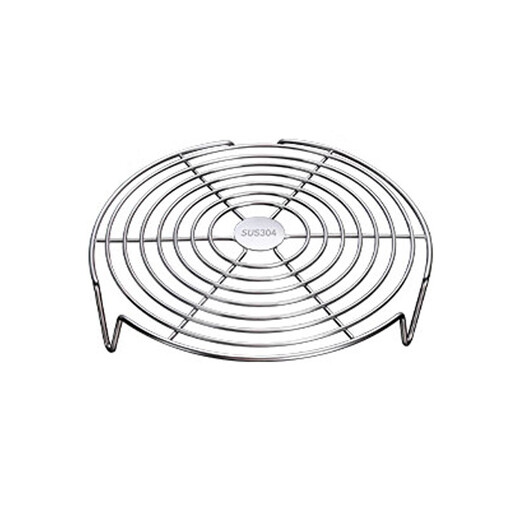
Why this product fits the profile: The compact insert with a 20 cm diameter is designed for smaller pans and modest portions.
The clear diameter makes it easy to check the fit and avoids buying an oversized product for small households.
304 stainless steel and compact design; suitable as a simple steaming insert for everyday use.
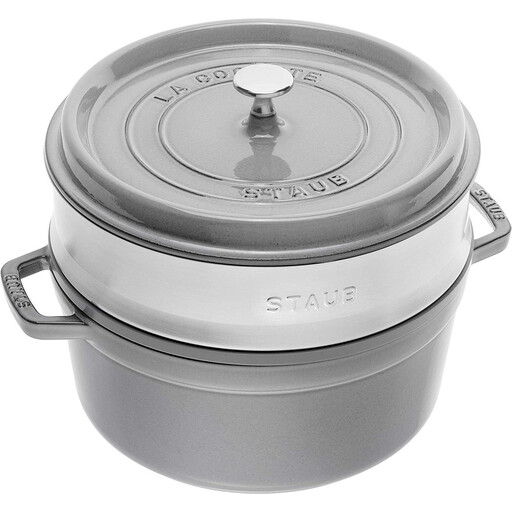
Why this product fits the profile: The 26 cm cocotte with 5.2 litres combines braising, searing and steaming in one cooking vessel.
The product data specifies capacity, material, hob types and oven suitability concretely, rather than just advertising general versatility.
Cast iron with black enamel interior, 304 stainless steel steaming insert and suitability for all hob types according to product information.
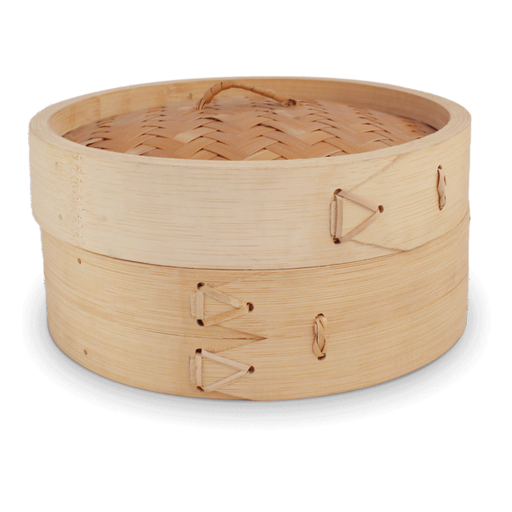
Why this product fits the profile: The bamboo steamer is designed for dim sum, baozi, vegetables and larger portions.
The intended use and diameter are clearly stated. This reduces the risk of choosing a vessel that’s too small for multiple portions.
25 cm diameter, one steaming basket and a lid; suitable for wok dishes and steamed dough-based foods.
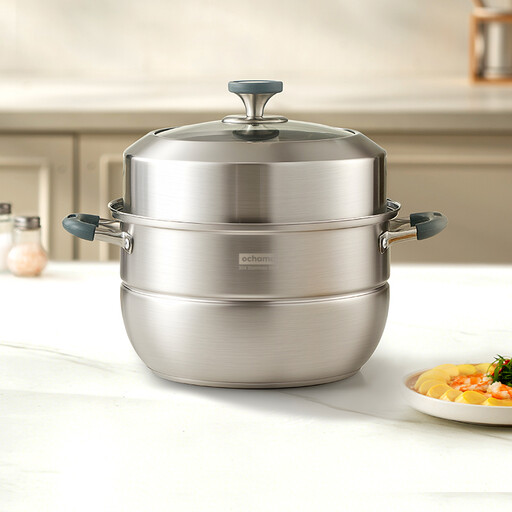
Why this product fits the profile: The two-tier design offers separate levels for different ingredients and is suitable for induction and gas according to the product information.
The multi-tier design uses height rather than requiring a larger footprint.
304 stainless steel, stackable baskets and 28 cm diameter; suitable for larger quantities and separate cooking levels.
We’ve put together a complete, regularly updated list of products that fully meet these strict selection criteria and the safety regulations in force in the EU.
A steamer works with steam, without the food sitting directly in the water. A pressure cooker, on the other hand, creates pressure and is used for shorter cooking times with suitable dishes. The two appliances are therefore not interchangeable.
A simple steaming insert makes sense if you already have a suitable pan. A multifunctional cooking pot with an integrated insert can reduce the number of kitchen utensils you need. For dim sum and baozi, a bamboo steamer is often more suitable than a tall stainless steel steamer. For everyday vegetables, a basket with suitable handles and a lid is often enough.
The water should stay below the steaming insert and not touch the food. The exact amount depends on the pan height, cooking time and lid seal. The pan must not boil dry during cooking. For longer cooking times, you should check the water level.
The lifespan depends on the material, use and care. Stainless steel can be used for a long time with gentle cleaning. Coated parts should not be treated with metal objects or abrasive cleaners. Bamboo steamers must be allowed to dry completely after each use, so that moisture doesn’t remain in the material permanently.
A pan steamer uses the heat from a hob. The energy consumption depends mainly on the hob type, heat setting, water quantity and cooking time. A well-fitting lid and a securely seated insert help to keep the steam inside the pan. For electric appliances, the stated power and the selected operating time are the most important comparison values.