Hosts serving several sides
If you want to time baby carrots and other dishes so they’re ready for your guests together, look for enough usable cooking space and suitable inserts.


If you’re already replacing an oven and regularly bake or roast, a steam oven with a dedicated steam-cooking function could do both jobs. For the occasional vegetable side, a countertop steamer or a hob-top steamer that suits your cooker is usually the more focused choice. The key factors are the usable space for your portions, the space it takes up and how you plan to serve the food.
If you want to time baby carrots and other dishes so they’re ready for your guests together, look for enough usable cooking space and suitable inserts.
If you’re replacing an oven and want to steam as well as bake, compare the built-in dimensions and the operating modes specifically listed for each model.
For the odd dinner party, a countertop appliance or hob-top steamer could be an alternative if you don’t need a new built-in oven.
| Buying consideration | What to look for | Who is this important for? |
|---|---|---|
| Usable space | Compare the amount you plan to cook with the area of each insert and the usable levels; check which cooking dishes are included. | If I want to serve several sides at once, I need enough space for the portions of carrots I’m planning. Around 36% of consumers put portion capacity first. |
| Dedicated steam cooking | Check the operating modes and manual for a dedicated steam-cooking function using the full model code. | If I also want to steam in the oven, I look for a clearly stated steam-cooking function, not just steam added during baking. Around 29% of consumers prioritise this. |
| Timing and serving | Check the timer, automatic shut-off, water refilling and, where applicable, keep-warm function for the exact model; check food temperature when keeping food warm. | When I’m cooking for guests, I want to coordinate cooking and serving times. Around 21% of consumers put menu timing first. |
| Space and cleaning | Check the space needed while the appliance is in use, the clearances required for the specific model and which parts are dishwasher-safe. | If worktop space is limited, I want to know how much room the appliance needs while in use and how much effort it takes to clean. Around 14% of consumers prioritise space and care. |
Adding steam during a baking function and using a dedicated steam-cooking mode serve different purposes.
Check the operating modes and suitable cooking dishes for the full model code.
For some appliances, the stated capacity is spread across several containers or levels. What matters is the area available in each insert you need to use.
Compare the amount you plan to cook with the usable area of each insert, not just the total capacity.
An appliance function doesn’t prove that the carrots will reach a particular temperature throughout while they’re waiting to be served. The German Federal Institute for Risk Assessment recommends keeping heated food at a temperature of at least 60 °C throughout while it is being kept warm until served.
Plan cooking and serving times accordingly, and check the food’s temperature if you’re keeping it warm for a longer period.
Bosch home appliances lists the HSG636BB1 as no longer available; Siemens home appliances also lists the HS758G3B1 as no longer available. These details apply to the models named.
Treat list positions as context for comparison only, and check the full model code and current availability before buying.
Built-in steam ovens and separate built-in steam cookers for suitable kitchen niches; operating modes vary by model.
According to AEG, the TP9SB82WAB combines oven and steam functions for households that need both ways of cooking.
DGC models such as the DGC 7450 are aimed at households looking for a built-in appliance for steaming, baking and roasting.
Electric countertop steamers such as the VC1451 let you steam without replacing your oven.
Vitalis hob-top steamers use a hob you already have.
Electric countertop appliances such as the DG 2 offer versatile inserts.
The products below include electric countertop steamers and hob-top steamers. Before choosing, check which type suits your kitchen space and the portions you plan to cook.
 No image available
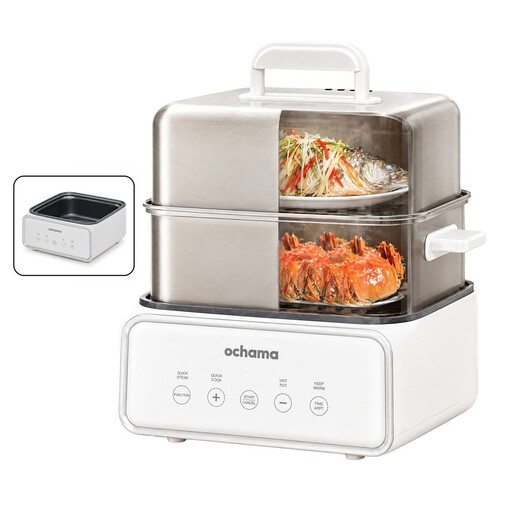
An option if you want to cook several dishes in one electric countertop appliance.
 No image available
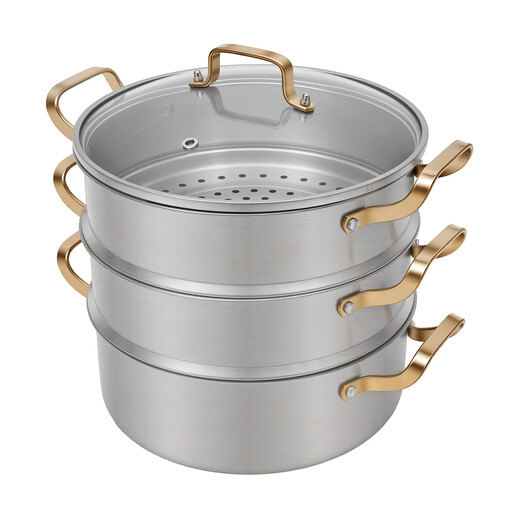
For anyone who wants to use their existing gas or induction hob for steaming.
 No image available
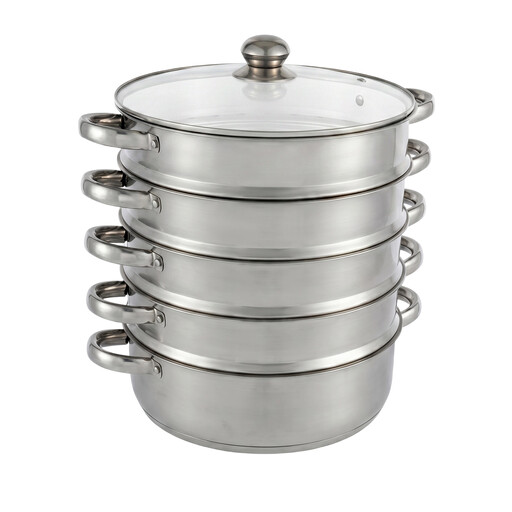
A hob-top option if you’re looking for a multi-tier steamer pot for cooking several dishes.
 No image available
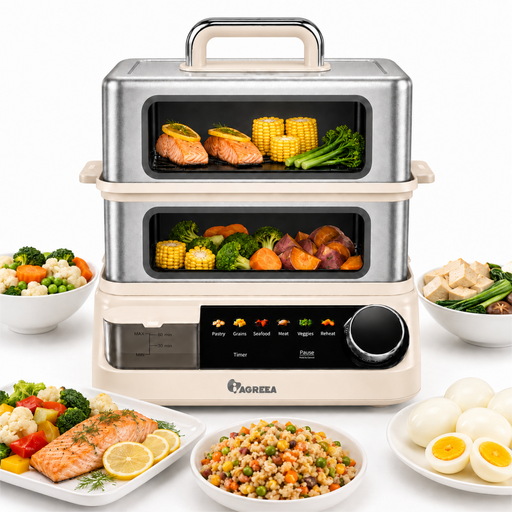
An electric countertop option if you’re looking for two tiers and controllable cooking programmes.
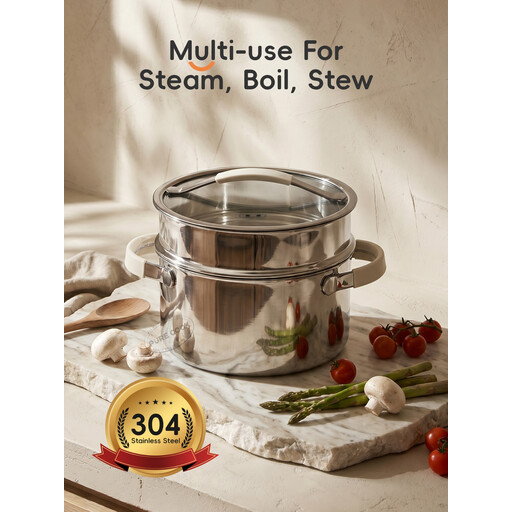 No image available
For serving several guests, this steamer pot is an option if its stated size suits your portions and hob.
It depends on the usable space and tiers of the appliance in question. Tefal lists two containers for the VC1451; check that your portions will fit and account for different cooking times when adding the food.
Measure the space it needs while in use and check the manual for the exact model. Steba requires at least 10 cm of clearance around the DG 2; this isn’t a general requirement for other models.
A keep-warm function doesn’t guarantee a particular temperature throughout the carrots. The German Federal Institute for Risk Assessment recommends keeping heated food at a temperature of at least 60 °C throughout while it is being kept warm until served. Plan your serving time accordingly and check the food’s temperature if you’re keeping it warm for longer.
If you buy from a business seller in Germany, EU consumer rules give you a legal guarantee of at least two years against the seller, starting from the date you receive the goods. This is separate from any voluntary manufacturer’s guarantee; your specific rights depend on the fault and the purchase contract. The European Commission explains these guarantee rules on its Your Europe portal.
Not directly: according to the Verbraucherzentrale, the standard consumption figures given refer to baking with conventional top and bottom heat or fan-assisted heat. To compare running costs for steaming, you’d need comparable consumption data for the function you actually use.