
Lieferung heute & morgen

Qualitätsgarantie

Willkommens-Angebote freischalten: KOSTENLOSE Lieferung | Bis zu 80 % RABATT | Kostenlose 30-Tage-JoyPlus-Testphase
App herunterladen
A STEM experiment kit for children can make science, technology and maths tangible and engaging. However, choosing the right one is not always easy for parents, grandparents and carers. Many sets promise a wide range of experiments, colourful materials or app functions, but they may not suit the child’s age, patience or available space.
An experiment kit from age 8 often assumes that children can read instructions independently, measure quantities and follow several steps in sequence. For younger children, simple observation and building activities are usually more suitable. A set for ages 8 to 12 can quickly lead to frustration for a six-year-old, while a very simple set may offer too little challenge for a twelve-year-old.
Before buying, it is worth checking the product description: are batteries, consumable materials or household items required? With a microscope for children, for example, batteries for the LED lighting may not be included. For a chemistry experiment kit, you should also check how many experiments can actually be carried out with the substances provided and whether refills are available.
Bright colours, lots of pieces and terms such as “laboratory” or “professional mode” reveal little about the product’s actual suitability. What matters are specific details about small parts, sharp edges, batteries, magnets and the level of supervision required. With sets containing chemical components or hot water, an adult should supervise the set-up and any critical steps.
Pay attention to the official recommended age and whether the child is expected to read, count, sort or build according to instructions. A set such as the KOSMOS Student Lab is designed for children aged 6 to 9 and contains more than 50 activities covering light, shadows, air, water and the senses. For children aged 8 and over, more complex topics such as crystal formation, optical illusions or simple chemical reactions may be suitable.
With a science kit for children, the tools and consumable materials included are particularly important. A crystal-growing set should contain containers, mixing materials and clear instructions. With slime or sweet-making laboratories, it is important to know whether the ingredients will only last for a few sessions. Storage and cleaning should also be realistic for your everyday routine.
With construction toys, magnetic building blocks and an RC building kit for children, you should check the connections, number of parts and power supply. Strong magnets must be safely enclosed. Electronic components must not come into contact with water, and rechargeable batteries or standard batteries should be inserted or replaced by adults. The manufacturer’s instructions and the labelling on the packaging also apply to every product.
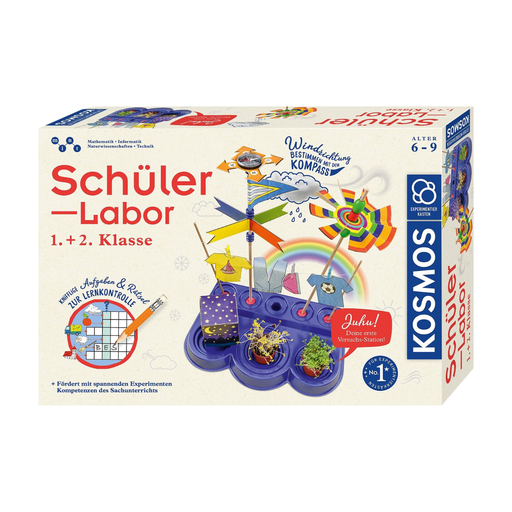
Why this product suits this profile: This broad introduction is designed for children aged 6 to 9, making it ideal for their first at-home activities in nature and technology, or as STEM learning equipment to complement schoolwork.
The age range and step-by-step instructions make it easier to assess the requirements before buying. No batteries are needed.
More than 50 activities, including light and shadows, air and water, and hearing and sight; suitable for ages 6 to 9.
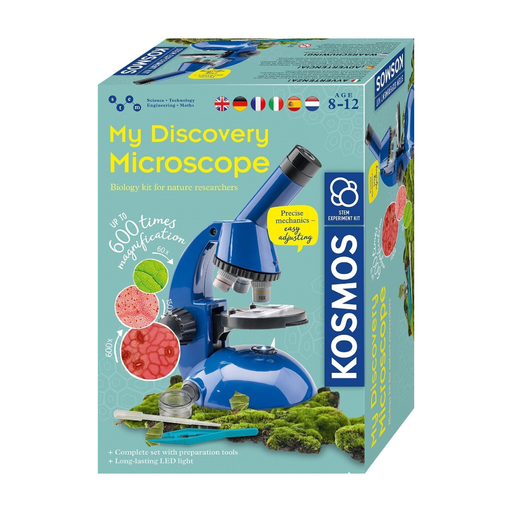
Why this product suits this profile: For children aged 8 and over who want to observe plants, fibres or other samples closely and record their findings over a longer period.
The magnification of up to 600x and the accessories included are clearly specified. Please note that 2 AA batteries are required, along with small parts and functional tips.
LED lighting, specimen-preparation accessories and instructions for initial biological observations.

Why this product suits this profile: For children aged 6 to 12 who enjoy building, controlling vehicles and trying out their first programmable sequences.
The power supply and play time are clearly stated: according to the product description, the battery provides around 15 minutes of use after a full charge. Electronic components must not get wet.
604 pieces, five model variants, plus remote control and app control with driving, path and programming modes.
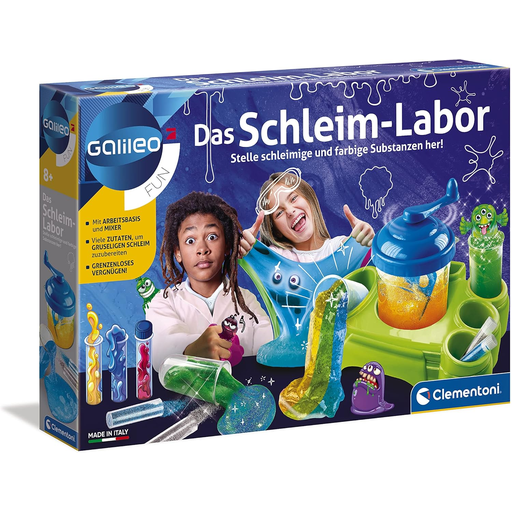
Why this product suits this profile: This set is designed for children aged 8 and over who would rather discover colours, textures and mixtures through hands-on activities than pure theory.
The contents clearly list laboratory equipment, a work area and a hand mixer. Direct adult supervision is required because of the small parts and chemical components.
A practical workspace and plenty of ways to customise slime with colours, glitter, beads and other additions.
We have put together a complete, regularly updated list of products that fully meet these strict selection criteria and the safety regulations applicable in the EU.
For observing nature, a Triops set or a microscope for children is a good choice. With KOSMOS Triops World, the focus is on observing and caring for small crustaceans every day. Children who prefer building can choose magnetic building blocks or transparent construction toys. A 126-piece set with a marble run and illuminated elements combines spatial thinking with observations of cause and effect.
For creative experiments, options include growing crystals, a slime laboratory, optical illusions or making gummy sweets. When choosing an educational gift, you should consider not only the topic but also the available workspace, how easy it is to tidy away and whether an adult is available to provide supervision.
That depends on their interests. Chemistry sets such as a slime laboratory or an experiment kit involving colour and fizzing reactions are ideal for children who enjoy mixing things. A microscope is suitable for observation, while crystal-growing sets demonstrate a process that takes several days. The manufacturer’s recommended age should always be considered alongside the child’s abilities.
Simple experiments often take 15 to 30 minutes. Growing crystals or raising Triops takes place over several days. With building sets, the time required depends on the model variant and the child’s experience. Keeping the parts and materials neatly organised makes it easier to use the set regularly.
Many sets include the basic materials for a limited number of experiments. Afterwards, refill packs or additional household materials may be needed. Before buying, check the information about consumables, batteries and accessories. This helps prevent the set from being left unused after just a few sessions.