
Lieferung heute & morgen

Qualitätsgarantie

Willkommens-Angebote freischalten: KOSTENLOSE Lieferung | Bis zu 80 % RABATT | Kostenlose 30-Tage-JoyPlus-Testphase
App herunterladen
STEM learning toys for children combine play with science, technology, engineering and maths. However, choosing the right product is not always easy for parents, grandparents and educational settings. Many sets promote themselves using STEM or Montessori terminology without clearly explaining which age group, skills or situations they are suitable for.
Three common purchasing challenges occur particularly often:
With learning toys for children aged 3 and over, parents should check the safety warnings directly on the product page. According to the product information, the magnetic building blocks featured here are not suitable for children under three. Small components may be swallowed. Particular care is needed with magnetic elements: if magnets are swallowed, they can cause serious injury. If this is suspected, seek medical assistance immediately.
For children aged 6 to 9, clearly structured tasks with illustrated instructions are often suitable. From around the age of 8, experiment kits for children covering scientific topics may be considered. Chemistry, crystal and confectionery sets should only be used as instructed and under direct adult supervision.
For magnetic construction tiles, ABS plastic, rounded edges and a securely enclosed magnet chamber are important details. Damaged parts, loose magnets or cracks are reasons to stop using the product.
The size must also match the system you already have. Some magnetic building blocks use edge lengths of 2.5 cm, while others measure 3.75 cm or 5.5 cm. Sets with different dimensions cannot necessarily be combined. If you already own magnetic building blocks for children, check compatibility before buying.
Construction toys primarily encourage free building, spatial thinking and hand–eye coordination. An experiment kit, on the other hand, involves individual experiments, observations and instructions. When choosing a product, it is therefore important to consider whether the child prefers building independently or carrying out investigations step by step.
You should also check:

Why this product suits this profile: According to the product information, the set is intended for children aged 3 and over and offers a manageable introduction to building with geometric shapes. The metal tin makes storage and transport easier.
The number of pieces remains manageable, so beginners are not overwhelmed by an unwieldy collection. The stated individual piece size is 3.75 cm.
32 magnetic components, ABS plastic, rounded edges and a portable metal tin.

Why this product suits this profile: This set provides more components for larger models and collaborative building. The transparent elements are ideal for families who want to combine geometric constructions with visual effects.
The product information states that the magnets are securely enclosed and the edges are smooth. Nevertheless, damaged parts should be checked regularly and removed.
76 pieces, 3.75 cm square tiles, ABS plastic and, according to the description, compatibility with standard sets of the same size.
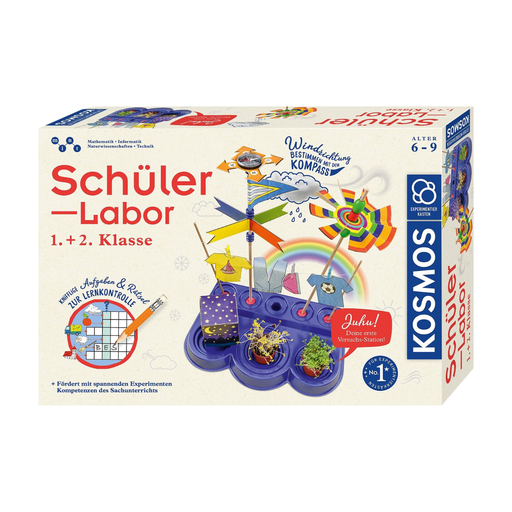
Why this product suits this profile: According to the product description, this set is designed for children aged 6 to 9 and contains more than 50 experiments covering light, shadows, air, water and the senses. It is suitable for regular activities at home or as a classroom supplement.
The range of topics is clearly described. This makes it easier to assess before buying whether the content is appropriate for the child’s age and the desired area of learning.
More than 50 described experiments, illustrated instructions and topics from the natural world and technology.
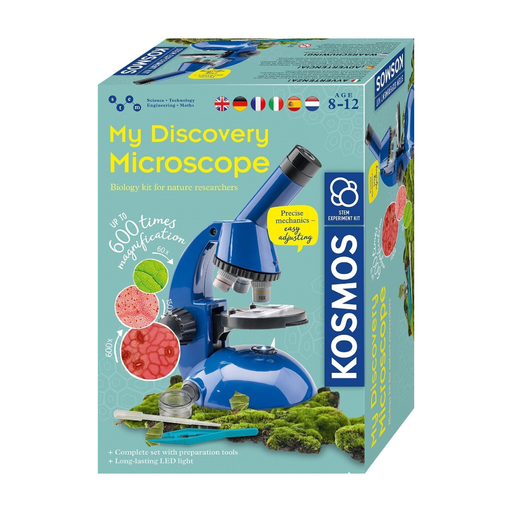
Why this product suits this profile: According to the product information, the microscope is intended for children aged 8 and over. It combines observations of plants, animals and fibres with prepared accessories. Two AA batteries are required for the LED lighting.
The product description specifies the magnification, accessories and power supply. This allows you to check any follow-up costs and the actual contents of the package before buying.
Up to 600× magnification according to the product information, LED lighting and accessories including slides, a pipette, tweezers and specimen containers.
We have put together a complete, regularly updated list of products that fully meet these strict selection criteria and the safety regulations applicable in the EU.
Magnetic building blocks should be stored in a dry place and protected from direct heat. Depending on the manufacturer’s instructions, wiping them with a soft cloth may be sufficient; avoid aggressive cleaning products and prolonged soaking. Check the edges, casings and magnet areas regularly.
For experiment kits, liquids, powders and tools should be put away after every use in accordance with the instructions. Consumables may limit the actual lifespan of the set. For sets with batteries, old and new batteries, as well as different battery types, must be kept separate.
For children aged 3 and over, simple magnetic building blocks and creative construction sets with larger, easy-to-grip pieces may be suitable. The age recommendation does not replace supervision. Small parts and magnets must not be put in the mouth.
Many sets work without electricity. A microscope with LED lighting may require batteries. Chemistry, crystal and slime sets often contain consumables, which may run out after the recommended experiments have been completed. You should therefore check the contents of the package and whether refill materials are available.
Only in some cases. The shape, magnet position and edge length are decisive. Product information such as ‘compatible with 2.5 cm sets’ refers to this specific system size. Before expanding your collection, compare the dimensions of the construction toy you already own.