
Lieferung heute & morgen

Qualitätsgarantie

Willkommens-Angebote freischalten: KOSTENLOSE Lieferung | Bis zu 80 % RABATT | Kostenlose 30-Tage-JoyPlus-Testphase
App herunterladen
A STEM robot kit can spark a child's curiosity for technology and science, offering a meaningful off-screen activity. However, the market can be overwhelming, and not every set delivers on its promises. As a Joybuy Product Recommendation Officer, I'll help you navigate common purchasing pitfalls and make an informed decision.
Many well-intentioned purchases end in frustration for both children and parents. This is often due to avoidable issues that only become apparent after unboxing.
To avoid a bad purchase, you should check three core aspects before making a decision. These parameters determine whether a robotics experiment kit will provide long-term enjoyment.
A good kit grows with the child's abilities. Don't just look at the age recommendation; examine the structure of the learning concept. An ideal tech toy for ages 8 and up offers a modular design. The child starts with a simple, functional model and can later expand or reprogram it. Illustrated step-by-step instructions are essential here. A set that combines mechanical building with basic, simple programming logic (e.g., via an app with graphical blocks) provides a balanced and motivating learning curve.
The manual is the heart of any kit. It must be written in clear, correct English and contain large, unambiguous illustrations. Check if the manufacturer is known for its understandable instructions, as is often the case with brands like Clementoni or Kosmos. The components themselves should be made of durable plastic (e.g., ABS plastic) and fit together precisely. Poorly manufactured parts that are difficult to connect or break easily are a clear deal-breaker.
Consider what happens after assembly. A simple build-it-yourself robot for kids can quickly lose its appeal once completed. A learning robot for kids, on the other hand, often offers the ability to program different behaviours or expand it with sensors. Check whether the model only follows a rigid set of instructions or if it allows room for creativity and personal experiments. Models that use standard components and common battery types (e.g., AA batteries) are the more straightforward and cost-effective choice in the long run.
Based on these criteria, we have selected a few products from our range that suit different interests and requirements.
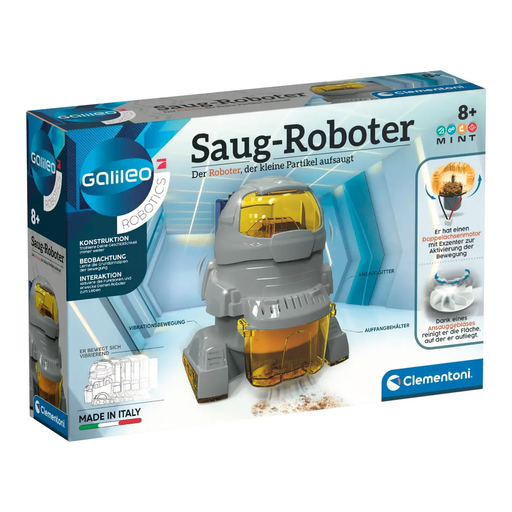
Why this model is a great fit: Ideal for children who want to understand how mechanical devices work. The assembly process teaches tangible principles of mechanics and electronics, resulting in a functional little suction robot. A classic entry into the world of robotics.
The illustrated instructions for the Galileo Robotics series are clearly structured and in English, which prevents frustration. The set requires standard AA batteries, so there are no hidden follow-up costs.
Provides hands-on learning about mechanical principles like vibration and centrifugal force. The child not only builds a model but a device with a visible function (suction power).
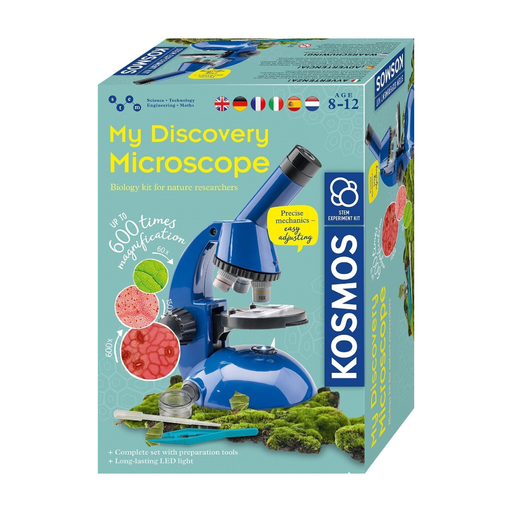
Why this model is a great fit: For children whose interests lie more in biology and discovering the unseen world than in mechanics. It's a STEM tool that encourages close observation and scientific work.
The complexity is manageable for children aged 8 and up. The set is complete and requires no expensive additional purchases. The Kosmos manual is in English and provides a child-friendly introduction to using the microscope.
Promotes keen observation skills and introduces the fundamentals of biology. The complete accessory kit (slides, tweezers, etc.) allows you to get started right away.
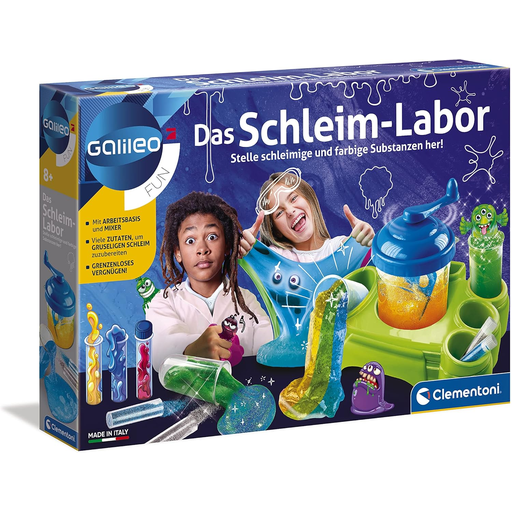
Why this model is a great fit: Perfect for kids who love to mix, experiment, and see tangible results. This experiment kit combines the fun of slime with a safe introduction to basic chemical principles.
The instructions are specially designed for children and explain the chemical reactions in a simple way. All necessary materials are included, so there are no hidden costs for additional substances.
Fosters creativity and an understanding of material properties and chemical reactions. The included workstation ensures clean and organised experimenting.
We've compiled a complete, up-to-date list of products that fully meet these strict selection criteria and UK safety standards.
No, most entry-level kits, especially those for ages 8 and up, are designed so that no prior knowledge is required. A good, illustrated manual guides you step-by-step through the building process. For programmable models, the entry point is usually a graphical, block-based interface that is intuitive to understand.
A simple building kit focuses on mechanical assembly according to a fixed set of instructions. The result is often a single, unchangeable model. A learning robot, on the other hand, is usually modular and programmable. After building, children can give it various commands via an app or a simple programming language, equip it with sensors, and change its behaviour, which significantly increases its long-term play value.
Choose a model that goes beyond simple assembly. Kits that allow for creativity, can be reprogrammed, or can be combined with other sets (from the same manufacturer) offer much more long-term motivation. A robot that can react to obstacles, follow lines, or make sounds remains more interesting for longer than a model that only moves straight ahead.