
Lieferung heute & morgen

Qualitätsgarantie

Willkommens-Angebote freischalten: KOSTENLOSE Lieferung | Bis zu 80 % RABATT | Kostenlose 30-Tage-JoyPlus-Testphase
App herunterladen
A STEM robot kit is often at the top of the wish list when it comes to a meaningful gift for children aged 8 and up. The fascination with technology, the sense of achievement from building, and the opportunity to take first steps into the world of robotics make these kits a valuable learning tool. However, the market is overwhelming, and not every product that looks technologically advanced genuinely fosters understanding.
As a Joybuy Product Recommendation Officer, I closely monitor the educational toy market. In doing so, I consistently notice common pitfalls that can lead to disappointment when choosing a kit. Before you make a decision, you should be aware of them.
To avoid these problems, it's wise to look for a few objective features before buying. These will help you find a product that not only provides short-term excitement but also encourages long-term tinkering and learning.
The manufacturer's age recommendation is a crucial starting point. For children around 8 years old, a tech toy that teaches basic mechanical principles is ideal. The focus here is on the tactile experience: How do gears mesh? How does a motor generate movement? For older children aged 10 or 12, programmable models become interesting, offering an introduction to the logic of coding, often through an accompanying app. Check whether the kit has a clear focus—mechanics, electronics, or programming.
High-quality materials like durable ABS plastic and precision-fit parts are essential for a frustration-free building experience. The components should be sturdy and withstand being assembled and disassembled multiple times. The instructions are just as important: they should be clearly structured, written in understandable English, and feature clear, step-by-step illustrations. A look at product reviews from other buyers can often provide insight here.
A good DIY robot for kids continues to offer engagement even after the initial build. This can be achieved through several factors:
Based on these criteria, we have identified a few products that are well-suited for different interests and learning goals.
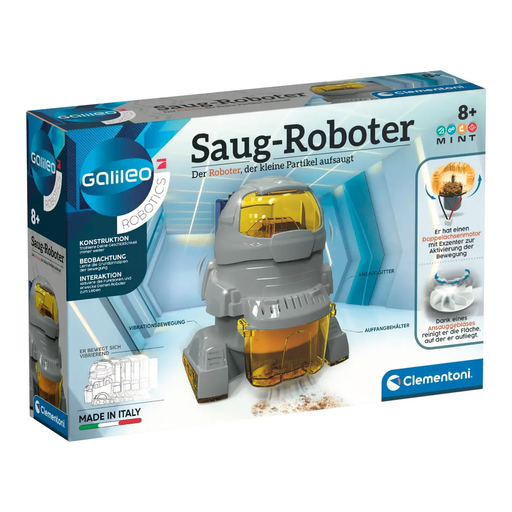
Why it's a great match: Ideal for children who want to understand how technology works. The focus is on assembling the mechanics and the motor to enable a real function—suction.
This model is not a "show-off." Children assemble the suction mechanism with a vibration motor and eccentric shaft themselves, directly experiencing how physical principles are implemented in a machine.
Teaches tangible technical principles like mechanics and centrifugal force. The result is a functional robot vacuum kit that can suck up small crumbs.
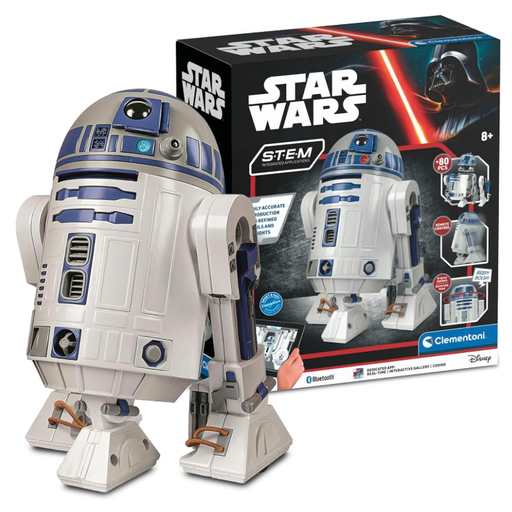
Why it's a great match: Combines the fun of building with a playful introduction to the world of programming. The app control and the iconic Star Wars character ensure high motivation.
This model solves the "short-lived play value" problem with its app, which features three modes (real-time control, programming, interaction). After building, the digital play and learning really begin.
Introduces children to the fundamentals of block-based programming. The app allows them to create their own command sequences and understand the logic behind them.
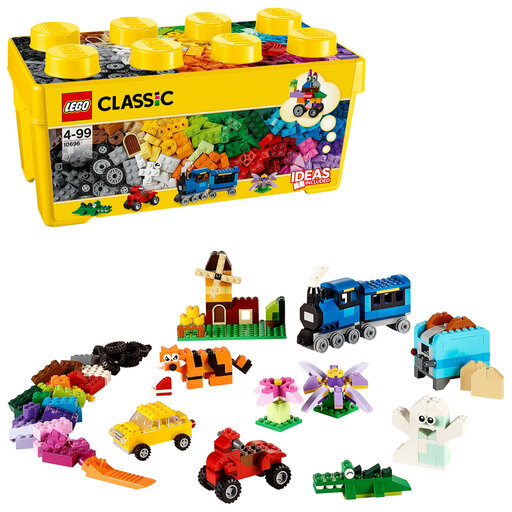
Why it's a great match: For children whose passion is free-form building. It's not a robot kit in the strict sense, but it's a foundation for technical understanding and creativity.
This set naturally avoids the "short-lived play value" pitfall. The 484 pieces in 35 colours offer limitless possibilities and can be reconfigured again and again.
Promotes spatial reasoning, fine motor skills, and problem-solving without a fixed set of instructions. The bricks are compatible with the entire LEGO system and are therefore infinitely expandable.
We have compiled a complete, up-to-date list of products that fully meet these strict selection criteria and UK safety regulations.
In general, these kits are a great choice starting from around age 8. For this age group, for whom tech toys for ages 8 and up are designed, the focus is usually on basic mechanical functions. For older children aged 10 or 12, programmable models become increasingly interesting. It is always advisable to check the manufacturer's specific age recommendation, as it is tailored to the complexity of the kit.
As a rule, the kits are designed to be assembled without any additional special tools. All necessary components are included in the box. An exception is often battery-powered models: a small Phillips head screwdriver is required to open and close the battery compartment, which is usually not included.
The build time can vary greatly. Simple mechanical models can often be completed in one to two hours. More complex, programmable robots can take several hours or be spread out as a project over several days. The instructions often give a good indication of the expected time commitment.