
Lieferung heute & morgen

Qualitätsgarantie

Willkommens-Angebote freischalten: KOSTENLOSE Lieferung | Bis zu 80 % RABATT | Kostenlose 30-Tage-JoyPlus-Testphase
App herunterladen
Finding a toy that not only entertains but also supports a child's development can be a challenge. Many parents, grandparents, and educators look for products that spark curiosity while teaching valuable skills. STEM toys are designed to meet this exact need, playfully introducing children to the fields of science, technology, engineering, and mathematics.
This article serves as a guide. It introduces various types of educational toys and presents a selection of products aimed at fostering problem-solving skills, creativity, and technical understanding.
Choosing the right toy depends on several factors. The following points can help you make an informed decision.
The manufacturer's age recommendation is a key indicator. It provides information not only about the product's safety (e.g., the presence of small parts) but also about its difficulty level. A toy that is too complex can lead to frustration, while one that is too simple quickly becomes boring. In the EU, look for the CE mark, which confirms that the product meets applicable safety standards.
Educational toys for school-aged children are most effective when they align with the child's individual interests.
A good STEM toy often offers more than just a single use. Systems that are expandable or allow for different solutions have high replay value. They stimulate creativity and motivate children to tackle new challenges and implement their own ideas.
Here is a selection of products that cover different STEM fields and are designed for various age groups and interests.
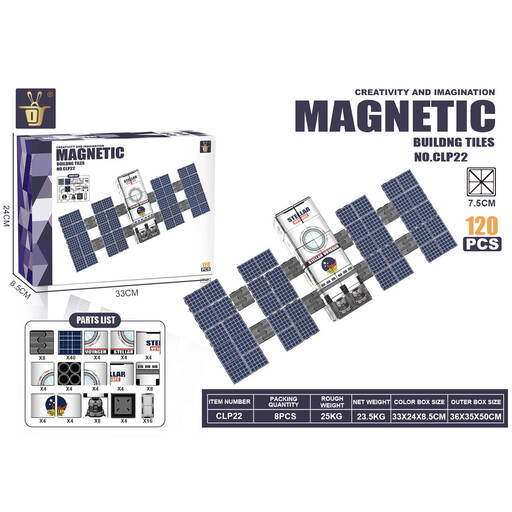
Why It Stands Out This 120-piece set combines the fun of building with the fascination of space. The diamond-shaped tiles are printed with rockets, planets, and stars, inspiring cosmic creations. According to the manufacturer, the magnets are fully sealed within the housing, and the edges are smoothly finished to ensure safe handling. The product meets ASTM and EN71 safety standards.
Pros
Who It's For This construction toy is ideal for children who love to build and are fascinated by space. It's well-suited for free play, either alone or in a group, and encourages creativity in building space stations, rockets, and imaginative structures.
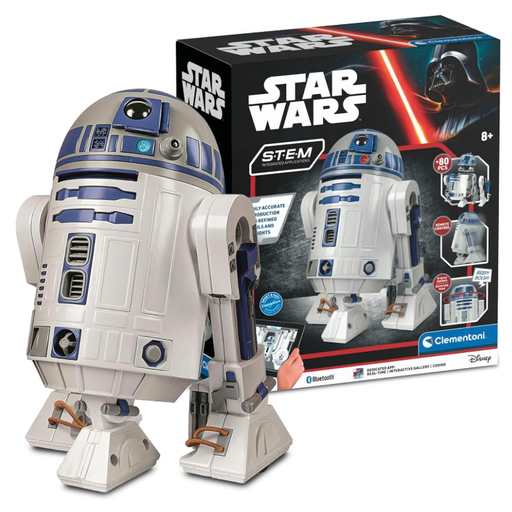
Why It Stands Out This kit merges the world of Star Wars with a hands-on introduction to robotics. Children can assemble their own R2-D2 from over 50 parts. The finished droid is controlled via a special app that offers three different modes: real-time control, an introduction to block-based programming, and interactive character reactions. Authentic light and sound effects, along with a rotating head, complete the experience.
Pros
Who It's For Recommended for children and teens aged 8 to 14, especially fans of the Star Wars saga. It's a great choice for tech-savvy kids who want a motivating first look into the world of coding.
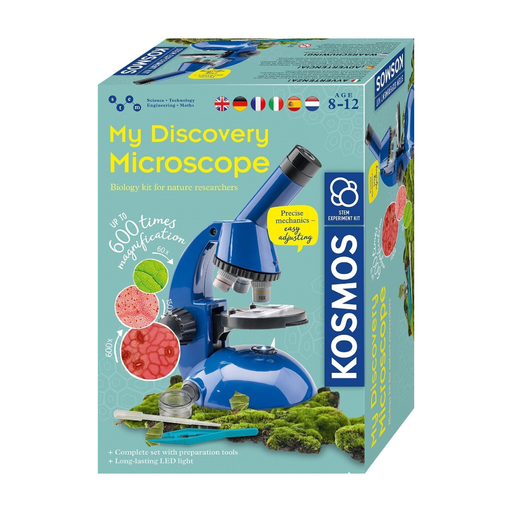
Why It Stands Out This experiment kit makes the invisible visible. With up to 600x magnification, young scientists can examine the microcosm of plants, fibres, or water samples. The set is robustly designed and includes extensive accessories like slides, a pipette, tweezers, and sample vials, so experiments can begin immediately. A colourful manual explains how to use it and provides ideas for initial investigations.
Pros
Who It's For This science toy is designed for curious children aged 8 and up who are interested in biology and the natural sciences. It's ideal for sparking a spirit of discovery and developing an understanding of the world that is invisible to the naked eye.
Every child has unique interests and talents. If the products featured here don't quite match what you're looking for, there are many other options to explore. From complex robotics sets to simple chemistry kits, the selection is vast.
Explore our full range of STEM toys and find the perfect educational toy for your child.
STEM stands for Science, Technology, Engineering, and Mathematics. (In German, the acronym is MINT). STEM toys, also known as educational toys, are designed to playfully introduce children to these subjects and promote skills like logical thinking, problem-solving, and creativity.
An introduction to robotics is possible as early as primary school. For children around 6 to 8 years old, there are simple kits that often use a block-based, visual programming language. These don't require reading skills and teach fundamental logical concepts. For older children and teens, there are more complex systems that involve text-based programming languages and more advanced mechanical constructions.
When choosing an experiment kit, it's important to pay attention to the contents and the instructions. Are all the necessary materials for the described experiments included, or will you need to use additional household items? The manual should be clear, easy to understand, and illustrated in an age-appropriate way. It's also essential to review the safety instructions, especially if the kit contains chemicals or sharp tools.