
Lieferung heute & morgen

Qualitätsgarantie

Willkommens-Angebote freischalten: KOSTENLOSE Lieferung | Bis zu 80 % RABATT | Kostenlose 30-Tage-JoyPlus-Testphase
App herunterladen
The search for a meaningful gift for school-aged children leads many parents and relatives to STEM toys. These products promise a playful introduction to science, technology, engineering, and mathematics. However, the market is overwhelming, and not every product advertised as an educational toy delivers on its promise. Before you make a decision, it's helpful to know the most common pitfalls that lead to disappointment in the playroom.
As a Joybuy Product Recommendation Officer, I filter through product information daily. My goal is to provide you with objective criteria so you can make an informed choice that matches the child's interests and abilities.
Disappointment often runs high when an expensive science kit for kids ends up in a corner after a single use. These three problems are particularly common:
To avoid these pitfalls, you should check three core parameters. These will help you objectively assess the quality and educational value of a science toy.
A good STEM toy is robust and safe. Pay attention to the following points:
A well-thought-out concept is the key to fostering creativity and sparking long-term interest.
To make your choice easier, we have matched some products to different user profiles.

Why This Fits Their Persona: Ideal for a first step into the world of physics. The experiments are integrated into daily life (bathtime), which lowers the barrier to entry and sparks curiosity without feeling like a chore.
The waterproof, purely pictorial instructions avoid the frustration trap for early readers. The experiments can be repeated and varied, which increases the replay value.
Promotes an understanding of basic physical principles like buoyancy and water pressure in a safe environment. Requires no batteries.
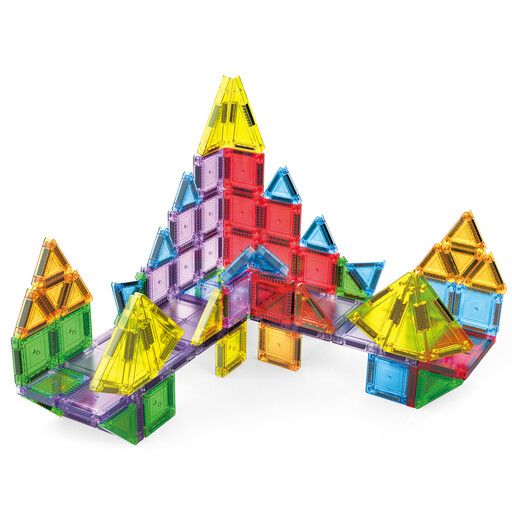
Why This Fits Their Persona: Perfect for children who love to build and design freely. The open-ended play principle promotes spatial reasoning and imagination without imposing rigid rules.
Sidesteps the low replay value trap as it is infinitely combinable. The strong, securely encapsulated magnets and robust ABS material prevent material fatigue.
Develops fine motor skills and an understanding of geometry. Compatibility with other standard magnetic tiles allows the system to grow with the child.

Why This Fits Their Persona: Combines a fascination with sweets with real chemical processes. The result is edible, which creates high motivation and makes the benefits of science directly tangible.
The clear instructions explain the science behind the gelling process, thus avoiding the trap of simply "following a recipe." The set includes material for multiple batches and even gift jars.
A complete kit including all necessary ingredients (except water) and utensils. Teaches about states of matter and the function of gelling agents.
We have compiled a complete, up-to-date list of products that fully meet these strict selection criteria and UK/EU safety regulations.
STEM is an acronym that stands for Science, Technology, Engineering, and Mathematics. STEM toys aim to teach children basic concepts and skills in these subjects through playful activities. The spectrum ranges from simple building sets and experiment kits to programmable robots.
Simple science kits that cover basic phenomena like magnetism or buoyancy are often suitable for children as young as 6. More complex sets in the fields of chemistry, electronics, or biology (e.g., with a microscope) are generally aimed at children aged 8 or 10, as they require greater concentration and a better understanding of instructions. Always check the manufacturer's recommendations, but balance them with the individual child's abilities and interests.
Look for the CE mark, which confirms compliance with EU safety standards. Check the toy for sturdy construction, rounded edges, and the absence of small, easily detachable parts, especially for toys intended for younger children. For sets containing chemicals or batteries, it is crucial to read the manufacturer's warnings carefully and only allow use under adult supervision.