
Lieferung heute & morgen

Qualitätsgarantie

Willkommens-Angebote freischalten: KOSTENLOSE Lieferung | Bis zu 80 % RABATT | Kostenlose 30-Tage-JoyPlus-Testphase
App herunterladen
STEM toys for children combine playful discovery with subjects from science, technology, engineering and maths. However, choosing the right product is not always easy for families and education professionals: age recommendations, number of pieces, safety information and actual learning content can vary considerably.
A set with 100 or more pieces may seem versatile at first glance. What really matters, however, is whether the elements can be combined and whether children can use them to build genuinely different models. When choosing magnetic building blocks for children, you should therefore assess not only the number of pieces but also the variety of shapes, piece size and compatibility.
A small starter set may be more suitable for younger children than a large collection that quickly becomes overwhelming. For groups, siblings or classroom use, a larger number of pieces can offer advantages.
Magnetic building blocks and magnetic tiles contain small, powerful magnets. A strong connection can make building easier, but it says nothing about how securely the magnets are enclosed in the casing. Look for rounded edges, an intact outer casing and clear warning notices.
For products containing small parts, the rule is simple: they are not suitable for children under three years of age. If a magnet is swallowed or inhaled, seek medical assistance immediately. Damaged pieces or loose magnets should no longer be used.
Not every product described as an educational toy contains clear, easy-to-follow learning steps. Check whether instructions, tasks or explanations are included. A science kit for children is particularly appealing when it provides more than just materials and also encourages observation, documentation and an understanding of cause and effect.
The stated age is a guide to the level of difficulty, piece size and handling requirements. Educational toys for children aged 3 and over should only be used in accordance with the safety warnings. For experiment kits suitable for children aged 8 and over, read the instructions in full. Activities involving hot water, chemicals, sharp tools or batteries require adult support or supervision.
ABS plastic is often used for magnetic building blocks. Important points to check include smooth, burr-free edges, a sturdy casing and securely enclosed magnets. You should also check the information provided about the manufacturer, the responsible person in the EU, country of origin and cleaning instructions.
The CE mark indicates the manufacturer's declaration that the product meets the relevant EU requirements. It is not, however, an independent quality seal. The specific safety and age warnings remain essential when making your purchasing decision.
For a science kit suitable for children aged 8 and over, it should be clear which components are included and whether consumables need to be purchased separately. Sets involving crystals, slime, sweets or chemical mixtures may only be partly reusable once individual components have been used up. Batteries are often not included with microscopes. This should be factored in before buying.

Why this product suits this profile: This set is designed for children aged 3 and over and contains 32 square magnetic tiles, each measuring 3.75 cm along the edge. The metal tin makes storage and transport easy, whether for visits, holidays or short play sessions.
The manageable number of pieces makes it easy to get started. The material, piece count, individual size and warning about small parts are all clearly stated.
32 pieces, ABS plastic, no assembly required and a portable metal tin for tidy storage and transport.
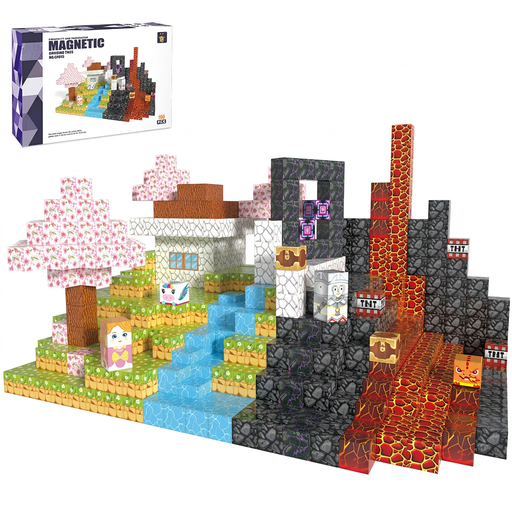
Why this product suits this profile: With 100 pieces, this set is suitable for more ambitious building ideas, multiple children or use at home and in educational settings. Its stated compatibility with 2.5-cm magnetic building blocks expands the possible combinations.
The product details specify the piece size, material, storage bag and construction with permanently enclosed magnets.
100 pieces, 2.5-cm format, storage bag and, according to the product description, CPC and ASTM information.
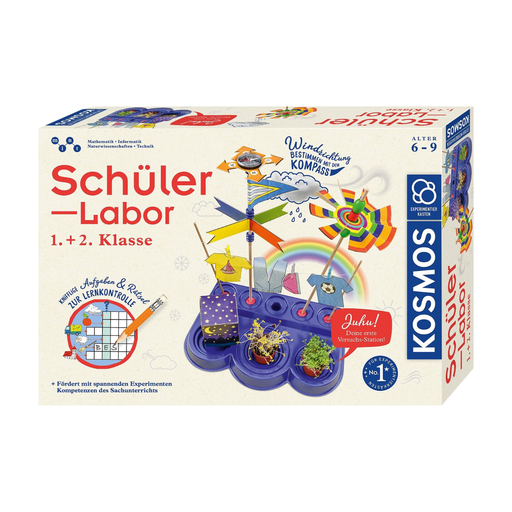
Why this product suits this profile: This set is aimed at children aged 6 to 9 and includes more than 50 experiments covering light and shadow, air, water and the human senses. It is ideal for families looking for a regular supply of varied learning activities.
The activities are organised by topic and include illustrated, step-by-step instructions. This keeps the learning content clear beyond individual play sessions.
More than 50 experiments, a 6–9 age range and a focus on science and technology topics.
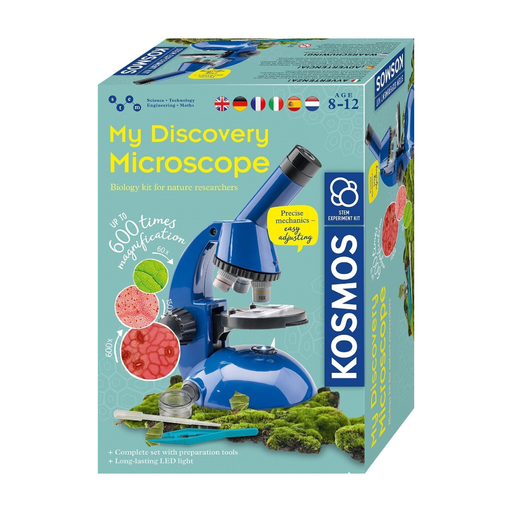
Why this product suits this profile: This microscope is designed for children aged 8 and over and offers magnification of up to 600x. With slides, a pipette, tweezers and other accessories, children can examine natural materials.
The contents list clearly identifies the observation tools required. It also highlights small parts, functional edges and the need for adult supervision when using batteries.
Magnification of up to 600x, a comprehensive range of accessories and an illustrated instruction booklet.
We have put together a complete, regularly updated list of products that fully meet these strict selection criteria and the safety regulations applicable in the EU.
From the age of 3, simple magnetic building blocks, magnetic tiles and creative construction toys may be suitable, provided the age recommendation and safety warnings are followed. Supervised use is advisable because of the small parts and powerful magnets. Sets with clear geometric shapes make it easier for children to explore colours, shapes and spatial structures.
The useful life depends on the contents. Construction sets can generally be used repeatedly as long as no pieces are damaged or lost. With chemistry, crystal or slime sets, individual materials are consumable components. Before buying, check whether refill materials are intended or available.
That depends on the product. Some sets contain the essential materials, while others require household items, batteries or water. The product description and instructions should therefore be checked before buying. Experiments involving heat, mixtures or sharp tools require adult supervision.