
Lieferung heute & morgen

Qualitätsgarantie

Willkommens-Angebote freischalten: KOSTENLOSE Lieferung | Bis zu 80 % RABATT | Kostenlose 30-Tage-JoyPlus-Testphase
App herunterladen
STEM toys for children combine playful discovery with subjects including science, technology, engineering and maths. However, choosing the right product is not always straightforward for families. A large set may seem versatile at first glance, an experiment kit promises exciting effects and a construction system appears endlessly expandable. But the key considerations are not simply the number of pieces or the packaging design. Age suitability, safety information, materials, instructions and the intended use all matter.
100 components may sound impressive. However, if the set contains only a few shapes or the pieces do not connect securely, it may be put aside after a short time. With magnetic building blocks for children, you should therefore check the variety of shapes, connection system and compatibility. A marble run extension is only useful if it fits the system you already have.
The “from 3 years” label does not mean that every child should play without supervision. Small parts and magnets can pose a risk to younger children. With magnetic products, it is particularly important that the magnets are permanently enclosed and that the product includes clear warnings. Damaged components should be removed from the play area.
Experiment kits for children may require additional household materials, batteries, water or a suitable workspace. A microscope for children, for example, often needs batteries for its lighting. Before buying, it is worth checking the contents, consumables, storage requirements and the amount of time needed for supervision.
The manufacturer’s age recommendation is the first filter. Learning toys from 3 years should offer simple, easy-to-grip components and clearly defined play activities. Science toys from 6 years are suitable for structured observation and mixing tasks supported by illustrated instructions. An experiment kit from 8 years may already include several steps, measurements or explanatory background information.
Age alone is not enough, however. Check whether your child:
For plastic construction kits, smooth edges, secure connections and clear material information are important criteria. Information such as ABS plastic, enclosed magnets and available conformity details can help you assess the product. Certificate information should be regarded as product information provided by the seller. It does not replace checking for cracks, loose parts or sharp edges.
For chemistry sets, the rule is simple: read the instructions, follow the safety and storage guidance, and only carry out experiments as intended. The term chemistry experiment kit describes the subject matter, but it is not a licence to work unsupervised.
Do not compare the price alone. Also check:
A magnetic tile construction set with 2.5-cm elements is not automatically compatible with a system of a different size. With marble runs and experiment sets, you should also check whether replacement or extension parts are available.
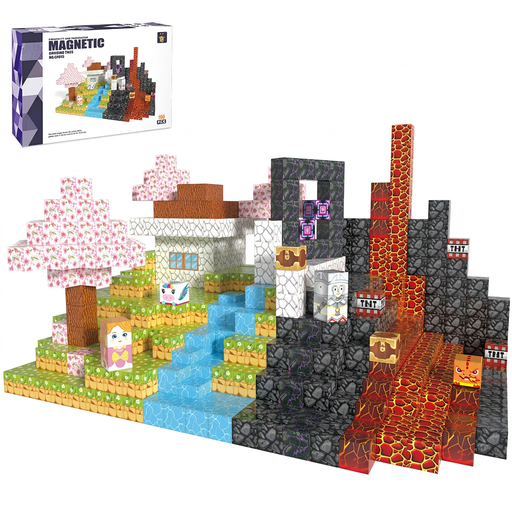
Why this product suits this profile: The set contains 100 geometric components, requires no batteries and comes with a storage bag. It is suitable for free building at home or on the go.
The product description states the piece count, the 2.5-cm element size, the ABS material and the intended use from 3 years. According to the seller, the magnets are permanently enclosed.
100 pieces, no batteries, basic geometric shapes and compatibility with other 2.5-cm magnetic tile sets according to the product information.
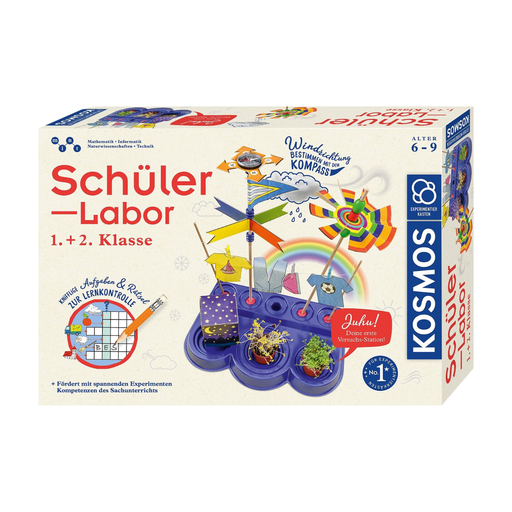
Why this product suits this profile: The set is designed for children aged 6 to 9 and covers light, shadows, air, water and the senses. Illustrated, step-by-step instructions support structured use.
More than 50 described experiments and learning activities provide a clear structure. This means the play value does not depend solely on individual effect materials.
A broad range of topics, illustrated instructions, 1.38 kg of contents and a focus on science and technology for primary-school age children.
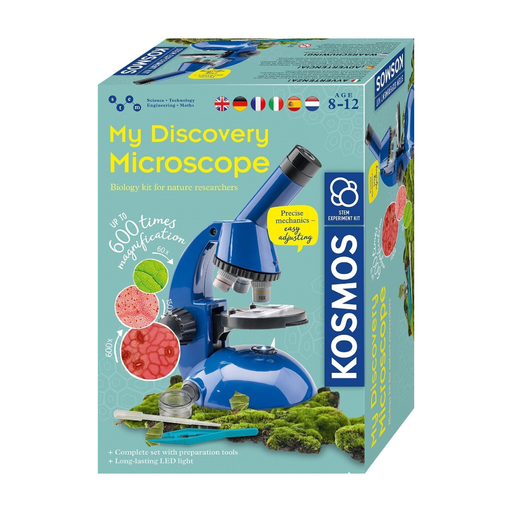
Why this product suits this profile: For children aged 8 and over who want to observe plants, fibres or other specimens. The set includes preparation materials and offers up to 600x magnification according to the product description.
The contents include microscope slides, coverslips, a pipette, tweezers, a needle and specimen containers. An additional 2 AA batteries are required and are not included.
600x magnification according to the seller, LED lighting, accessories for preparing specimens and an instruction booklet for initial biological observations.
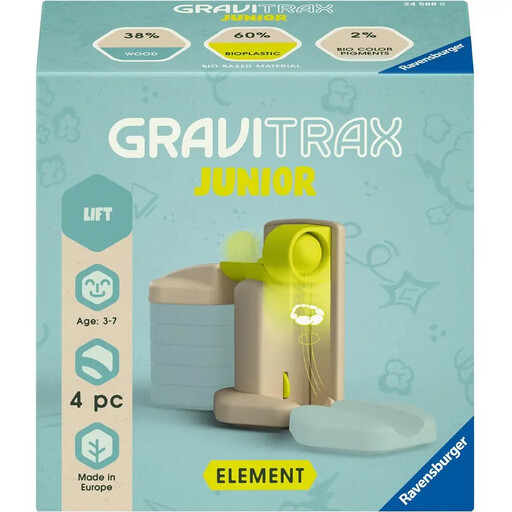
Why this product suits this profile: This extension element is designed for children aged 3 and over and complements existing GraviTrax Junior starter sets. It is ideal for families who want to expand an existing marble run step by step.
Compatibility is specifically stated for all GraviTrax Junior starter sets. You can therefore check whether the existing system is suitable before buying.
Element Lift, marble and ramp, no batteries, plus wood-based bioplastic according to the seller.
We have put together a complete, regularly updated list of products that fully meet these strict selection criteria and the safety regulations applicable in the EU.
Adults should regularly check magnetic components for cracks, loose magnets or detached parts. Swallowed magnets can cause serious injuries. If you suspect that a magnet has been swallowed, seek medical help immediately. Magnetic toys should also be kept away from magnet-sensitive devices and medical implants.
For chemistry and science toys, it is advisable to use a dedicated workspace:
This helps educational toys stay usable for longer and be used repeatedly, rather than ending up incomplete in a cupboard after just a few uses.
For children aged 3 and over, suitable options include large construction systems, simple magnetic tiles and age-appropriate marble-run elements. The manufacturer’s recommendation, the condition of the parts and adult supervision are all important. Small balls, loose magnets and components that could be swallowed must be kept out of the reach of younger children.
It depends on the set. Some kits require only household materials, while others contain consumable granules or biological components. A microscope may require batteries. Before buying, check the sections covering batteries, contents and refill materials.
How long a toy remains engaging depends on the opportunities for variation, the instructions and the child’s developmental stage. Sets covering several topics, offering open-ended building activities or supporting compatible extensions can be used for longer. With experiment kits, you should also check how many independent experiments are actually included and whether individual components can be reused after the activity.