
Lieferung heute & morgen

Qualitätsgarantie

Willkommens-Angebote freischalten: KOSTENLOSE Lieferung | Bis zu 80 % RABATT | Kostenlose 30-Tage-JoyPlus-Testphase
App herunterladen
Whether you're reaching for the top kitchen shelf, changing a lightbulb, or hanging curtains, many everyday household tasks require you to safely get a little higher. Grabbing a wobbly chair or an unsuitable box, however, poses significant risks. A stable and reliable step ladder is therefore an essential piece of equipment for any home.
This article serves as your guide. It highlights the key features to look for when making your selection and presents a range of models tailored to specific needs. Our goal is to provide an informed basis for your decision, helping you find a safe and durable household ladder.
To find the right step stool, several functional criteria should be considered. These features determine not only its potential uses but, most importantly, its safety.
The material is crucial for the stability and longevity of a household ladder. Steel models are known for their robustness and exceptional stability. A steel step ladder with a certified load capacity of 150 kg provides a very secure base for most household activities. Look for solid joint construction and a wide base that makes it difficult to tip over sideways. Certifications like T?V or compliance with the EN14183 standard can provide additional proof of tested safety.
A non-slip step ladder is a must-have for smooth floors like tile or parquet. Rubberised feet prevent the ladder from sliding, while ribbed or rubber-coated steps ensure secure footing. For those who prefer extra support or feel unsteady on ladders, a folding step stool with a handrail is a smart choice. The handle provides an additional point of contact when climbing up and down, significantly increasing the sense of stability. A safety bar or a locking mechanism that prevents accidental folding are other crucial safety features.
The number of steps you need depends on your ceiling height and the tasks you have in mind. A 3-step ladder is sufficient for most standard applications in the kitchen, basement, or living room. For higher ceilings or work on the ceiling itself, a four-step model may be necessary. Since storage space is often limited, a folding step ladder is the most practical solution. Pay attention to its dimensions when folded. A slim folding step stool that is only a few centimetres deep can be easily stored in niches, behind doors, or in cupboards.
Based on the criteria mentioned, we have compiled a selection of models that are well-suited for various household applications due to their functional properties.
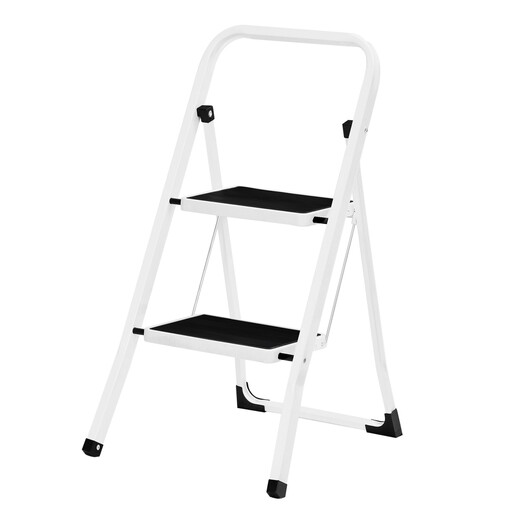
Why it stands out: This model stands out for its extremely slim folded profile of just 4.5 cm, allowing for exceptionally space-saving storage. The integrated handle makes it easy to carry and adds extra security.
Benefits:
Who it's for: Ideal for users who need a lightweight and quickly deployable step stool for everyday tasks in various rooms like the kitchen or garage, and who value easy storage.
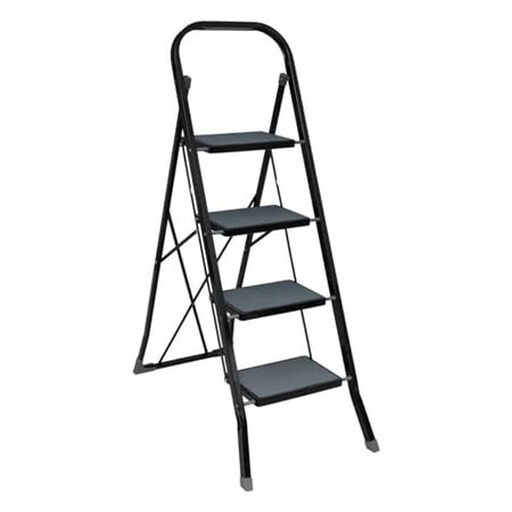
Why it stands out: With four steps and a high safety bar (guard rail), this model offers extended reach and a high degree of safety, confirmed by its T?V and EN14183 certifications.
Benefits:
Who it's for: A great choice for homeowners and DIY enthusiasts who regularly perform tasks at greater heights and place the highest value on stability and certified safety.
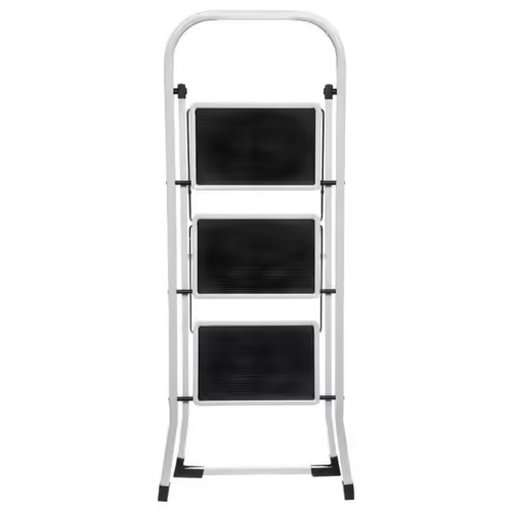
Why it stands out: This 3-step ladder represents an excellent balance of working height, safety, and compactness. A safety bar and a non-slip coating provide reliable support.
Benefits:
Who it's for: Perfect for anyone looking for a versatile household ladder for regular use that offers a good balance between reach and ease of handling.
Are you looking for other practical aids for stability and safety in everyday life? Whether for indoors or outdoors, the right equipment is crucial. For example, discover our selection of compact trekking poles, which provide extra support during outdoor activities.
1. How many steps should a household step ladder have? The ideal number of steps depends on your ceiling height and the intended tasks. For reaching upper kitchen cabinets or standard shelves, models with two or three steps are usually sufficient. If you need greater reach, for instance, to install lights on high ceilings, a four-step ladder is a better choice.
2. Which material is better for a household ladder: steel or aluminium? Both materials have their advantages. Steel offers very high stability and sturdiness, which is particularly beneficial for models with a load capacity of 150 kg. Aluminium is significantly lighter and therefore easier to transport. The decision depends on your priority: maximum stability (steel) or low weight and easy transport (aluminium).
3. What should I look for in a non-slip step ladder? Pay attention to two key features: First, the steps themselves should have a non-slip surface, for example, through ribbing or a rubber coating. Second, rubber caps on the ladder's feet are essential. They prevent the ladder from slipping on smooth floors like tile, laminate, or parquet and also protect the flooring from scratches.