
Lieferung heute & morgen

Qualitätsgarantie

Willkommens-Angebote freischalten: KOSTENLOSE Lieferung | Bis zu 80 % RABATT | Kostenlose 30-Tage-JoyPlus-Testphase
App herunterladen
A step ladder is a versatile tool that provides access to hard-to-reach areas in the home, workshop, or office. Choosing the right model depends on specific requirements such as the necessary working height, available storage space, and safety considerations. An informed decision is based on analysing technical parameters like material, load capacity, and compliance with relevant standards.
The functionality and safety of a household ladder are determined by a range of design features. Considering these criteria is fundamental to selecting the right model for your needs.
The number of steps directly determines the achievable height.
The material affects the weight, stability, and durability of the step ladder.
The maximum load capacity is a critical safety feature. The standard for domestic use is often 150 kg. It is crucial not to exceed this limit.
Safety is the top priority for any climbing aid. Look for the following features:
For homes with limited space, a folding step stool with a slim profile when folded is advantageous. Models that fold down to just a few centimetres deep can be discreetly stored in alcoves, behind doors, or in cupboards.
Based on an analysis of technical specifications and real-world usability, we present three models suited for different use cases.
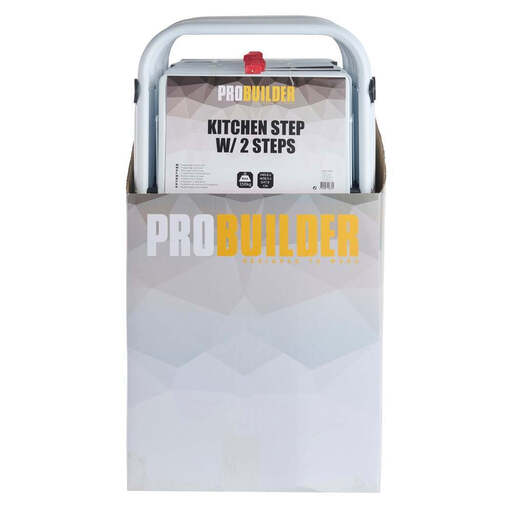
Why we recommend this product: This model is specifically designed for use in the kitchen and around the home. Its steel construction ensures excellent stability. The standout feature is its ultra-slim folded profile of just 4.7 cm, allowing for space-saving storage even in the tightest of spaces. The wide steps (20 x 30 cm) provide a comfortable and secure standing surface.
Advantages:
Who it's for: This model is ideal for anyone looking for a very stable yet extremely space-saving ladder for the kitchen or for apartments with limited storage.
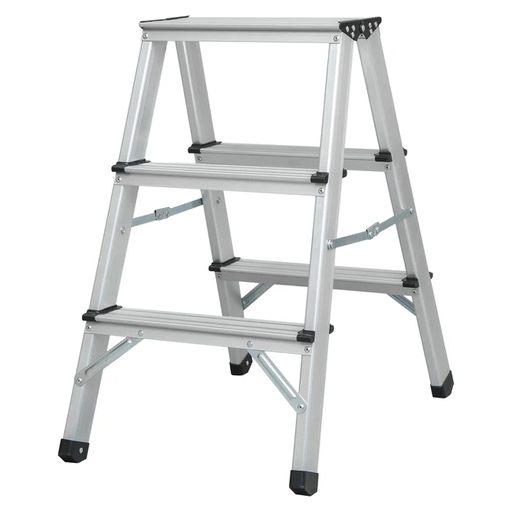
Why we recommend this product: This 3-step aluminium ladder combines a greater working height with a low weight of just 2.22 kg. A special feature is its dual-sided access, which increases flexibility on the job as the ladder doesn't need to be constantly repositioned. The wide, non-slip steps and certification to EN14183:2003 highlight its focus on safety.
Advantages:
Who it's for: Users who need greater reach and prioritise a lightweight design and versatile use. Well-suited for DIY enthusiasts, workshop tasks, or homes with high ceilings.
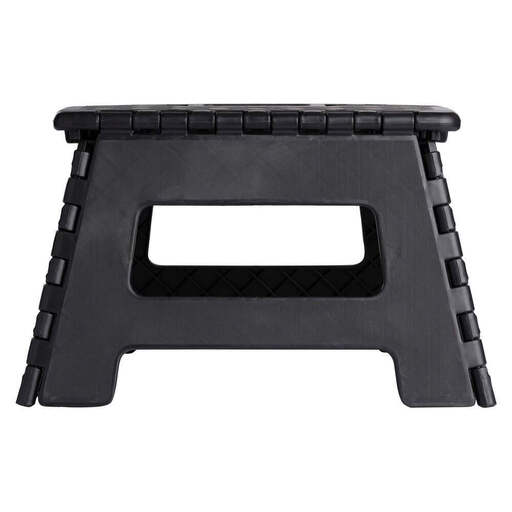
Why we recommend this product: This folding step stool is the definition of functionality and portability. Made from PP plastic, it weighs just 1.1 kg and features a one-handed folding mechanism. The integrated carrying handle and a folded depth of 4.5 cm make it a practical companion for quick tasks around the house, in the garden, or for camping. Despite its low weight, it supports up to 150 kg according to the manufacturer.
Advantages:
Who it's for: Ideal for anyone who needs a quick, simple, and easy-to-transport climbing aid for low heights. Also suitable for campers, families, or as a portable seat.
The products featured here cover the most common needs. However, if you require a ladder with a different number of steps, specific material properties, or for professional applications, we recommend exploring our broader range.
Discover our full range of ladders to find the perfect solution for your project.
1. What is the difference between a step ladder and a step stool? A step ladder typically has two or more steps and a foldable, A-frame structure that provides stability. A step stool is usually a single-step, compact platform that often folds flat. It is designed for lower heights, prioritising maximum portability and quick access.
2. How high should a kitchen step ladder be? For most standard kitchens with a ceiling height of around 2.50 m, a 2-step ladder is usually sufficient to safely reach the top shelves of wall cabinets. It offers a good compromise between reach and compact size.
3. What should I look for in a step ladder with a 150 kg capacity? Beyond the stated maximum load capacity of 150 kg, you should ensure it has a sturdy construction and provides stable footing on a level surface. Check that the safety lock engages correctly and that the steps are non-slip and clean. Compliance with standards like EN 14183 is an additional indicator of tested, fundamental safety.