
Lieferung heute & morgen

Qualitätsgarantie

Willkommens-Angebote freischalten: KOSTENLOSE Lieferung | Bis zu 80 % RABATT | Kostenlose 30-Tage-JoyPlus-Testphase
App herunterladen
A step stool for children should help your child become more independent without creating a hidden safety risk. Whether they’re washing their hands, brushing their teeth or helping in the kitchen, colour and design aren’t the only things that matter. The key considerations are the standing area, height, weight capacity and whether the model suits your child’s age and mobility.
Many product descriptions use terms such as ‘tip-resistant’, ‘sturdy’ or ‘Montessori’ without clearly explaining the details that matter. The points below can help you avoid common buying mistakes.
A maximum weight of 80 or 150 kg initially tells you only the load capacity stated by the seller. It doesn’t automatically mean that a step stool for children will remain stable if your child climbs, jumps or leans to one side. A wide base, a low centre of gravity and a suitable way to climb up are at least as important for children.
Some models can only be adjusted by taking them apart or turning them around. This can be practical, but you should make sure the stool is set up correctly before every use. A step that’s too high can be difficult to climb, while a children’s stool that’s too low may not be tall enough at the washbasin.
A folding step stool is a good option for smaller homes. At the same time, parents should check that the folding mechanism is fully locked into place and that there are no pinch points. For toddlers, simple, fixed designs are often easier to understand. A compact step stool isn’t automatically suitable for standing at a worktop for longer periods either.
When choosing a safe step stool for children, the construction matters more than a decorative design. Look for:
A step stool for children in the bathroom shouldn’t be left standing on a wet floor. Water, soap residue and slippery tiles can significantly affect its stability.
A low step stool for toddlers is often enough at the washbasin. In the kitchen, a greater working height is usually needed. An adjustable-height step stool or a learning tower for children can be useful for longer.
For a learning tower, choose a platform height that lets your child reach the worktop safely without leaning too far forwards. Adjustable platforms are practical, but they must be fitted correctly and checked regularly.
MDF, coated wood-based materials and bamboo differ in weight, care requirements and sensitivity to moisture. In the bathroom, an easy-to-wipe surface is useful. Wood and bamboo shouldn’t be soaked.
If you’re buying an FSC-certified step stool, the product description should clearly state which material the FSC claim applies to. The roba Montessori learning tower is described as being made from FSC-certified bamboo, but the information provided doesn’t include a certificate number. If traceable sourcing matters to you, check the manufacturer’s information and product documentation before buying.
Before buying, read the age recommendation, maximum weight capacity and warnings. A claim such as ‘from 9 months’ doesn’t replace adult supervision. Children shouldn’t jump or climb on a step stool, or stand by hot hob rings without supervision.
Depending on the type of product, technical standards may apply to step ladders and similar products. A CE mark isn’t a blanket mark of quality for furniture and shouldn’t be your only reason for buying. Clear manufacturer information, easy-to-follow assembly instructions and specific details about use are more helpful.
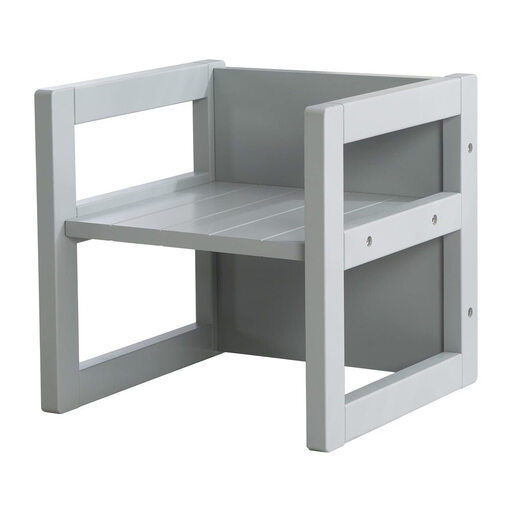
Why this product suits this profile: Measuring 30 × 30 × 30 cm, this compact children’s stool is a simple seat or step with several height options, making it a good choice for families.
The three seat heights of 14, 18 and 29 cm are selected by turning the stool. Choose the right position before use and place the stool on a level floor.
MDF construction, weighing around 3.1 kg, with a folding design and a stated weight capacity of around 80 kg.
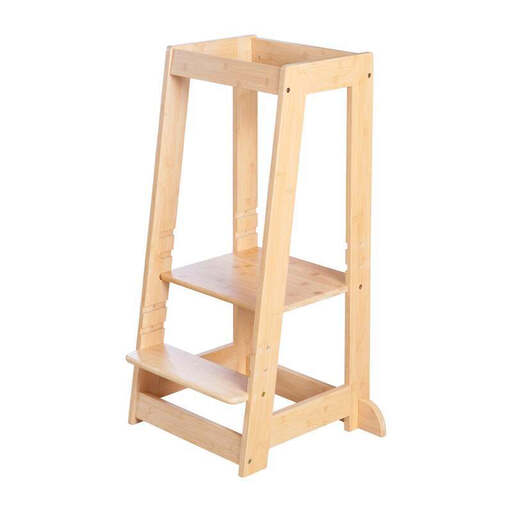
Why this product suits this profile: This Montessori learning tower is designed for families who regularly spend time together at the worktop or sink and prefer a solution that grows with their child.
The flared feet and height-adjustable platform help address the risk of tipping sideways. Even so, you’ll need a level surface and adult supervision.
Made from FSC-certified bamboo according to the product information, with three platform heights from 34.5 to 44.5 cm and a weight capacity of up to 80 kg.
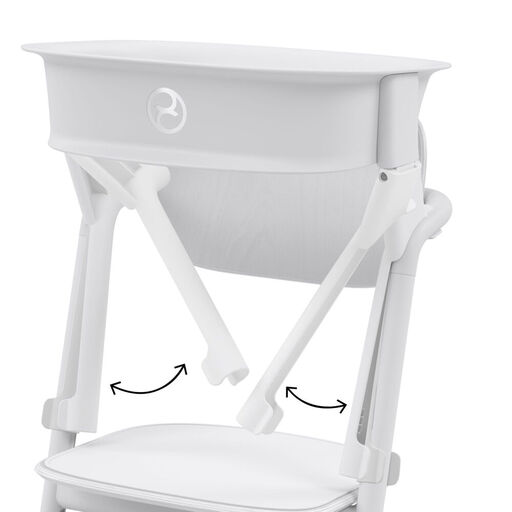
Why this product suits this profile: This model is worth considering if you already own a LEMO chair and want a space-saving add-on rather than a separate learning tower.
According to the product information, the add-on attaches to the LEMO chair without tools. However, it can only be used with this chair, so you’ll need to own or buy the chair separately.
Folds away for compact storage, with an adjustable seat and footrest. When used with a LEMO chair, it’s stated to be suitable from around one year old and up to 25 kg.
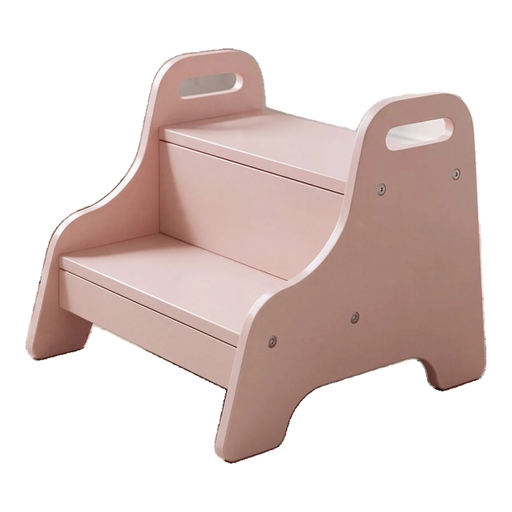
Why this product suits this profile: Designed for washbasins, worktops and lower reach heights, this children’s stool is a good choice for families looking for a fixed step without an adjustment mechanism.
The wide step and side handles are designed to help your child find their footing when climbing up. Assemble it carefully with the screws and push-fit connections, following the instructions.
High-density wood-based panels, water-based paint according to the product information and a wipe-clean surface.
We’ve put together a complete, regularly updated list of products that meet these strict selection criteria and fully comply with the safety regulations in force in the EU.
It depends on the design, the age recommendation and your child’s development. The product information provided lists the roba children’s stool as suitable from around 9 months, and the CYBEX LEMO learning tower with LEMO chair from around one year. Adult supervision is essential in every case. Your child should be able to stand securely and climb up and down in a controlled way.
Only place the stool on dry, level tiles and check before each use that all its feet are in full contact with the floor. Wipe up water and soap residue straight away. Anti-slip feet can help, but they don’t replace adult supervision or regular checks for loose connections.
A fixed learning tower can be used through several stages of your child’s development if the platform and footrest can be adjusted and the weight limit is observed. A simple step stool with a fixed height, on the other hand, depends more on the height of the washbasin or worktop it’s used with. So it’s not just the age recommendation that matters: your child’s height, reach and ability to move safely are important too.