Owners of passive speakers
You want to keep using your existing speakers with a suitable stereo amplifier. So check the connection type and speaker load first, rather than relying on the wattage alone.


First, make sure your choice is compatible with your existing speakers, then consider the sources you actually use. A traditional integrated amplifier is a good fit if CD, vinyl or other wired sources are your priority; choose a streaming amplifier if you want network features built in. For vinyl, the phono input needs to match your cartridge. And a higher wattage rating is no guarantee of better sound for jazz or suitability for a small room.
You want to keep using your existing speakers with a suitable stereo amplifier. So check the connection type and speaker load first, rather than relying on the wattage alone.
You play jazz albums on vinyl or listen to CDs, so you need the right phono, analogue or digital inputs. An MM phono input is suitable only if your cartridge and connection requirements are compatible.
You mainly listen to albums through network services and need to decide whether you want streaming built into the amplifier or whether a separate source will do.
First check that the amplifier is compatible with your speakers, then compare its inputs with your album sources and the space available.
| What to look for | What to check | Who should consider it? |
|---|---|---|
| Speaker compatibility | Check whether your speakers are passive and whether their connection type and supported load are compatible with the amplifier. | If I want to keep using my existing speakers, I check the connection type and supported load first. Around 31% of consumers put speaker compatibility first. |
| Vinyl and CD connections | Check the cartridge type and any existing phono preamp against the turntable input. For a CD player, the output needs to match an available amplifier input. | If you want to connect a turntable or CD player directly, check the signal path first. Around 25% of consumers prioritise these connection requirements. |
| Built-in streaming | Check whether the unit offers the network features you want or whether a separate player with a suitable audio output will do. | If I listen to albums through network services, I consider whether the amplifier can stream itself or needs a separate source. Around 25% of consumers put built-in streaming first. |
| Placement and low-volume listening | Measure the space available and check the required clearance in the manual. Also consider whether you want to use headphones or a loudness function. | If space is limited or I listen at low volumes, I pay particular attention to the unit’s dimensions and suitable features. Around 19% of consumers prioritise placement or low-volume listening. |
Manufacturers’ figures are based on specific speaker loads and test conditions. A higher figure alone is no guarantee of better sound or compatibility with your speakers.
Compare power ratings on a like-for-like basis, and check your speakers’ specifications against the amplifier manual before you buy.
A line input cannot replace the phono stage a turntable needs if it doesn’t have a suitable preamp of its own. With MM phono inputs, the cartridge and connection must also be compatible.
Check whether your turntable already provides a pre-amplified line signal, and which phono stage is suitable for its cartridge.
Depending on your turntable, you may need a separate, compatible phono preamp.
Bluetooth and network streaming are different ways of playing audio. An amplifier with Bluetooth doesn’t automatically include network features.
Choose the connection you actually need based on your album sources and how you want to control playback.
If your preferred playback method isn’t built into the amplifier, you may need a separate player.
The A-S301 is a traditional integrated amplifier for several wired sources, including digital players.
According to Denon, the PMA-600NE combines MM phono, digital inputs and Bluetooth in a traditional integrated amplifier.
The AXA35 is an analogue-focused option for MM turntables and other RCA sources.
The PM6007 is aimed at listeners with an MM turntable and a mix of analogue and digital album sources.
According to the manufacturer, the WiiM Amp combines network features with connections for passive speakers and additional sources.
This selection features compact stereo amplifiers for home speakers, with Bluetooth as a possible playback option. Before you buy, check the connections and speaker specifications against your existing setup.
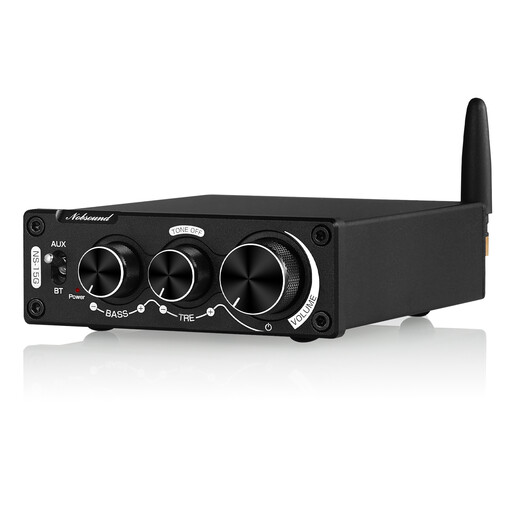 No image available
The product title describes this as a mini Bluetooth stereo amplifier. Check that its connections and speaker specifications are compatible with your existing components.
Only if the output and input are compatible. Denon specifically describes the PMA-600NE’s phono input as suitable for MM cartridges; Cambridge Audio also specifies an MM phono stage for the AXA35. The WiiM Amp’s documented input list includes a line input but no phono input. If your turntable doesn’t have a suitable preamp of its own, you’ll need a separate phono stage to use the line input.
No, as long as a separate player has a suitable audio output and the amplifier has a matching input. If you want network features built into the amplifier, the WiiM Amp is one documented example. Before choosing, check that it supports the services and controls you need.
First, check that your speakers are passive and that their connection and load specifications are compatible with your chosen unit. Measure the space available and check the manual for the clearance and cabling requirements. According to Yamaha, the A-S301 measures 435 × 151 × 387 mm.
The statutory rights you have if a product is faulty are separate from any voluntary guarantee. According to Germany’s consumer advice centres, online purchases generally come with a 14-day right to cancel from the date you receive the goods. Check the conditions and any exceptions that apply to your specific purchase.
No. The German Environment Agency explains that old electrical equipment must be collected separately from unsorted household waste. Contact your local council to find a suitable collection point.