What should you look for when buying?
Narrow down your options by focusing on what matters most to you: speaker compatibility, connections for your existing sources, ease of use in a shared room or built-in streaming.
| Priority |
What to check when buying |
Who should pay particular attention? |
| Speaker compatibility |
For passive speakers, check that the connections and permitted impedance match the specifications of the specific amplifier. |
If I want to keep my existing passive speakers, I’ll first check that they’re compatible with the amplifier. Around 31% of consumers put speaker compatibility first. |
| Connections for my sources |
Note the output of each source and whether you have a phono preamp, then check these against the inputs on the exact model. |
If you want to listen to your folk albums on a CD player, turntable or digital source, you’ll need the right inputs for each one. Around 31% of consumers prioritise connections for their sources. |
| Easy controls for quiet listening |
Check the controls, remote, headphone socket and any app you may need. |
If I want to turn the volume down easily or switch to headphones in a shared room, I’ll check the controls on the specific device. Around 23% of consumers put easy-to-use controls for shared spaces first. |
| Streaming without a separate device |
Check the services you want, network connectivity and control device for the specific model; don’t confuse Bluetooth with network streaming. |
If you mainly want to listen to folk through supported streaming services and don’t want a separate source device, check the built-in features. Around 15% of consumers prioritise streaming without a separate device. |
Joybuy products
Joybuy’s selection for passive speakers with Bluetooth or a compatible analogue source.
 No image available
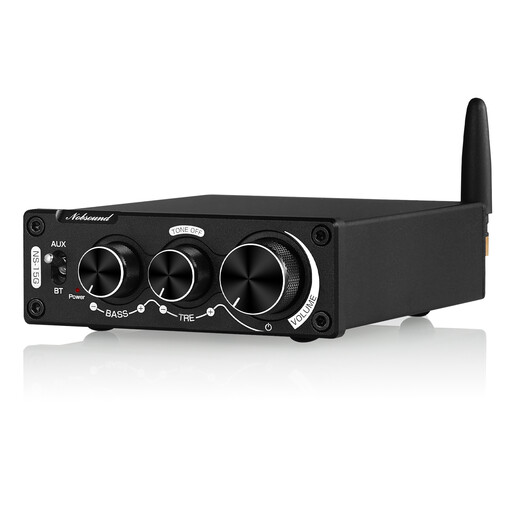
Nobsound 200 W mini Bluetooth digital amplifier with bass and treble controls
A relevant option for passive speakers and Bluetooth or a compatible analogue source. The product name specifies 200 W, along with bass and treble controls. Check your speakers’ impedance before connecting them, and only use the supplied power adapter if it is the correct one.
View at Joybuy
Frequently asked questions
Do I actually need a stereo amplifier for my existing speakers?
The amplifiers covered here are designed for passive speakers. If you have active speakers, check their inputs instead, and whether you need an additional power amplifier. With passive speakers, the connections and permitted impedance must be compatible with the specific model.
How do I connect a turntable?
First, check the cartridge, output and whether you have a phono preamp. For example, a compatible MM turntable can be connected to the dedicated MM phono input listed for the Denon PMA-600NE or Marantz PM6007. Check other combinations individually.
What should I look for when buying an amplifier in Germany?
The German Federal Network Agency includes correct CE marking, an identifiable product and manufacturer details, and German-language instructions with any necessary warnings among its market surveillance checks. Check these details for the specific product.
What if a product is faulty or an online purchase isn’t right for me?
Your statutory rights if a product is faulty are separate from any voluntary guarantee. According to the consumer advice centre, online consumer purchases generally come with a 14-day right to cancel, starting from receipt of the goods; you must notify the seller that you wish to cancel. Check the specific purchase contract and any exceptions.
What should I do with an old or faulty amplifier?
Electrical and electronic waste must not be put in household rubbish. The Federal Environment Ministry states that it must be handed over to an authorised collection provider.


