Who is this selection for?

Fans of quiet chamber music

You usually listen to passive speakers at low volumes and want to adjust the tonal balance, rather than focusing mainly on high output power. Yamaha specifies separately adjustable Loudness on the A-S301. Whether you like the setting with your speakers and recordings is something you’ll need to judge for yourself.

Owners of existing hi-fi systems

You want to keep using your speakers, CD player or turntable. Check that the amplifier’s speaker load and inputs are compatible with your equipment. For a turntable, for example, it’s important to know whether you need an MM phono input.

Streaming listeners with passive speakers

You want to access music services directly through your amplifier and decide whether app control and an equaliser suit your day-to-day listening, or whether separate traditional source components are a better fit. The WiiM Amp Pro lists streaming, equaliser and room correction as features; before buying, check that it supports the services you actually use.

What should you look for when buying?

What matters What to look for Who should pay particular attention?
Tonal balance at low volumes Check whether Loudness can be adjusted separately and whether a Direct mode bypasses the tone controls. If I want to adjust the balance between treble and bass when listening to quiet chamber music, ease of use matters more to me than a high wattage rating. Around 33% of consumers put tonal balance at low volumes first.
Compatibility with passive speakers Compare your speakers’ specifications with the connections and supported loads of the specific amplifier model. If you want to keep using your passive speakers, check that the system is compatible before considering extra features. Around 27% of consumers prioritise compatibility with their speakers.
Connections for existing sources Make a note of your devices’ outputs and check whether you need analogue, optical, coaxial or MM phono inputs. If you’re keeping your CD player, digital source components or turntable, their signal paths need to match the amplifier. Around 20% of consumers focus first on connections for their existing sources.
Streaming and digital control Check that your music services are supported and consider how setup works. If you’ll use the amplifier with a TV, supported audio formats also matter. If you want to listen without a separate network source device, check the services you need and how the app works before buying. Around 13% of consumers prioritise built-in streaming.
Listening on headphones Check the headphone connection and whether the specifications suit your headphones. Also find out whether the speakers are muted when you plug in. If you’d also like to listen to chamber music on headphones, the right connection matters alongside speaker playback. Around 7% of consumers prioritise private listening on headphones.

Common buying misconceptions

  • Assuming wattage proves good sound at normal room volume

    Power ratings apply to specific loads and test conditions. On their own, they don’t tell you how the amplifier, speakers and recording will sound at your preferred low listening volume.

    Only compare power ratings under the same conditions. First, check speaker compatibility and how easy the controls are to use at your usual volume.

  • Treating Loudness, tone controls and Direct mode as the same thing

    Yamaha describes the A-S301 as having separately adjustable Loudness. According to its manual, the Denon PMA-600NE’s bass, treble and balance controls can be used when SOURCE DIRECT is switched off. These controls don’t necessarily work in the same way.

    Check how the controls work on the specific model, then compare settings using the same music at the same volume.

  • Confusing Bluetooth with network streaming

    Bluetooth and built-in streaming through network services are different ways of connecting a source. A Bluetooth input doesn’t necessarily mean you can access your preferred music services directly through the amplifier.

    Choose according to the sources and services you actually use. Depending on your setup, you may need an additional network source device to access network services.

Key brands at a glance

Yamaha

The A-S301 is worth considering if you’re looking for separately adjustable Loudness and want to connect analogue or digital source components.

  • Yamaha lists variable Loudness and optical and coaxial inputs for this model.
  • These features don’t guarantee an audible benefit with every chamber music recording, nor do they tell you whether the amplifier will suit speakers whose specifications are unknown.

Denon

The PMA-600NE could suit a range of sources, including Bluetooth, digital inputs and MM phono.

  • Denon lists these connections in its product information, and the manual describes bass, treble and balance controls.
  • SOURCE DIRECT must be switched off to use the tone controls. Manufacturer claims about sound quality aren’t independent proof of how the amplifier performs at low volumes.

WiiM

The Amp Pro is aimed at buyers who want to pair passive speakers with network streaming and an adjustable equaliser.

  • WiiM lists streaming, an equaliser, room correction and HDMI ARC.
  • Check that your preferred services are supported and, if you’ll use it with a TV, that the audio formats are suitable. Information about the effects of correction features comes from the manufacturer.

Marantz

The PM6007 is a traditional option for analogue and digital sources, as well as MM phono.

  • Marantz lists analogue, coaxial and optical inputs, as well as an MM phono input.
  • Integrated HEOS isn’t listed for the PM6007, so check whether you’ll need a separate device for network streaming.

NAD

The C 316BEE V2 is worth considering for systems that mainly use analogue sources, an MM turntable or headphones.

  • NAD lists analogue inputs, tone controls and a headphone socket.
  • The listed features don’t prove superior sound quality or particularly good speaker control when playing quiet chamber music.

Suitable products on Joybuy

Joybuy selection for passive stereo speakers with Bluetooth or RCA input and adjustable tonal balance.
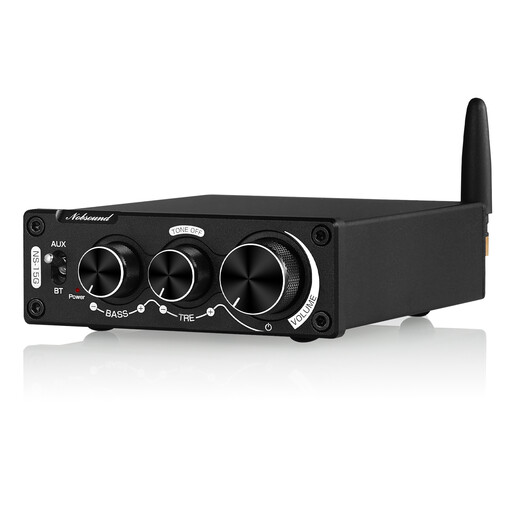
Nobsound 200 W mini Bluetooth digital HiFi stereo amplifier with bass and treble controls for home speakers

Nobsound 200 W Mini Bluetooth Digital Amplifier

For passive stereo speakers with Bluetooth or RCA input. The bass control may appeal if you’d like to adjust the tonal balance.

Described as a 2.0 amplifier, with a stated speaker load of 4–8 Ω. Bluetooth, an RCA input and a tone control bypass are listed in the product description.

The product description states that you should only use the supplied matching power adapter.

Joybuy

Frequently asked questions

How can I properly try out an amplifier for quiet chamber music?

Listen with your own speakers and familiar recordings at your usual low volume. If the amplifier has a Loudness feature, compare the settings carefully. The fact that the feature is listed doesn’t, by itself, prove it will improve the sound in your room.

What should I check when connecting and setting up the amplifier?

Switch the unit off before connecting it, and follow the manual for the specific model. Check your speakers’ specifications against the supported connections and loads, and use the specified supply voltage. Yamaha’s manual warns that using the wrong voltage can cause damage and create hazards.

What applies in Germany if there’s a fault or you buy online?

The statutory rights you have against the seller are different from a voluntary guarantee, as explained by the Verbraucherzentrale. For a typical purchase of new goods, claims for defects generally expire two years after delivery. For a consumer distance-selling contract, you generally have a 14-day right to cancel; statutory conditions and exceptions apply.

Which labels and disposal rules are relevant?

For electrical equipment covered by relevant EU regulations, the manufacturer uses the required CE marking to declare conformity with applicable product rules; it isn’t an independent sound quality test. The Umweltbundesamt explains that Germany’s Electrical and Electronic Equipment Act sets out obligations for manufacturers and retailers, among others. Old electrical equipment should be taken to the designated collection and take-back points.